
Polymarket’s impressive $21.5 billion trading volume in 2026 dwarfs Kalshi’s $1.1 billion but, per the Polymarket vs Kalshi comparison, does bigger always mean better for liquidity? This guide uncovers the metrics and strategies active speculators need to navigate the prediction market landscape and spot hidden arbitrage opportunities.
Prediction Market Liquidity Analysis: Spotting Opportunities in 2026
Prediction market liquidity analysis reveals that Polymarket’s $21.5B 2026 volume dominates the $44B global market, but Kalshi’s regulated sports contracts offer unique arbitrage opportunities with $1.1B monthly trading (FinOps, Oct 2025).
The prediction market landscape is rapidly evolving, with global trading volumes exceeding $40 billion in 2026 (marketcapof.com). While Polymarket leads in overall volume, the distribution across platforms and event categories creates pockets of opportunity. Understanding these dynamics is critical for traders looking to execute large positions and capitalize on mispricings. But how can you truly gauge whether a market is liquid enough to support your strategy?
Core Liquidity Metrics That Matter for Traders
Liquidity in prediction markets is measured through bid-ask spreads (narrow = deep pools), order book depth (volume at top levels), and slippage tolerance (price impact on large orders).
Traders need to go beyond simple volume figures. The bid-ask spread, representing the difference between the highest bid and lowest ask price, indicates how tight the market is. Order book depth shows the volume of contracts available at different price levels, revealing the market’s capacity to absorb large orders. Slippage, the difference between the expected price and the actual execution price, is crucial for managing risk when entering or exiting positions. How can you calculate these metrics yourself?
Polymarket vs Kalshi: Liquidity Pool Comparison
Polymarket’s 0% trading fees and $21.5B volume create tighter spreads (<1¢ during peaks) for politics markets, while Kalshi's regulated framework offers $10-50M election markets with predictable settlement.
Polymarket, known for its zero trading fees (though a 2% fee applies to winning positions), attracts significant volume, especially in political events. This often translates to tighter bid-ask spreads, sometimes less than a cent during peak trading hours. Kalshi, on the other hand, operates within a regulated framework and charges a 3% taker fee, which can widen spreads. Kalshi’s strength lies in regulated sports contracts, offering a different liquidity profile. Want to know more about Polymarket fees and limits? We’ve got you covered (Kalshi trading interface tutorial).
Identifying Low-Slippage Events for Large Bets
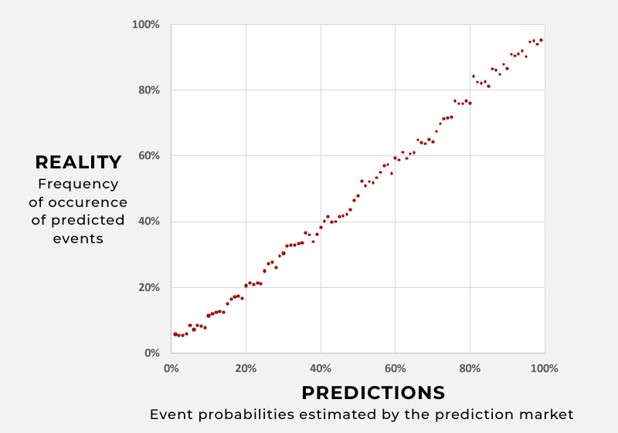
High-volume politics and sports events ($10-50M+ markets) consistently show low slippage, making them ideal for large position entries without significant price impact.
For large bets, minimizing slippage is paramount. Events with high trading volume, typically politics and major sports, tend to exhibit lower slippage. Markets exceeding $10 million in volume often allow for substantial position entries without significantly impacting the price. But remember, timing is everything. Entering positions during peak trading hours, when liquidity is highest, can further reduce slippage. What events are showing the most volume right now?
Arbitrage Opportunities: The $40M Edge
IMDEA’s 2024-25 analysis identified $40M in arbitrage profits across prediction markets, primarily from cross-platform mispricing during high-volatility events like elections.
A 2024-2025 analysis by IMDEA found a staggering $40 million in arbitrage profits across prediction markets, mainly stemming from price discrepancies during volatile events like elections (IMDEA arXiv:2508.03474). This highlights the potential for savvy traders to exploit cross-platform mispricing. But how can you detect these fleeting opportunities in real-time?
Order Book Depth Analysis for Risk Management
Order book depth charts reveal that Polymarket’s politics markets maintain $500K+ at top bid/ask levels, while Kalshi’s sports contracts show $100K+ depth during peak hours.
Visualizing order book depth through charts allows traders to assess the risk associated with large orders. On Polymarket, political markets often display a robust $500,000 or more at the top bid and ask levels. Kalshi’s sports contracts, while generally less deep, can still exhibit $100,000+ depth during peak hours. This information is crucial for determining appropriate position sizes and setting stop-loss orders. Curious about how to read prediction market odds to inform your risk management?
Platform-Specific Liquidity Strategies
Traders maximize returns by leveraging Polymarket’s deep politics liquidity for large positions while using Kalshi’s regulated framework for sports arbitrage with lower counterparty risk.
A blended approach often yields the best results. Traders can capitalize on Polymarket’s deep liquidity in political markets for large-scale positions, while leveraging Kalshi’s regulated environment for sports-related arbitrage opportunities, which inherently carry lower counterparty risk. But what does this look like in practice?
Cross-Platform Arbitrage Execution
Successful arbitrage requires monitoring bid-ask spreads across platforms in real-time, with execution speeds under 5 seconds to capture price discrepancies before market efficiency.
Successful cross-platform arbitrage demands vigilance and speed. Traders must continuously monitor bid-ask spreads across different platforms, executing trades within seconds to capitalize on fleeting price discrepancies. A difference of even a fraction of a cent can translate to significant profits when scaled across large positions. What technical infrastructure do you need to succeed?
Future Liquidity Trends: 2026 and Beyond

Prediction market liquidity is projected to quadruple from $15.8B (2024) to $63.5B (2025) as regulatory clarity and institutional participation drive deeper order books across all platforms.
The future looks bright for prediction market liquidity. Projections indicate a dramatic increase from $15.8 billion in 2024 to $63.5 billion in 2025 (ainvest.com snippet), driven by greater regulatory clarity and increased institutional participation. This influx of capital will likely lead to deeper order books and tighter spreads across all platforms. How will this growth affect individual traders?
Building Your Liquidity Analysis Toolkit
Essential tools include real-time order book monitoring, spread tracking across platforms, and volume analysis to identify optimal entry/exit points for large positions.
To effectively analyze liquidity, traders need a suite of specialized tools. Real-time order book monitoring software provides a snapshot of market depth. Spread trackers highlight arbitrage opportunities across platforms. Volume analysis tools help identify events with sufficient liquidity for large positions. Where can you find these essential tools?
Risk Management for Liquidity Trading
Effective liquidity trading requires position sizing based on order book depth, stop-loss placement accounting for slippage, and diversification across multiple high-volume events.
Liquidity trading necessitates a robust risk management strategy. Position sizes should be carefully calibrated based on order book depth. Stop-loss orders must account for potential slippage. Diversifying across multiple high-volume events can mitigate the impact of unforeseen market fluctuations. What formulas should you use to calculate your position size?
The Value Proposition of Prediction Markets: More Than Just Bets
There’s often skepticism around whether people actually make money in prediction markets, as highlighted in Reddit discussions. While the allure of quick profits exists, the true value lies in informational efficiency. Prediction markets aggregate diverse opinions to create surprisingly accurate forecasts. This “wisdom of the crowd” effect, as explored in prediction markets explained, offers valuable insights for decision-making, going beyond simple betting. The key is seeing them as information-gathering tools, not just gambling platforms.
Navigating Regulatory and Taxation Challenges
Liquidity can be significantly impacted by conflicting regulatory frameworks and taxation rules. As our guide to regulated prediction markets details, different jurisdictions have varying stances on prediction markets, affecting who can participate and how they’re taxed. This can create artificial barriers to liquidity and hinder arbitrage opportunities. For instance, US citizens face restrictions on certain international platforms, limiting their access to potentially more liquid markets. Staying informed about these legal and tax implications is crucial for maximizing profitability.
Actionable Takeaways for Traders in 2026
To thrive in 2026’s prediction market landscape, focus on these key actions: (1) Prioritize high-volume political and sports events for low-slippage entries. (2) Monitor cross-platform bid-ask spreads in real-time to identify arbitrage opportunities (remember the $40M edge, according to IMDEA’s analysis). (3) Use order book depth charts to assess risk and set appropriate stop-loss levels. (4) Consider a hybrid strategy, leveraging Polymarket’s deep liquidity and Kalshi’s regulatory framework. (5) Continuously refine your liquidity analysis toolkit and risk management practices. By implementing these strategies, you can increase your chances of success in the exciting world of prediction markets. If you’re new to the space, start with our guide on how prediction markets work to build a solid foundation.