
Prediction markets operate as regulated exchanges where traders buy and sell binary contracts representing event probabilities, with real-time order books matching bids and asks while market makers ensure liquidity through continuous quoting. In 2026, these platforms have evolved into multi-billion dollar ecosystems, processing over $44 billion in annual volume across platforms like Polymarket and Kalshi, which operate under CFTC oversight as legitimate derivatives exchanges.
How Prediction Markets Work: Mechanics of Event Contracts in 2026
Prediction markets function as financial exchanges where participants trade contracts that pay $1 if a specific event occurs and $0 if it does not, the essence of prediction markets explained. Unlike traditional sports betting where you wager against a bookmaker, prediction markets operate as clearing houses where traders buy and sell positions against each other in real-time. The price of each contract directly reflects the market’s collective probability estimate, with a $0.70 contract indicating a 70% chance of the event occurring according to current market consensus.
The mechanics center on continuous double auction order books, where limit orders specify desired prices and market orders execute immediately at the best available price. When a trader places a buy order at $0.65 for a “yes” contract and another trader’s sell order sits at $0.64, the orders match and execute at the midpoint or the best available price, depending on the platform’s matching engine rules. This system ensures transparent price discovery through pure supply and demand dynamics.
Settlement occurs once the event outcome becomes definitively known, with winning contracts paying $1 per share and losing contracts becoming worthless. The entire process happens on-chain for many platforms using Polygon and USDC, enabling near-instant settlement and transparent audit trails. This infrastructure supports the $5 billion+ daily volume observed across major platforms in Q1 2026, according to industry analytics firm DappRadar.
The Binary Format: Yes/No Contracts and Probability Pricing
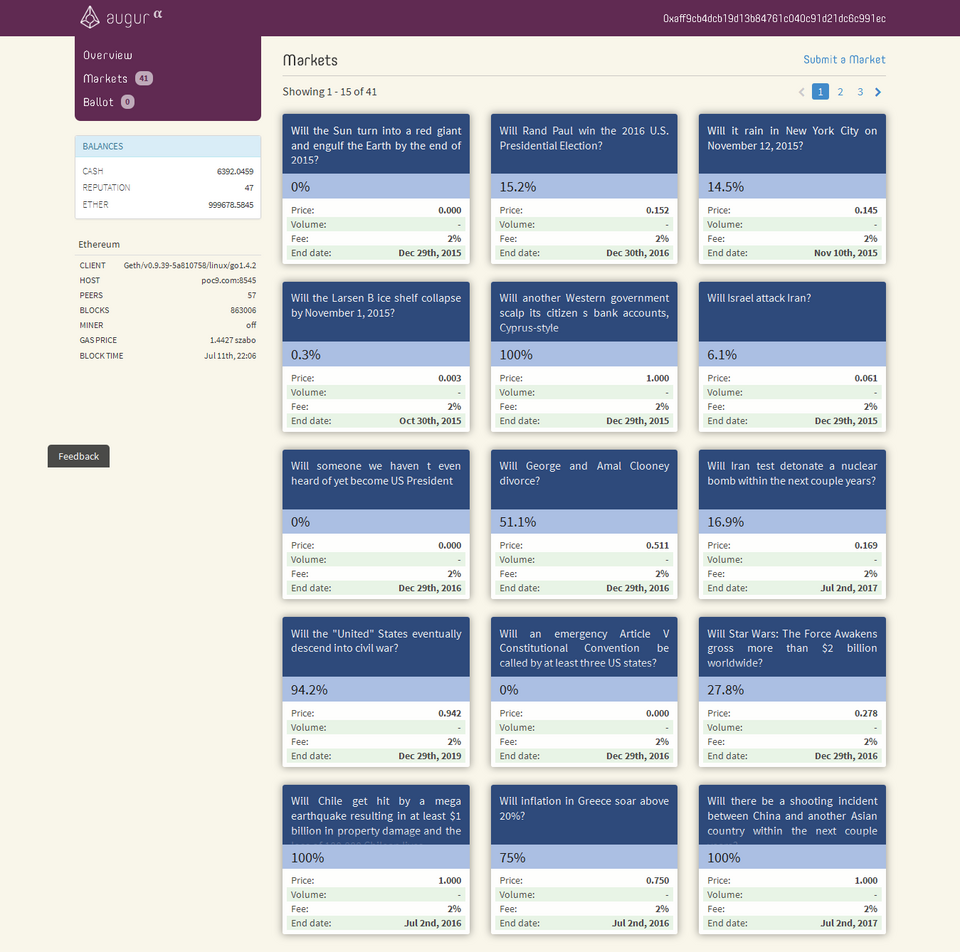
Binary contracts form the foundation of most prediction markets, operating on a simple yes/no premise where the outcome resolves to either $1 (event happens) or $0 (event does not happen). The price traders pay for these contracts directly represents the market-implied probability of the event occurring. A contract priced at $0.30 suggests the market believes there’s only a 30% chance of the event happening, demonstrating how to read prediction market odds, while a $0.85 price indicates strong consensus that the event will occur.
This probability pricing mechanism creates a unique feedback loop where traders’ collective actions continuously update the implied odds. When new information emerges—such as a candidate’s debate performance or a company’s earnings report—traders immediately adjust their positions, causing contract prices to move in real-time. This dynamic pricing makes prediction markets faster and often more accurate than traditional polling methods, with studies showing they consistently outperform surveys in forecasting accuracy.
How Prices Reflect Real-Time Market Odds
Contract prices dynamically adjust based on new information, with traders’ buy and sell actions continuously updating the implied probability in the order book. When breaking news hits, such as a major policy announcement or unexpected event outcome, the order book experiences rapid rebalancing as traders rush to update their positions. Market makers play a crucial role here, adjusting their quoted spreads to manage the increased volatility while maintaining continuous liquidity.
The speed of price adjustment depends on market depth and liquidity, key to prediction market liquidity analysis. In highly liquid markets with numerous active traders, prices can update within seconds of news breaking. However, in thinner markets, price discovery may take longer as fewer participants absorb and react to new information. This creates arbitrage opportunities for traders who can quickly identify and exploit temporary price discrepancies across platforms.
Order Book Mechanics: How Bids and Asks Match Trades
Prediction markets use continuous double auction order books where limit orders (set price) and market orders (immediate execution) match when bids meet asks, with the bid-ask spread representing liquidity costs. Each order book maintains two sides: the bid side showing all buy orders at various prices, and the ask side displaying all sell orders. The highest bid and lowest ask prices are constantly visible, creating a transparent marketplace where traders can see exactly what prices are available.
When a trader places a market buy order, the system automatically matches it against the best available sell orders, starting with the lowest ask price. If the buy order size exceeds the available liquidity at that price level, it continues matching against higher ask prices until the entire order is filled. This process ensures efficient price discovery while protecting traders from unexpected execution prices through the visible order book depth.
The Role of Market Makers in Providing Liquidity
Market makers continuously quote both buy and sell prices, profiting from the bid-ask spread while ensuring trades can execute even in thin markets by absorbing temporary imbalances. These professional liquidity providers maintain standing orders on both sides of the market, ready to buy from sellers and sell to buyers at any time. Their presence guarantees that traders can always execute positions, even when natural counterparty interest is limited.
The bid-ask spread represents the market maker’s compensation for providing this service and assuming inventory risk. In highly liquid markets, spreads can be as tight as $0.01, while in less active markets they may widen to $0.05 or more. Market makers adjust their spreads dynamically based on volatility, with higher spreads during uncertain periods to compensate for increased risk. This mechanism ensures continuous market function regardless of trading volume or news events.
Settlement and Trading: From Position to Payout
Traders can buy or sell positions anytime before settlement, with winning contracts paying $1 per share and losers becoming worthless once the event outcome is definitively resolved. This flexibility allows traders to manage risk dynamically, taking profits when prices move favorably or cutting losses when the market turns against their positions. Unlike traditional sports betting where wagers lock in until the event concludes, prediction markets enable continuous position management throughout the trading period.
The settlement process is automated and transparent on modern platforms. Once an event concludes, the platform’s oracle system verifies the outcome through multiple sources, then automatically settles all positions. Winners receive their $1 per share payout, while losing positions are removed from accounts. This process typically completes within minutes for straightforward events, though more complex resolutions may take additional time for verification.
Arbitrage Opportunities in Price Discrepancies
Traders exploit temporary price differences between platforms or related markets, with arbitrage activity helping keep prices aligned with true probabilities across exchanges. When the same event contract trades at different prices on Polymarket and Kalshi, exemplifying Polymarket vs Kalshi comparison, arbitrageurs quickly buy the cheaper contract and sell the more expensive one, profiting from the price differential while simultaneously pushing prices toward equilibrium. This activity serves a crucial market function by ensuring consistent pricing across all trading venues.
Cross-platform arbitrage requires sophisticated technology and fast execution, as price discrepancies typically last only seconds in liquid markets. Professional arbitrage firms use automated trading systems to monitor multiple exchanges simultaneously, executing trades within milliseconds of price divergences appearing. The profit margins are often small—typically 1-3%—but the high trading volume and low risk make this strategy attractive for institutional players in the prediction market space.
Beyond Binary: Scalar Contracts and Range Betting
Some prediction markets offer scalar contracts where payouts depend on specific numerical outcomes within a range, allowing traders to bet on metrics like inflation rates or temperatures rather than simple yes/no events. These contracts function similarly to traditional financial derivatives, with payouts determined by how close the final outcome falls to the trader’s predicted value. For example, a scalar contract on Q4 2026 inflation might have a range of 2% to 5%, with payouts scaling proportionally based on where the actual inflation rate lands within that range.
Scalar contracts add significant complexity to prediction market mechanics, requiring more sophisticated pricing models and settlement calculations. Unlike binary contracts with their simple $1 payout structure, scalar contracts must account for the continuous nature of numerical outcomes. This complexity creates unique trading opportunities for quantitative traders who can develop models to identify mispriced ranges based on statistical analysis and market sentiment.
How Scalar Contracts Calculate Payouts
Scalar contract payouts are determined by where the final outcome falls within the predefined range, with profits proportional to how close the result is to the trader’s predicted value. If a trader buys a scalar contract at $0.50 predicting inflation will hit 3.5%, and the actual inflation comes in at 3.6%, the payout calculation considers the distance from both the contract price and the actual outcome. The closer the final result to the trader’s position, the higher the percentage return on their investment.
This proportional payout structure creates different risk-reward profiles compared to binary contracts. While binary contracts offer fixed 100% returns for correct predictions, scalar contracts can provide variable returns based on prediction accuracy. This makes them particularly attractive for events where traders have strong directional views but uncertain precision, such as economic indicators or sporting event statistics where exact outcomes are difficult to predict but general trends are more apparent.
Trading Fees and Platform Economics in 2026
Prediction platforms earn revenue through transaction fees rather than user losses, with Kalshi using formula-based fees while Polymarket fees and limits typically involve a percentage of net profits. This fee structure aligns platform incentives with trader success, as platforms benefit from increased trading volume rather than participant losses. In 2026, competitive pressure has driven fee optimization across the industry, with major platforms offering tiered fee structures based on trading volume and account status.
The regulatory framework established by the CFTC in 2023 and refined throughout 2024-2026 has created a stable environment for platform operations. Platforms must maintain sufficient capital reserves, implement robust risk management systems, and provide transparent fee disclosures. This regulatory clarity has attracted institutional participants who were previously hesitant to engage with prediction markets, further increasing liquidity and reducing trading costs for all participants.
The Impact of Fees on Trading Strategies
Fee structures influence which markets traders choose and how they time entries/exits, with some strategies optimized specifically to minimize the impact of platform charges on profitability. High-frequency traders must carefully consider fee impacts on their expected returns, as transaction costs can quickly erode profits from small price movements. This has led to the development of fee-aware trading algorithms that optimize order timing and size to minimize total trading costs.
For retail traders, fee awareness influences market selection and position sizing. Markets with higher liquidity typically offer lower effective fees due to tighter spreads, while niche markets may have higher costs that require larger price movements to generate profitable trades. Understanding these dynamics helps traders allocate capital efficiently across different prediction markets based on their expected returns relative to total trading costs.
2026 Market Trends: Volume, Regulation, and Professional Traders
Prediction markets reached $44 billion in annual volume in 2026, attracting professional traders from traditional sports betting, with increasing regulatory clarity treating platforms as financial exchanges rather than gambling venues. This explosive growth reflects both the maturation of the prediction market industry and the broader acceptance of event-based trading as a legitimate financial activity. The integration with major brokerage platforms like Robinhood has further accelerated adoption, bringing prediction markets to millions of retail investors who previously had no access to these instruments.
Professional trading firms have established dedicated prediction market desks, applying sophisticated quantitative strategies previously reserved for traditional financial markets. These firms bring institutional-grade technology, risk management, and capital to the prediction market ecosystem, significantly improving liquidity and price efficiency. Their presence has also professionalized the industry, with many firms now offering prediction market trading as part of broader event-driven investment strategies.
How Breaking News Affects Market Liquidity and Prices
Major news events trigger rapid price adjustments and order book rebalancing as traders react, with market makers adjusting spreads to manage increased volatility and maintain continuous liquidity. When significant news breaks, the initial price impact often creates temporary dislocations as the market absorbs and processes the new information. Market makers respond by widening spreads to compensate for increased uncertainty, while arbitrageurs work to eliminate any cross-platform price discrepancies that emerge.
The speed and magnitude of price adjustments depend on the nature of the news and the specific market involved. Political events often see the most dramatic price movements, with contract prices sometimes swinging 20-30 percentage points within minutes of major announcements. Economic data releases and corporate events typically produce more measured reactions, though still significant enough to create substantial trading opportunities for those positioned correctly. This volatility is precisely what attracts many traders to prediction markets, offering the potential for outsized returns in short time periods.
Getting Started: A Trader’s Guide to Prediction Markets
New traders should start with small positions on regulated platforms like Kalshi—following its Kalshi trading interface tutorial—or Polymarket, focusing on understanding order types and fee structures before attempting more complex strategies like arbitrage or market making. The learning curve for prediction markets is relatively gentle compared to traditional financial markets, but success still requires understanding the unique mechanics and risks involved. Starting with simple binary contracts on high-liquidity events allows new traders to gain experience without exposing themselves to excessive risk.
Developing a systematic approach to market selection is crucial for long-term success. Traders should focus on markets where they have informational advantages, whether through expertise in specific domains, access to timely information, or superior analytical capabilities. Building a diversified portfolio across multiple uncorrelated events can help manage risk while providing exposure to various trading opportunities. As traders gain experience, they can gradually incorporate more sophisticated strategies while maintaining disciplined risk management practices.
FAQ: Common Questions About Prediction Market Mechanics
How do prediction market contracts work? Prediction market contracts are binary instruments that pay $1 if a specific event occurs and $0 if it does not. Traders buy and sell these contracts on exchanges where prices reflect the market’s collective probability estimate, with $0.70 representing a 70% chance of occurrence. Settlement occurs automatically once the event outcome is verified, with winning contracts paying out at $1 per share.
Are prediction markets legal in the US? Yes, major US-based regulated prediction markets like Kalshi operate under CFTC oversight as legitimate derivatives exchanges. The regulatory framework established in 2023-2026 treats event contracts as legitimate financial instruments rather than gambling products, though certain categories of events remain prohibited. Platforms must comply with capital requirements, risk management standards, and transparent fee disclosures.
How do prediction markets resolve event outcomes? Resolution occurs through automated oracle systems that verify event outcomes from multiple reliable sources. For straightforward events like sports results or election outcomes, resolution typically happens within minutes of the official result being announced. More complex events may require additional verification time. The resolution process is transparent and auditable, with platforms required to maintain detailed records of their outcome determination procedures.
What role do market makers play in prediction markets? Market makers provide continuous liquidity by maintaining standing buy and sell orders across various price levels. They profit from the bid-ask spread while ensuring traders can always execute positions, even in thin markets. Market makers adjust their spreads based on volatility and risk, with wider spreads during uncertain periods to compensate for increased inventory risk.