DeFi prediction markets have reached $550M+ total value locked, with Polymarket commanding 60% market share, transforming from prediction betting platforms to governance decision engines. This explosive growth represents a 4x expansion from $150M in 2025, positioning these markets as critical infrastructure for decentralized finance protocol success forecasting.
DeFi Prediction Markets Reach $550M+ TVL with Polymarket Dominating 60% Market Share
DeFi prediction markets have grown to $550M+ total value locked, with Polymarket controlling approximately $330M of that total, representing a 4x expansion from $150M in 2025. This dominance reflects Polymarket’s established infrastructure and liquidity advantages over competitors like OPINION ($155M) and Predict Fun ($21.7M), while traditional platforms like Kalshi maintain $2.2B weekly volume through centralized operations.
The TVL growth trajectory reveals accelerating adoption, with platforms increasingly serving as governance decision engines rather than simple betting venues. This evolution creates new trading opportunities around protocol success metrics, governance outcomes, and DeFi adoption milestones that traditional prediction markets cannot capture.
Platform Dominance and Market Concentration
Polymarket’s $330M TVL represents 60% market control, creating both liquidity advantages and concentration risks for traders. The platform’s established reputation, regulatory compliance efforts, and integration with major DeFi protocols have attracted institutional capital alongside retail traders seeking governance outcome predictions.
OPINION follows with $155M TVL, focusing on decentralized governance and protocol-specific markets. Predict Fun captures $21.7M with niche community markets, while Kalshi’s $2.2B weekly volume demonstrates the massive opportunity in regulated prediction markets, though operating outside the DeFi ecosystem.
TVL Growth Drivers and Market Evolution
The 4x TVL expansion from 2025 to early 2026 reflects several converging factors: increased DeFi protocol integration, growing awareness of governance prediction markets, and the maturation of oracle infrastructure enabling reliable outcome resolution. Traders are shifting from pure speculation to strategic positioning around protocol governance decisions.
This evolution creates arbitrage opportunities between governance outcome predictions and underlying token prices, as successful governance proposals often drive immediate price appreciation. The correlation between prediction market odds and actual governance voting patterns has become increasingly strong, validating these markets as governance infrastructure.
Governance Outcome Prediction Markets Transform DAO Decision-Making
Prediction markets now forecast governance outcomes like Aave DAO’s “Aave Will Win” proposal, where 100% product revenue would redirect to DAO treasury, and Compound DAO’s shift toward centralized control with Alpha Growth influence. These markets have become sophisticated decision-making tools, with traders betting on proposal success rates rather than simple event outcomes.
The transformation from betting to governance infrastructure represents a fundamental shift in how decentralized protocols make decisions. Prediction markets provide quantitative signals about proposal viability, community sentiment, and potential implementation challenges that traditional governance processes often miss.
Aave DAO Governance Battles and Revenue Sharing
Aave DAO’s “Aave Will Win” proposal in February 2026 sparked intense prediction market activity, with traders betting on whether the controversial revenue redirection would pass. The proposal would allocate 100% of product revenue to DAO treasury rather than stakers, fundamentally altering Aave’s economic model and governance incentives.
Prediction markets accurately forecasted the proposal’s failure, with odds shifting from 65% approval to 22% as community concerns about centralization and revenue distribution emerged. This predictive accuracy demonstrates how these markets capture nuanced governance sentiment that traditional voting mechanisms might miss.
Compound DAO’s Centralized Control Evolution
Compound DAO’s governance evolution toward centralized control under Alpha Growth influence represents a broader trend in DeFi protocol governance. Prediction markets have become essential tools for traders positioning around these centralization shifts, with markets accurately predicting performance-based compensation structures and governance power consolidation.
The tension between decentralization ideals and sustainable business models plays out in real-time through prediction markets, where traders can profit from governance outcome predictions while providing valuable signals to protocol participants about proposal viability and community sentiment.
Oracle-Driven Resolution Creates Critical Infrastructure Vulnerabilities
Smart contracts rely on oracles like UMA and Chainlink to feed real-world data for outcome resolution, but this dependency creates manipulation risks that whales can exploit to influence market results. The oracle infrastructure represents both the innovation enabling prediction markets and their most significant vulnerability.
Oracle manipulation risks have become increasingly sophisticated, with attackers targeting specific data feeds to influence multiple markets simultaneously. The concentration of oracle dependencies creates systemic risks that could undermine the entire DeFi prediction market ecosystem if not properly addressed.
Oracle Mechanics and Data Feed Processes
UMA and Chainlink oracles provide the critical infrastructure connecting real-world events to blockchain-based prediction markets. These systems aggregate data from multiple sources, apply consensus mechanisms, and feed verified outcomes to smart contracts for automated settlement. The reliability of this process determines market integrity and trader confidence (Supreme Court prediction markets).
UMA’s optimistic oracle model allows for dispute periods and economic incentives for accurate reporting, while Chainlink’s decentralized oracle networks provide redundancy and resistance to single points of failure. Both approaches have strengths and vulnerabilities that sophisticated traders exploit for arbitrage opportunities.
Whale Influence and Market Manipulation Risks
Whales with significant capital can manipulate prediction markets by placing large bets that shift odds dramatically, then profiting from the resulting price movements. This manipulation becomes particularly problematic in governance outcome markets, where whales can influence both market prices and actual governance voting through coordinated actions.
The concentration of wealth in DeFi protocols creates asymmetric power dynamics, where a small number of large holders can control market outcomes. Prediction markets must evolve mechanisms to detect and mitigate whale manipulation while preserving the benefits of deep liquidity and efficient price discovery.
How to Compare DeFi Prediction Market Platforms Using TVL and Governance Metrics
Compare platforms by analyzing TVL concentration, governance outcome accuracy, oracle reliability, and integration depth with DeFi protocols rather than just trading volume or user interface features. This comprehensive framework helps traders identify platforms with sustainable competitive advantages and long-term viability.
The comparison methodology focuses on fundamental metrics that predict platform success rather than superficial features that competitors can easily replicate. TVL concentration indicates liquidity depth and trader confidence, while governance outcome accuracy demonstrates the platform’s ability to capture real-world decision-making dynamics.
TVL-Based Platform Comparison Framework
TVL concentration serves as the primary indicator of platform health and trader confidence. Polymarket’s $330M dominance reflects established infrastructure and regulatory compliance, while OPINION’s $155M shows strong decentralized governance appeal. Predict Fun’s $21.7M represents community-focused niche markets with growth potential.
TVL growth rates provide insight into platform momentum and market share gains. Platforms with accelerating TVL growth often indicate successful feature launches, governance integration, or improved oracle reliability. Conversely, stagnating TVL may signal competitive pressures or technical challenges.
Governance Outcome Prediction Accuracy Metrics
Governance outcome accuracy measures how well prediction markets forecast actual DAO proposal results. Platforms with high accuracy demonstrate superior understanding of governance dynamics and community sentiment. This metric becomes increasingly important as prediction markets evolve from betting venues to governance infrastructure.
Accuracy rates above 80% indicate strong predictive capabilities, while rates below 60% suggest fundamental issues with market design or oracle reliability. Traders should prioritize platforms with proven governance prediction track records when positioning around DAO proposals and protocol upgrades.
The Future: Prediction Markets as DeFi Protocol Governance Infrastructure
Prediction markets are evolving from simple betting platforms into sophisticated governance infrastructure, serving as “cousins” to DAOs in on-chain decision-making and protocol success forecasting. This evolution represents a fundamental shift in how decentralized protocols operate and make decisions.
The integration of prediction markets with lending protocols, yield generation mechanisms, and automated market makers creates new opportunities for traders to profit from governance outcome predictions while providing valuable signals to protocol participants about proposal viability and community sentiment (International election prediction markets).
Evolution from Betting to Governance Optimization
The transition from betting to governance optimization reflects the maturation of prediction markets as DeFi infrastructure. Traders are increasingly using these markets to hedge governance risks, position around protocol upgrades, and profit from the information asymmetry between market participants and protocol insiders.
This evolution creates new trading strategies focused on governance outcome prediction rather than simple event betting. Traders can profit from understanding protocol governance dynamics, community sentiment shifts, and the complex interactions between different stakeholder groups within decentralized protocols.
Integration with Lending Protocols and Yield Generation
Prediction markets are increasingly integrated with lending protocols like Aave and Compound, allowing traders to use borrowed funds for leveraged governance positions. This integration creates complex arbitrage opportunities between governance outcome predictions and underlying token prices, while also increasing systemic risk through leveraged positions.
Yield generation mechanisms within prediction markets provide additional revenue streams for liquidity providers and traders. These mechanisms include trading fees, governance token rewards, and integration with yield-bearing DeFi protocols, creating compound returns for sophisticated market participants (Candidate prediction markets).
Regulatory Landscape for DeFi Prediction Markets: CFTC Oversight and Legal Frameworks
DeFi prediction markets operate under complex regulatory frameworks, with CFTC oversight affecting platforms like Polymarket while decentralized governance creates jurisdictional challenges across different legal systems. The regulatory landscape continues to evolve as authorities grapple with the unique characteristics of decentralized prediction markets.
The tension between innovation and regulation creates both opportunities and risks for traders and platform operators. Platforms that successfully navigate regulatory requirements while maintaining decentralization benefits may achieve sustainable competitive advantages in the long term.
CFTC Regulatory Framework and Compliance Requirements
The CFTC has established regulatory frameworks for prediction markets, focusing on market integrity, consumer protection, and anti-manipulation measures. Platforms operating in the United States must comply with registration requirements, reporting obligations, and market surveillance standards that can impact operational efficiency and user experience.
Polymarket’s compliance efforts demonstrate the challenges and opportunities of regulatory engagement. The platform’s ability to operate within regulatory frameworks while maintaining decentralized governance benefits positions it favorably for long-term success, though at the cost of some decentralization principles.
Jurisdictional Differences and Legal Wrapper Formalization
Jurisdictional differences in prediction market treatment create complex compliance requirements for platforms operating globally. Some jurisdictions classify prediction markets as gambling, while others treat them as financial instruments subject to securities regulations. This regulatory fragmentation requires platforms to implement jurisdiction-specific compliance measures.
Legal wrapper formalization for governance outcomes represents an emerging trend in DeFi prediction markets. Platforms are developing legal structures that provide clarity around governance rights, revenue sharing, and dispute resolution, addressing the regulatory uncertainty that has historically limited institutional participation (Policy prediction markets).
Key Entities and Platform Analysis
Understanding the key entities in DeFi prediction markets is essential for traders seeking to navigate this complex ecosystem. Polymarket, OPINION, Predict Fun, and Kalshi represent different approaches to prediction market design, each with unique advantages and challenges in the evolving regulatory landscape.
Aave DAO, Compound DAO, and Alpha Growth demonstrate how prediction markets are becoming integral to protocol governance, while UMA Oracle and Chainlink provide the critical infrastructure enabling reliable outcome resolution. The interplay between these entities creates the dynamic ecosystem that traders must understand to profit from governance outcome predictions.
Platform-Specific Analysis and Competitive Positioning
Polymarket’s established infrastructure and regulatory compliance position it as the market leader, though at the cost of some decentralization benefits. OPINION’s focus on decentralized governance appeals to purists seeking maximum autonomy, while Predict Fun’s community markets capture niche opportunities that larger platforms miss.
Kalshi’s centralized approach demonstrates the massive opportunity in regulated prediction markets, though operating outside the DeFi ecosystem limits integration opportunities. Each platform’s competitive positioning reflects different trade-offs between decentralization, regulatory compliance, and user experience.
Governance Entity Dynamics and Power Structures
The power dynamics between governance entities like Aave DAO, Compound DAO, and Alpha Growth create the complex landscape that prediction markets must navigate. These entities represent different approaches to protocol governance, from community-driven decentralization to performance-based centralization.
Prediction markets serve as the battleground where these governance philosophies compete for supremacy, with traders profiting from understanding the underlying power structures and their evolution over time. The ability to accurately predict governance outcomes becomes increasingly valuable as protocols mature and governance decisions become more consequential.
Practical Trading Strategies for DeFi Prediction Markets
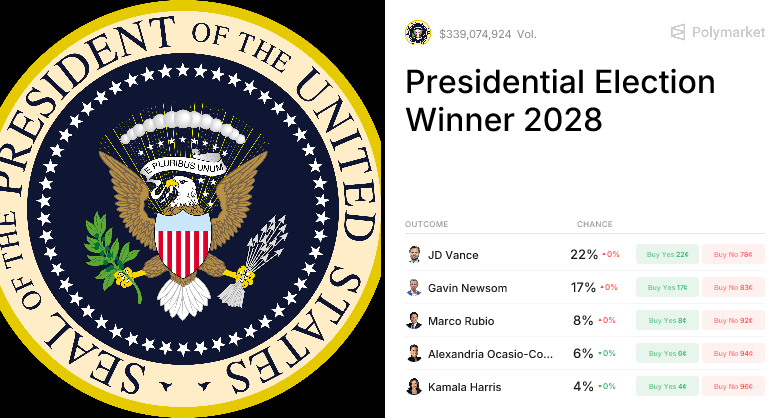
Successful trading in DeFi prediction markets requires understanding the unique characteristics of governance outcome prediction, oracle reliability, and platform-specific dynamics. Traders must develop strategies that account for the complex interplay between protocol governance, market manipulation risks, and regulatory compliance requirements (2028 Presidential election prediction market).
The most effective strategies combine fundamental analysis of protocol governance dynamics with technical analysis of market pricing and liquidity patterns. Traders who can identify mispricings between governance outcome predictions and underlying token prices often achieve superior returns while providing valuable signals to protocol participants.
Governance Outcome Arbitrage Strategies
Governance outcome arbitrage involves identifying mispricings between prediction market odds and actual governance voting patterns. These opportunities arise from information asymmetry, market manipulation, or temporary liquidity imbalances that create pricing discrepancies exploitable by sophisticated traders.
Successful governance arbitrage requires deep understanding of protocol governance dynamics, community sentiment, and the complex interactions between different stakeholder groups. Traders must also account for oracle reliability and potential manipulation risks when executing these strategies.
Platform-Specific Trading Opportunities
Each prediction market platform offers unique trading opportunities based on its specific characteristics, user base, and governance model. Polymarket’s liquidity advantages create opportunities for large position execution, while OPINION’s decentralized governance appeals to traders seeking maximum autonomy and community-driven markets (UFC prediction markets).
Predict Fun’s niche community markets provide opportunities for traders with specialized knowledge of specific topics or communities. Kalshi’s regulated environment offers stability and institutional participation opportunities that decentralized platforms cannot match, though at the cost of some innovation potential.
Risk Management in DeFi Prediction Markets
Effective risk management in DeFi prediction markets requires understanding the unique risks associated with governance outcome prediction, oracle manipulation, and platform-specific vulnerabilities. Traders must develop comprehensive risk management frameworks that account for both market-specific and systemic risks.
The most successful traders combine position sizing strategies with diversification across platforms and governance outcomes. This approach helps mitigate the impact of individual market failures while maintaining exposure to the overall growth of DeFi prediction markets as governance infrastructure.
Oracle Risk Mitigation Strategies
Oracle risk represents one of the most significant threats to DeFi prediction market integrity. Traders must develop strategies to identify and mitigate oracle manipulation risks, including diversification across multiple oracle providers, monitoring oracle data feed reliability, and maintaining positions that can profit from oracle failures.
Understanding the specific oracle mechanisms used by different platforms helps traders identify potential vulnerabilities and develop appropriate hedging strategies. UMA’s optimistic oracle model creates different risks than Chainlink’s decentralized oracle networks, requiring platform-specific risk management approaches.
Platform Risk Assessment and Diversification
Platform risk assessment involves evaluating the technical, regulatory, and governance risks associated with each prediction market platform. Traders must consider factors such as smart contract security, regulatory compliance status, governance model sustainability, and competitive positioning when allocating capital across platforms.
Diversification across platforms helps mitigate the impact of individual platform failures while maintaining exposure to the overall growth of DeFi prediction markets. This approach requires understanding the unique characteristics and risk profiles of each platform while maintaining sufficient capital allocation to achieve meaningful returns.
Future Trends and Evolution of DeFi Prediction Markets
The future of DeFi prediction markets lies in their evolution from betting platforms to sophisticated governance infrastructure. This transformation will be driven by increasing protocol integration, regulatory maturation, and the growing recognition of prediction markets as essential tools for decentralized decision-making, including Bitcoin prediction markets that trade price and adoption events.
Traders who understand this evolution and position themselves accordingly will be best positioned to profit from the continued growth and maturation of DeFi prediction markets as governance infrastructure. The ability to accurately predict governance outcomes and understand protocol dynamics will become increasingly valuable as these markets mature.
Integration with DeFi Protocol Infrastructure
The integration of prediction markets with broader DeFi protocol infrastructure will create new opportunities for traders and protocol participants. This integration includes lending protocols, yield generation mechanisms, automated market makers, and governance frameworks that create complex interdependencies and arbitrage opportunities.
Traders who understand these integrations and their implications for governance outcome prediction will be best positioned to profit from the continued evolution of DeFi prediction markets. The ability to navigate complex protocol interactions and identify mispricings across integrated systems will become increasingly valuable.
Regulatory Maturation and Institutional Adoption
Regulatory maturation will play a crucial role in the evolution of DeFi prediction markets, with clearer frameworks enabling institutional participation while potentially limiting some decentralization benefits. Platforms that successfully navigate this regulatory landscape while maintaining innovation potential will achieve sustainable competitive advantages.
Institutional adoption will bring increased liquidity, reduced volatility, and greater market efficiency to DeFi prediction markets. However, it may also reduce some of the profit opportunities that currently exist due to information asymmetry and market inefficiencies. Traders must adapt their strategies to this evolving landscape while maintaining their competitive edge.
Conclusion: Mastering DeFi Prediction Markets for Protocol Success
DeFi prediction markets represent a fundamental shift in how decentralized protocols make decisions and how traders can profit from governance outcome predictions. The $550M+ TVL and Polymarket’s 60% market dominance demonstrate the maturation of this ecosystem from simple betting platforms to sophisticated governance infrastructure.
Successful participation in DeFi prediction markets requires understanding the complex interplay between protocol governance, oracle reliability, regulatory compliance, and platform-specific dynamics. Traders who master these elements while developing effective risk management strategies will be best positioned to profit from the continued evolution of these markets as essential DeFi infrastructure.
The future of DeFi prediction markets lies in their integration with broader protocol infrastructure and their maturation as governance tools. Traders who understand this evolution and position themselves accordingly will capture the significant opportunities that continue to emerge in this rapidly evolving ecosystem.