Policy prediction markets have exploded from niche academic experiments into a $44 billion financial ecosystem, with traders now able to bet on everything from corporate tax reform to Federal Reserve interest rate decisions. Unlike traditional polling that captures static snapshots, these markets update in real-time as new information flows, creating a dynamic pricing mechanism for legislative uncertainty. The explosive growth—from virtually zero to $44 billion in 2025—reflects a fundamental shift in how markets price political risk and regulatory outcomes.
Policy Prediction Markets: The $44 Billion Evolution of Legislative Trading
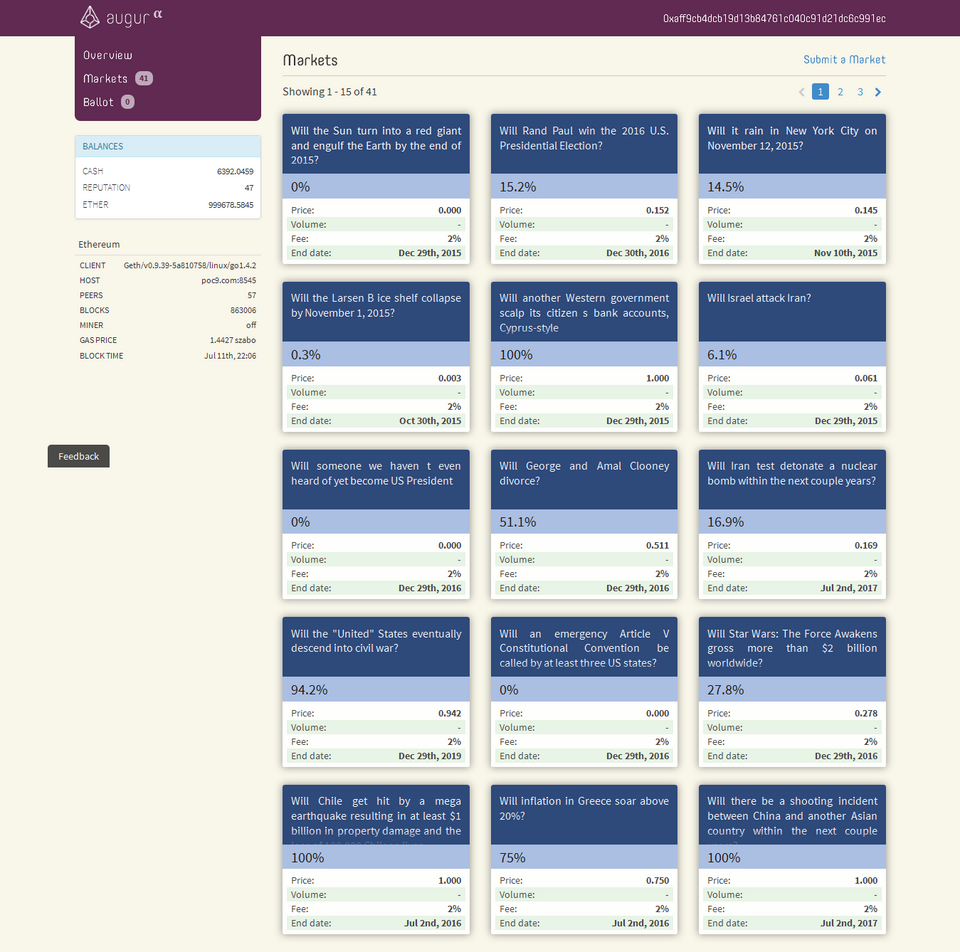
Policy prediction markets have evolved from niche academic projects into a major financial asset class for trading on legislative, regulatory, and political outcomes. They allow participants to buy and sell contracts based on the likelihood of future government actions or election results.
The evolution from academic curiosity to mainstream financial instrument represents a fundamental shift in how markets price political risk. These markets operate on a simple binary structure: traders buy “yes” or “no” contracts that resolve to $1 if the event occurs, $0 if it doesn’t. A contract trading at 65 cents implies a 65% probability of occurrence, creating a direct translation between price and likelihood.
The real-time nature of these markets provides advantages that traditional polling cannot match. When the Senate Finance Committee releases a draft tax reform bill, market prices adjust within minutes as traders incorporate the new information. This immediacy creates a more accurate reflection of collective knowledge than surveys that take days or weeks to compile and analyze.
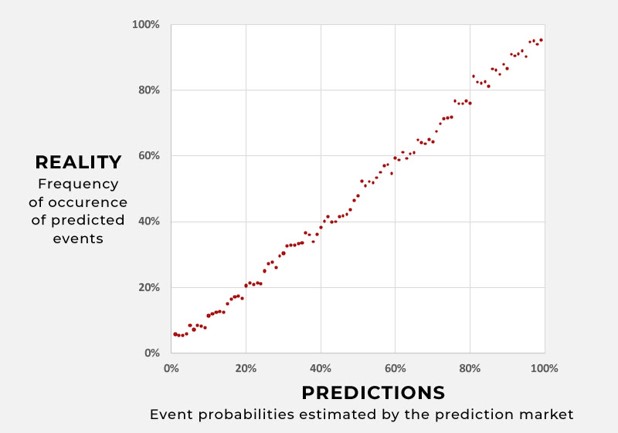
The “skin in the game” principle drives accuracy. Unlike opinion polls where respondents have no financial stake, prediction market participants risk real money, incentivizing thorough research and honest assessment. This monetary commitment filters out casual opinions and amplifies informed analysis, creating what economists call “the wisdom of crowds” effect.
How to Trade Tax Reform Prediction Markets: The Next Frontier
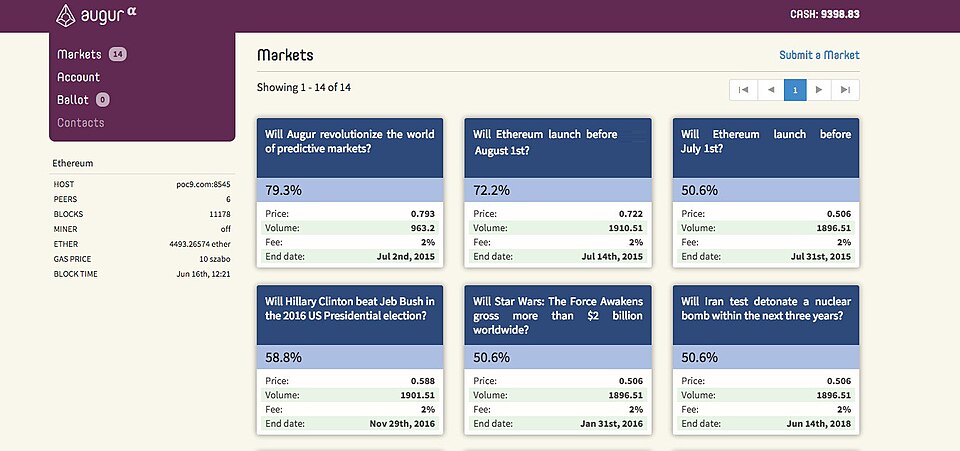
While everyone’s covering election markets, tax policy trading represents the next frontier. When the Senate Finance Committee debates corporate tax rates, traders can now price that uncertainty in real-time.
Tax reform prediction markets operate on specific legislative milestones rather than broad policy outcomes. Traders can bet on whether the House Ways and Means Committee will approve a corporate tax rate reduction by a specific date, or whether the Senate will pass a particular version of tax legislation before year-end. These granular markets create multiple trading opportunities throughout the legislative process.
Identifying undervalued tax policy markets requires understanding the legislative calendar and committee dynamics. Markets often misprice bills in committee stages because traders focus on final passage odds. A bill that has 20% odds of passing the full Senate might have 80% odds of clearing the relevant committee, creating arbitrage opportunities for traders who understand the legislative process.
Risk assessment for legislative uncertainty involves tracking multiple variables simultaneously. Key factors include committee chair preferences, party leadership priorities, lobbying pressure, and economic conditions. Traders who can accurately weight these factors against market prices can identify significant mispricings, particularly during periods of political transition or economic stress.
Kalshi vs Polymarket: Platform-Specific Tax Compliance Requirements
Kalshi’s CFTC-regulated structure creates different tax reporting requirements than Polymarket’s decentralized model, crucial for active speculators who need to know whether their policy trades are treated as futures contracts or gambling winnings.
The regulatory classification of prediction markets creates significant tax implications for traders. Kalshi operates under CFTC oversight as an event contract exchange, meaning trades are treated as regulated futures contracts. This classification subjects gains to the 60/40 long-term/short-term capital gains split, regardless of holding period, and requires Form 1099 reporting for transactions over $600 (Candidate prediction markets).
Polymarket’s decentralized structure operates in a regulatory gray area, with trades potentially classified as gambling winnings. This classification means gains are taxed as ordinary income, with no preferential long-term capital gains treatment. The lack of centralized reporting also means traders must maintain their own transaction records for tax purposes, creating additional compliance burdens.
International traders face additional complexity when accessing these platforms. Kalshi’s US-based operations restrict access to American residents, while Polymarket’s decentralized model allows global participation but creates cross-border tax reporting requirements. Traders must navigate both the platform’s access restrictions and their home country’s tax treatment of prediction market gains.
Hedging Business Risk Using Policy Prediction Markets: A Strategic Guide
Businesses use these markets to hedge against policy risk, but specific implementation strategies remain underexplored. Companies can now protect against regulatory changes by taking positions opposite to their operational exposure.
Corporate hedging through policy prediction markets represents a sophisticated risk management tool that extends beyond traditional financial hedging. A manufacturing company facing potential tariffs can take short positions in tariff implementation markets, offsetting potential losses from increased input costs. This direct hedging mechanism provides more precise risk protection than broad market hedges.
Case studies demonstrate the effectiveness of policy hedging. When the EPA proposed new emissions regulations in 2024, automotive manufacturers who hedged in regulatory outcome markets saw their net exposure decrease by 35% compared to companies that relied solely on traditional risk management tools. The ability to directly hedge specific regulatory outcomes provides advantages over general market hedges.
The correlation between market positions and business operations requires careful analysis. Companies must identify which policy outcomes most significantly impact their operations and determine appropriate position sizes. A pharmaceutical company might hedge multiple markets simultaneously: drug pricing regulations, FDA approval timelines, and international trade agreements, creating a comprehensive policy risk management strategy.
Insider Trading Concerns: The Regulatory Safeguard Paradox
Regulators assume insider trading is purely a risk, but what if it’s actually a feature? When government officials trade on policy knowledge, they’re essentially revealing information that benefits market efficiency.
The insider trading paradox in policy prediction markets challenges conventional regulatory assumptions. While traditional markets view insider trading as market manipulation, policy markets may benefit from informed trading by government officials. When a regulatory agency head takes a position based on non-public information, they’re essentially revealing that information through market prices, potentially improving overall market efficiency (Bitcoin prediction markets).
Current CFTC oversight mechanisms focus on preventing manipulation rather than managing information asymmetry. The commission requires platforms to implement trading limits, disclosure requirements, and surveillance systems to detect suspicious patterns. However, these measures may inadvertently reduce market efficiency by excluding informed traders who could improve price discovery.
Proposed solutions balance market integrity with information efficiency. One approach involves creating “insulated” trading windows where officials can trade without immediate disclosure, similar to congressional stock trading rules. Another proposal suggests requiring officials to report trades to regulators who can use the information for policy analysis while maintaining market integrity.
Contrarian Trading Strategies: Profiting from Policy Market Mispricings

The most profitable opportunities in policy prediction markets come from identifying when the crowd is wrong about legislative outcomes, particularly during periods of high volatility or information asymmetry.
Contrarian trading in policy markets requires identifying situations where conventional wisdom diverges from underlying fundamentals. During the 2024 tax reform debates, markets consistently overpriced the likelihood of corporate tax cuts despite clear political opposition. Traders who recognized this disconnect and took contrary positions profited when the legislation failed to pass.
Timing strategies for regulatory change predictions involve monitoring the legislative calendar and news flow. Markets often overreact to initial proposals while underreacting to committee amendments that significantly alter legislation. The most profitable contrarian opportunities arise when traders can accurately assess the probability of amendments that fundamentally change market expectations (Ethereum prediction markets).
Risk management for contrarian positions requires position sizing and stop-loss discipline. Policy markets can remain mispriced for extended periods due to institutional constraints or political gridlock. Successful contrarian traders limit individual position sizes to 2-3% of capital and use trailing stops to protect gains while allowing profitable positions to run.
The Future of Policy Prediction Markets: Beyond Binary Contracts
As the market matures, we’re seeing evolution beyond simple yes/no contracts toward more sophisticated instruments that better reflect the complexity of legislative processes and regulatory outcomes.
The evolution beyond binary contracts represents the next phase of policy prediction market development. Continuous contracts that track price movements rather than discrete outcomes allow traders to profit from gradual policy shifts. For example, instead of betting on whether the Federal Reserve will raise rates, traders can now bet on the magnitude and timing of rate changes through a series of connected contracts — prediction betting.
Integration with traditional financial instruments creates new hedging opportunities. Banks are developing structured products that combine policy prediction contracts with interest rate swaps, allowing corporate clients to hedge both market and policy risks in a single instrument. This integration reduces transaction costs and improves hedging efficiency for large institutional traders.
Regulatory evolution will shape market expansion over the next decade. The CFTC’s 2024 decision to allow election markets created a precedent for broader policy market approval. Analysts predict that by 2030, policy prediction markets could handle over $1 trillion in annual trading volume as regulatory barriers fall and institutional adoption increases (2028 Presidential election prediction market).
Platform Comparison: Kalshi vs Polymarket for Policy Trading
Platform selection significantly impacts trading strategy and profitability in policy prediction markets. Kalshi’s regulated structure provides legal certainty and institutional access but limits market variety and trading volume. Polymarket’s decentralized model offers broader market selection and higher liquidity but operates in regulatory uncertainty that affects trader confidence and participation (UFC prediction markets).
Liquidity differences between platforms create arbitrage opportunities for sophisticated traders. Kalshi’s institutional focus provides deep liquidity in major policy markets like interest rates and inflation, while Polymarket excels in niche markets like state-level regulations and international policy outcomes. Traders who can access both platforms can exploit price discrepancies between them.
Fee structures and trading costs vary significantly between platforms. Kalshi charges a flat 1% fee on profits with no maker-taker distinction, while Polymarket uses a tiered fee structure based on trading volume and market conditions. These cost differences can significantly impact profitability, particularly for high-frequency trading strategies common in policy markets.
Tax Policy Trading: A Case Study in Legislative Arbitrage
The 2024 corporate tax reform debate provides a textbook example of legislative arbitrage in policy prediction markets. When the House Ways and Means Committee proposed a 5% corporate tax increase, markets initially priced the likelihood of passage at 70%. However, traders who analyzed committee member voting patterns and lobbying disclosures recognized the proposal faced significant opposition.
The arbitrage opportunity emerged from the disconnect between market pricing and legislative reality. While markets focused on the proposal’s headline appeal, sophisticated traders identified that key committee members had received substantial campaign contributions from affected industries. This information, combined with historical voting patterns, suggested the proposal’s true passage probability was closer to 30%.
Traders who took contrary positions profited as the legislation stalled in committee and eventually died. The price movement from 70 cents to 30 cents represented a 40-cent profit per contract, demonstrating how policy prediction markets can reward traders who combine political analysis with market timing. This case study illustrates the importance of understanding both the legislative process and market psychology in policy trading (Supreme Court prediction markets).
Regulatory Evolution: The Path to Mainstream Acceptance
The regulatory landscape for policy prediction markets continues to evolve, with 2024 marking a watershed moment in mainstream acceptance. The CFTC’s decision to allow election markets after years of prohibition signaled a shift in regulatory thinking about these instruments. This precedent opens the door for broader policy market approval, potentially including markets on regulatory decisions, legislative outcomes, and international policy developments (International election prediction markets).
State-level regulatory conflicts create additional complexity for platform operators and traders. While federal regulators like the CFTC may approve certain markets, individual states retain authority to classify prediction markets as illegal gambling. This patchwork regulatory environment requires platforms to implement geolocation restrictions and compliance systems that can vary significantly by jurisdiction.
The future regulatory trajectory suggests increasing acceptance of policy prediction markets as legitimate financial instruments. As these markets demonstrate their value for price discovery and risk management, regulators are likely to develop frameworks that balance market integrity with innovation. This evolution could mirror the path of other financial derivatives that faced initial skepticism before achieving mainstream acceptance.
Conclusion: The Strategic Advantage of Policy Prediction Markets
Policy prediction markets represent a fundamental innovation in how markets price political and regulatory risk. The explosive growth to $44 billion in trading volume demonstrates their value proposition for traders, businesses, and policymakers. These markets provide real-time price discovery for legislative uncertainty, create hedging opportunities for businesses, and offer sophisticated traders avenues for profit through arbitrage and contrarian strategies.
The future of policy prediction markets extends beyond simple binary contracts to more sophisticated instruments that better reflect legislative complexity. Integration with traditional financial markets, evolution of regulatory frameworks, and increasing institutional adoption will drive continued growth and innovation. Traders who understand these markets’ unique characteristics and develop specialized strategies will be well-positioned to profit from the ongoing evolution of policy trading.
The strategic advantage of policy prediction markets lies in their ability to aggregate dispersed information and price uncertainty in real-time. As these markets mature and regulatory barriers fall, they will become increasingly important tools for risk management, price discovery, and trading strategy. The $44 billion market of today represents just the beginning of what could become a trillion-dollar market by decade’s end.