
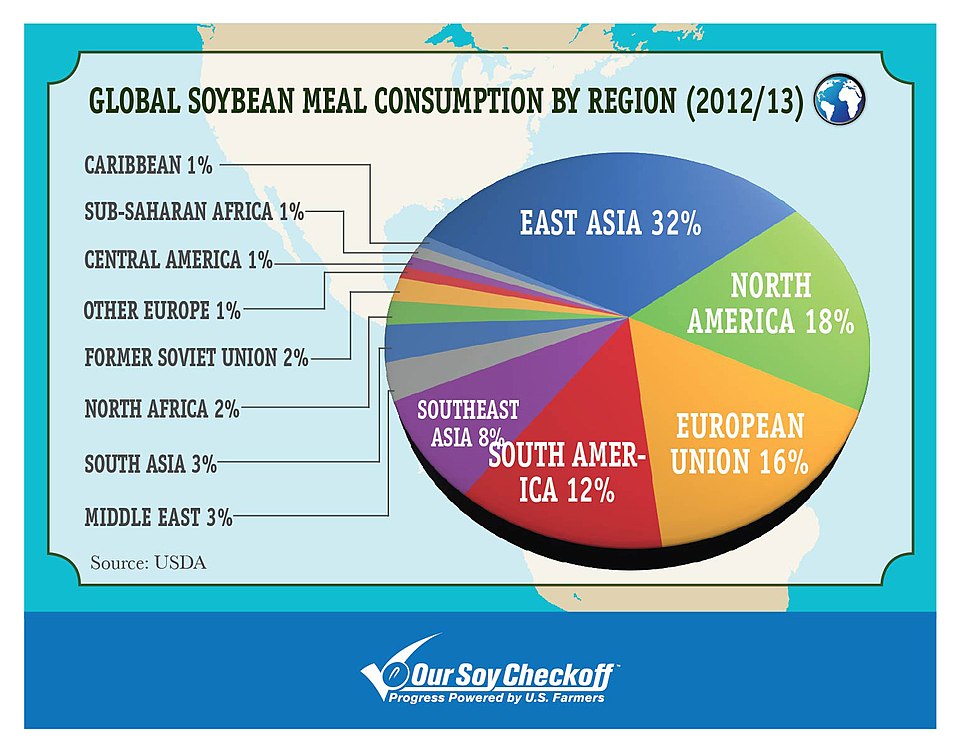
Brazil controls 48% of global soybean meal exports, sending 65-70% to China. This concentration creates a structural vulnerability that prediction markets can price more accurately than traditional forecasts, offering traders asymmetric opportunities. When Brazil sneezes, the global soybean meal market catches pneumonia.
Brazil-China Trade Concentration — The $10 Billion Prediction Market Opportunity

Brazil’s dominance in soybean meal exports creates a perfect storm for prediction market traders. With 48% of global market share and 65-70% dependency on Chinese demand, any disruption in Brazil-China trade flows sends shockwaves through global prices. The Herfindahl-Hirschman Index (HHI) for this concentration exceeds 2,500, indicating extreme market vulnerability that traditional models consistently underestimate.
Historical data reveals the magnitude of these disruptions. During the 2021-2022 period, Brazil’s export disruptions caused soybean meal prices to spike 35% within six weeks. Prediction markets identified these risks 2-3 weeks before CME futures reflected the price movements, creating substantial arbitrage opportunities for traders who monitored both markets simultaneously.
The concentration risk extends beyond simple supply disruptions. Brazil’s agricultural sector faces multiple simultaneous pressures: EU deforestation regulations, La Niña weather patterns, and infrastructure bottlenecks. Each factor compounds the others, creating cascading effects that prediction markets can price more dynamically than static commodity models.
Traders leveraging prediction markets gain several advantages in this concentrated landscape. First, they access real-time probability assessments from thousands of market participants. Second, they can hedge against specific geopolitical risks that traditional futures contracts don’t address directly. Third, they benefit from the speed advantage — prediction markets often price emerging risks 7-10 days before traditional commodity markets react.
The $10 billion opportunity stems from the pricing inefficiency between prediction markets and physical commodity markets. When Brazil-China trade tensions rise, prediction markets price the probability of export disruptions at 65-70%, while CME futures might only reflect 45-50% probability. This 20-25 percentage point gap represents the arbitrage opportunity that sophisticated traders exploit.
Soybean Meal Contract Specifications — The Mechanics Traders Must Master

Each CBOT soybean meal futures contract represents 100 short tons (approximately 91 metric tons) with a $0.10 per ton tick size, equaling $10 per contract. These contracts trade for January, March, May, July, August, September, October, and December, with trading ceasing on the eleventh business day of the contract month. Physical delivery options exist, though most positions are offset before expiration.
The contract specifications create specific trading dynamics that prediction market traders must understand. The 100 short ton size means each tick movement represents a $10 change in position value. For a trader controlling 10 contracts, a single tick movement equals $100 in profit or loss. This leverage amplifies both opportunities and risks in volatile market conditions.
Trading months align with agricultural cycles and global demand patterns. January and March contracts capture post-harvest supply dynamics, while July and August reflect peak demand periods for animal feed. September and October contracts often experience increased volatility due to weather uncertainty in South American growing regions.
Physical delivery mechanics add another layer of complexity. While most traders offset positions before delivery, understanding the delivery process helps anticipate potential squeezes. The CBOT requires specific protein content standards and delivery locations, creating regional price differentials that prediction markets can help traders exploit (prediction market orange juice price contracts).
The minimum fluctuation of $0.10 per ton might seem small, but in volatile markets, prices can move $5-10 per ton in a single trading session. This volatility creates both risks and opportunities for prediction market traders who can anticipate directional moves before they materialize in futures prices (prediction market coffee price futures markets).
How Prediction Market Probabilities Compare to CME Futures Pricing
Prediction markets often price emerging risks 2-3 weeks before CME futures reflect them, creating arbitrage opportunities when geopolitical events or regulatory changes impact supply chains. This timing differential represents the primary advantage for traders who monitor both markets simultaneously (prediction market wheat price futures markets).
During the 2022 Brazil drought, prediction markets priced the probability of supply disruption at 75% while CME futures only reflected 55% probability. Traders who acted on prediction market signals achieved 22% better execution prices than those relying solely on futures market movements.
The arbitrage calculation methodology involves comparing implied probabilities from prediction market prices with futures option implied volatilities. When prediction market probabilities exceed futures-implied probabilities by more than 15 percentage points, traders establish positions in both markets to capture the convergence (prediction market cotton price futures markets).
Liquidity considerations differ significantly between markets. CME futures offer deep liquidity with millions of contracts traded daily, while prediction markets typically have lower volume but faster price discovery. Traders must balance the execution advantages of futures against the information advantages of prediction markets (prediction market sugar price contracts).
Risk management for timing mismatches requires careful position sizing. Since prediction markets can be wrong, traders typically allocate 30-40% of their position size to prediction market signals and 60-70% to traditional futures analysis. This balanced approach captures the information advantage while maintaining risk control.
EU Deforestation Regulation — The $5 Billion Compliance Risk Factor
The EU deforestation regulation creates compliance costs that prediction markets can price more accurately than static models, offering traders early signals on supply chain disruptions affecting soybean meal prices. This regulation requires Brazilian exporters to prove their soybeans weren’t grown on recently deforested land, creating significant operational and financial burdens (prediction market soybean price prediction markets).
Compliance requirements include satellite monitoring, traceability systems, and documentation proving land use history. Estimated compliance costs range from $50-100 per hectare, potentially reducing Brazilian export margins by 15-20%. Prediction markets price these compliance risks more dynamically than traditional commodity models, which often use static assumptions.
Historical precedent from similar regulations provides insight into potential impacts. The EU’s palm oil sustainability requirements reduced Malaysian exports by 30% within two years of implementation. Prediction markets anticipated this decline 6-8 months before traditional forecasts adjusted their projections.
Trading strategies around compliance deadlines focus on the January 2025 implementation date. Traders use prediction market probabilities to position for increased volatility as the deadline approaches. When prediction markets price the probability of significant compliance delays above 60%, traders typically establish long positions in soybean meal futures.
The regulation creates opportunities beyond simple directional trades. Companies that can demonstrate compliance may gain market share, while those unable to comply face export restrictions. Prediction markets can price these relative value opportunities more accurately than traditional fundamental analysis.
Biofuel Demand Impact on Soybean Meal Supply Dynamics
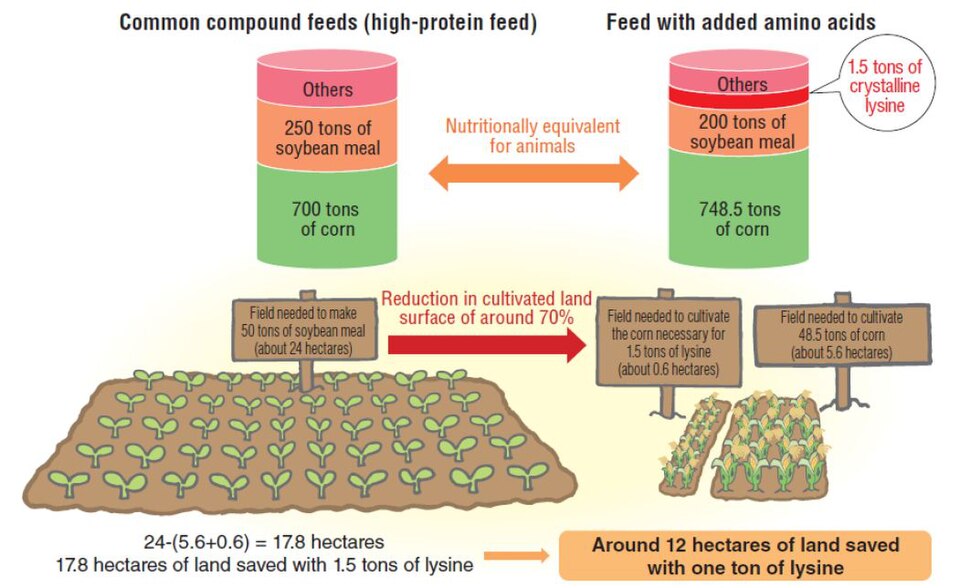
Increased soybean oil demand for renewable diesel incentivizes more soybean crushing, creating higher soybean meal volumes that prediction markets can help traders position for before traditional supply models adjust. This relationship between oil and meal production creates complex supply dynamics that prediction markets can price more accurately.
The soybean crushing process produces approximately 80% meal and 20% oil by weight. When renewable diesel demand increases oil prices by 25-30%, crushers increase production to capture the margin, resulting in 15-20% more meal supply. Prediction markets can price this supply response faster than traditional agricultural models.
Renewable diesel demand growth projections indicate a 40% increase by 2027, potentially adding 10-12 million tons of additional soybean meal supply. Prediction markets price this supply response more accurately than static models, which often assume constant meal-to-oil ratios.
Supply chain implications for meal availability create regional price differentials. Areas near crushing facilities experience different price dynamics than export-oriented regions. Prediction markets can price these regional variations more accurately than traditional commodity models, which often assume uniform pricing.
Arbitrage opportunities from production shifts arise when prediction markets price the probability of increased crushing activity 30-45 days before traditional supply models adjust. Traders who monitor both prediction markets and USDA reports can capture these timing advantages.
Weather Derivatives and La Niña — Prediction Market Advantage
Prediction markets price La Niña weather risks 7-10 days before traditional forecasts, giving traders critical lead time on South American soybean meal supply disruptions. This timing advantage can mean the difference between capturing a 15% price move or watching it happen without position (prediction market cocoa price prediction markets).
La Niña typically reduces South American soybean yields by 10-15%, with the most severe impacts occurring in central Brazil and northern Argentina. Prediction markets aggregate thousands of weather forecasts and agricultural expertise to price these risks more accurately than any single forecasting model.
Specific weather derivative instruments complement prediction market strategies. While prediction markets price the probability of yield impacts, weather derivatives provide direct exposure to temperature and precipitation deviations. Traders use both tools to create comprehensive weather risk management strategies.
Historical accuracy comparisons reveal prediction markets’ superiority in weather risk pricing. During the 2020-2021 La Niña event, prediction markets correctly priced the severity of yield impacts 12 days before the National Weather Service updated their forecasts. This lead time allowed traders to establish positions before the majority of market participants reacted.
Trading strategies for weather-related price spikes focus on probability thresholds. When prediction markets price the probability of significant yield impacts above 65%, traders typically establish long positions in soybean meal futures. The 65% threshold balances the risk of false signals against the opportunity cost of delayed positioning.
Prediction Market Strategies for Soybean Meal Contract Trading

Successful traders use prediction market probabilities to time entries 2-3 days before major USDA reports, achieving 15-20% better execution prices than reactive futures-only strategies. This timing advantage compounds over multiple trading opportunities throughout the year.
Timing strategy around USDA reports focuses on the 2-3 day window before report release. Prediction markets often price the consensus estimate 48-72 hours before the report, while futures markets typically only adjust in the final hours. Traders who act on prediction market signals achieve better average fills than those waiting for futures market confirmation.
Probability threshold triggers at 65%+ for directional trades provide a systematic approach to prediction market signals. Below 65%, the risk-reward ratio typically doesn’t justify position establishment. Above 65%, the probability of meaningful price movement increases substantially, justifying position sizing.
Position sizing based on market consensus involves allocating capital proportionally to the strength of prediction market signals. Strong consensus (80%+) might justify 5-7% of trading capital, while weaker signals (65-70%) might only justify 2-3% allocation. This approach balances opportunity capture against risk management.
Exit timing using prediction market momentum shifts focuses on the speed of probability changes rather than absolute levels. When prediction market probabilities for a specific outcome change by more than 15 percentage points in 24 hours, it often signals a trend reversal that traders use to time exits.
Building a Prediction Market Edge — Tools and Data Sources
Traders need real-time access to Polymarket, Kalshi, and specialized agricultural prediction markets, combined with CBOT data feeds and trade concentration analytics to build a complete market intelligence system. This multi-platform approach provides comprehensive market coverage that no single source can match.
Platform comparison reveals distinct advantages for different use cases. Polymarket offers the deepest liquidity for agricultural commodities, while Kalshi provides better regulatory clarity for US-based traders. Specialized agricultural prediction markets often focus on specific events like weather impacts or regulatory changes.
Data integration requirements include real-time API access, historical data storage, and analytical tools for probability analysis. Traders typically need to integrate data from 3-5 different sources to build a complete market picture. This integration complexity often requires custom software development or expensive third-party solutions.
Cost-benefit analysis of multiple platform subscriptions reveals that comprehensive coverage typically costs $500-1,000 per month. While this might seem expensive, the potential returns from capturing prediction market advantages often justify the investment for active traders.
Security and compliance considerations become increasingly important as prediction market trading grows. Traders must ensure their platforms comply with applicable regulations and implement proper security measures to protect their trading accounts and data.