
How Contract Pricing Reveals Market Sentiment in 2026
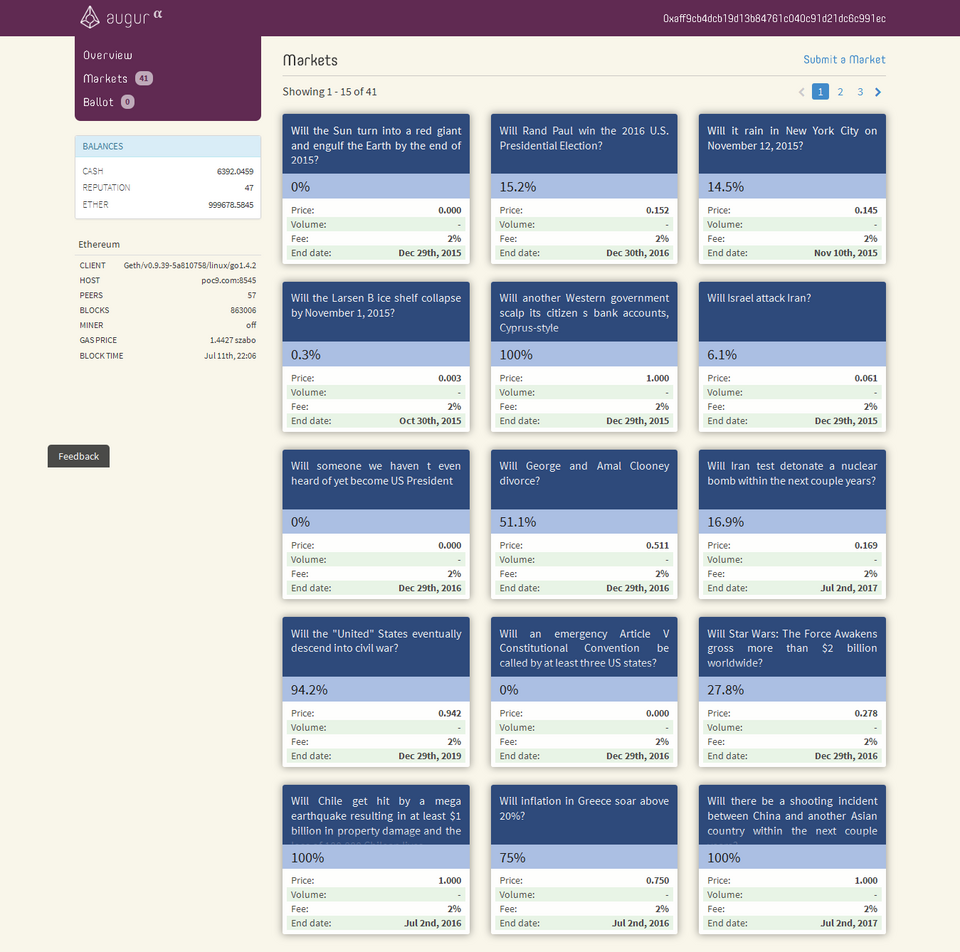
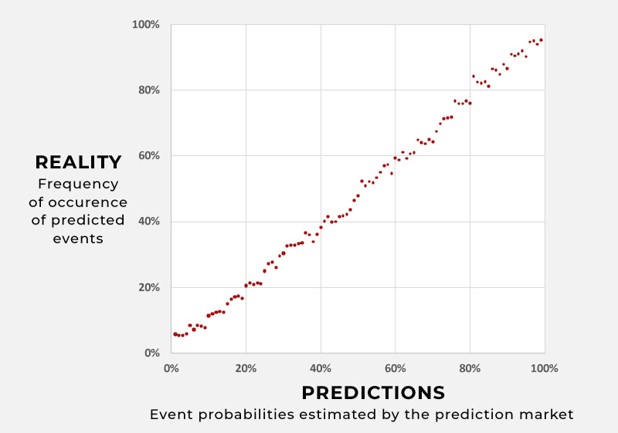
Contract prices in prediction markets directly reflect the market’s collective probability assessment of an event. A contract trading at $0.75 indicates a 75% market-implied probability of the event occurring. Analyzing these prices, especially in relation to other indicators, offers valuable insights into overall market sentiment.
- Price as probability: Contract prices directly represent market-implied probabilities (e.g., $0.60 price = 60% probability). This is the bedrock of sentiment analysis in prediction markets. A price of $0.60 for a “Yes” contract signifies a 60% likelihood the event will happen.
- Liquidity validation: High trading volume confirms price signals are reliable and not manipulated. Without sufficient liquidity, price movements can be easily skewed by a few large trades.
- Bid-ask spread analysis: Narrow spreads indicate strong consensus, while wide spreads signal uncertainty. Tight bid-ask spreads, where buyers and sellers are closely aligned, reflect a confident market. Wider spreads suggest disagreement or a lack of conviction.
- Price momentum tracking: Rapid price movements toward extremes often precede trend reversals. Observing the speed at which a contract’s price approaches $1.00 or $0.00 can signal growing certainty or panic, potentially indicating an overbought or oversold condition.
Order Book Depth and Social Media Buzz: The Early Warning System
Combining the granular data from order books with the broader sentiment expressed on social media provides a powerful early warning system for traders. This fusion can highlight shifts in market conviction often missed by traditional analysis, unveiling informed trader positioning before retail investors react.
- Institutional conviction detection: Heavy limit orders on one side combined with social sentiment shifts reveal informed trader positioning. Imagine spotting a large buy wall in the order book while social media buzz starts echoing the same bullish sentiment – a potential signal of institutional accumulation before a breakout.
- Retail euphoria timing: Social media sentiment often peaks 24-48 hours before price reversals, creating arbitrage opportunities. According to gomoon.ai, monitoring platforms like X (formerly Twitter) and Reddit (e.g., r/WallStreetBets) for sudden shifts from caution to euphoria can provide clues about impending price reversals.
- Volume-weighted order analysis: Large block trades with minimal price impact indicate sophisticated positioning. These stealthy moves, often executed by institutional traders, suggest a strategic accumulation or distribution of contracts without disrupting the market.
- Cross-platform sentiment correlation: X and Reddit sentiment alignment strengthens conviction signals. When similar sentiment patterns emerge on both platforms, it amplifies the signal’s reliability, suggesting a more widespread shift in market perception.
Volume-Price Divergence as a Contrarian Indicator
Volume-price divergence occurs when price action isn’t confirmed by volume, potentially signaling a weakening trend. This divergence can serve as a contrarian indicator, alerting traders to potential reversals before they materialize.
- Rising price, falling volume: Indicates weakening conviction and potential trend exhaustion. When prices climb but trading activity diminishes, it suggests that the rally is losing steam and may soon reverse.
- Volume spikes at resistance levels: Suggests institutional profit-taking and impending reversals. A surge in volume at a known resistance level often signals that large players are selling their positions, potentially triggering a price decline.
- Accumulation/distribution patterns: Large volume on up days vs. down days reveals smart money positioning. Observing whether volume is concentrated on upward or downward price movements can reveal the underlying sentiment of informed traders.
- Divergence duration analysis: Extended divergences often signal more significant reversals. The longer the divergence persists, the greater the likelihood of a substantial trend change, offering alert traders significant profit potential.
Time-to-Event Decay and News Sentiment for Kalshi Contract Resolution
As prediction market events approach their resolution, volatility tends to spike, creating unique trading opportunities. Analyzing time-to-event decay in conjunction with real-time news sentiment, especially on platforms like Kalshi, equips traders with prediction market scalping techniques for capitalizing on last-minute price swings.
- Accelerating decay patterns: As events approach, volatility increases exponentially, creating last-minute trading opportunities. The closer an event gets to its resolution, the more sensitive contract prices become to new information, leading to rapid price fluctuations.
- News volume correlation: NLP-scored news sentiment often leads price movements by 2-4 hours. AI-powered Natural Language Processing (NLP) can quickly analyze news articles and headlines to gauge market sentiment, potentially predicting short-term price movements.
- Platform-specific decay curves: Kalshi contracts show unique decay patterns compared to decentralized platforms. Regulated platforms like Kalshi may exhibit different decay characteristics due to regulatory oversight and participant demographics.
- Resolution volatility windows: Final 24 hours before settlement offer the highest risk-reward ratios. While risky, the final hours before an event’s resolution often present the most lucrative trading opportunities due to heightened volatility.
Sentiment Velocity and Order Book Imbalance Prediction
Sentiment velocity, the speed at which prices change, combined with order book imbalances, can provide valuable insights into the strength and sustainability of a trend. This combination helps traders gauge the conviction behind price movements and predict potential contract resolutions.
- Price movement urgency: Rapid price changes toward 100 or 0 indicate strong conviction behind outcomes. The faster a contract price moves towards its extreme values, the more confident the market is in the event’s outcome.
- Order book skew analysis: Heavy concentration of bids or asks reveals directional conviction. A significant imbalance in the order book, with a large number of buy or sell orders clustered at certain price levels, indicates strong directional bias.
- Velocity-volume correlation: High velocity with high volume confirms trend strength. When prices move rapidly and trading volume is high, it confirms that the trend is driven by strong market participation and conviction.
- Platform liquidity impact: Higher liquidity reduces false velocity signals. In highly liquid markets, price movements are less susceptible to manipulation, making sentiment velocity a more reliable indicator.
Contrarian Strategies Using Put-Call Ratio and Poll Divergence
Contrarian trading involves betting against prevailing market sentiment. By using tools like the put-call ratio and analyzing prediction market correlation with polls, traders can identify mispriced opportunities and capitalize on potential reversals.
- Extreme ratio identification: Put-call ratios exceeding 2.5:1 often signal market bottoms. A high put-call ratio suggests that investors are overly pessimistic, potentially indicating an oversold condition and an impending price reversal.
- Poll-market divergence: When prediction markets contradict public polls, mispricing opportunities emerge. If prediction market prices significantly deviate from public opinion polls, it may highlight mispricing or insider sentiment.
- Insider sentiment detection: Heavy “No” share buying when polls show majority “Yes” support. This scenario can indicate that informed traders, potentially with access to non-public information, are betting against the prevailing public sentiment.
- Contrarian timing windows: Extreme sentiment often reverses within 48-72 hours. Historically, extreme sentiment readings tend to revert to the mean within a short timeframe, offering alert contrarian traders opportunities for quick profits.
Google Trends Validation of Retail-Driven Sentiment Moves
Google Trends data can be used to gauge retail interest in specific events, providing valuable insights into the potential for retail-driven price movements. By analyzing search volume and geographic patterns, traders can validate sentiment and identify opportunities before the broader market catches on.
- Search volume correlation: Google Trends data often precedes retail trading volume by 6-12 hours. Spikes in search volume for specific events can indicate growing retail interest, potentially foreshadowing increased trading activity.
- Geographic sentiment mapping: Regional search patterns reveal localized conviction differences. Analyzing search trends by region can reveal pockets of strong sentiment, potentially indicating areas where price movements are likely to be more pronounced.
- Event-driven search spikes: Major news events create predictable search-then-trade patterns. Big news events often trigger predictable patterns of increased search activity followed by increased trading volume.
- Retail vs. institutional validation: Google Trends confirms whether price moves are retail-driven. Google Trends confirms whether price moves are retail-driven, or driven by institutional traders tracking prediction market whale activity tracking.
Building Your 2026 Prediction Market Sentiment Dashboard
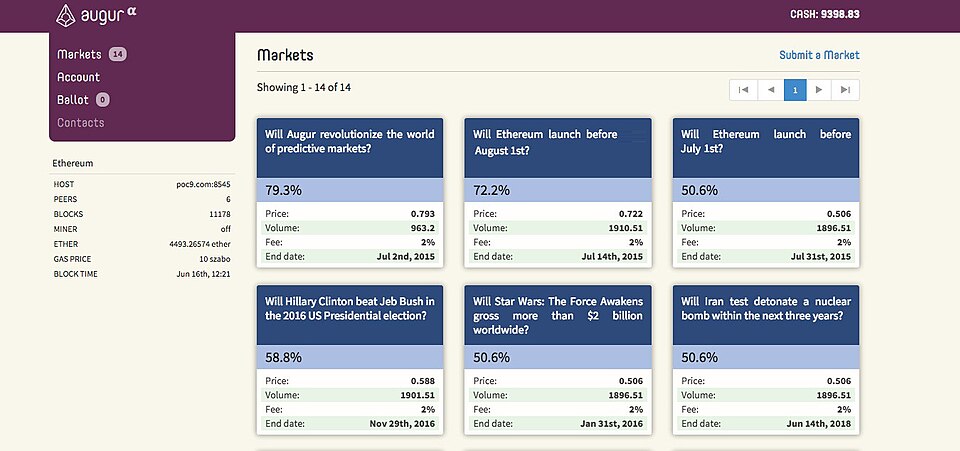
Creating a personalized dashboard that integrates multiple sentiment indicators is crucial for successful prediction market trading. By combining various metrics and setting up real-time monitoring with top prediction market mobile apps, traders can gain a comprehensive view of market sentiment and make more informed decisions.
- Multi-indicator weighting: Combine 3-5 indicators for more reliable signals than single metrics. Relying on a single indicator can be misleading. Combining multiple indicators, each with its own strengths and weaknesses, provides a more robust and reliable view of market sentiment.
- Real-time monitoring setup: Platform-specific tools for tracking sentiment across multiple markets. Many prediction market platforms offer tools for tracking real-time data and sentiment across different markets.
- Alert configuration: Set thresholds for volume-price divergence and sentiment velocity. Configuring alerts based on specific thresholds for key indicators ensures that you’re promptly notified of potential trading opportunities.
- Backtesting methodology: Validate indicator combinations using historical market data. Before deploying a sentiment-based trading strategy, it’s crucial to backtest it using historical market data to assess its effectiveness and identify potential weaknesses.
Common Sentiment Indicator Mistakes Traders Make in 2026

Even with the best tools and strategies, traders can fall victim to common mistakes when interpreting sentiment indicators. Understanding these pitfalls and how to avoid them is essential for maximizing trading success (how to withdraw from Polymarket).
- Overreliance on single metrics: Using only price or only volume ignores critical context. Focusing solely on one metric, such as price or volume, provides an incomplete picture of market sentiment.
- Ignoring liquidity conditions: Low-volume signals are unreliable and easily manipulated. Sentiment indicators are less reliable in low-liquidity markets, where price movements can be easily manipulated by a few large trades.
- Misinterpreting social media noise: Retail chatter often contradicts informed trader positioning. Social media sentiment can be noisy and unreliable, often reflecting the opinions of uninformed retail traders rather than informed professionals.
- Failing to account for time decay: Sentiment indicators become less reliable as events approach. As an event approaches its resolution, sentiment indicators become more volatile and less reliable, requiring traders to adjust their strategies accordingly.
In the fast-paced world of prediction markets, mastering sentiment indicators can provide a significant edge. By understanding how to interpret contract prices, analyze order book data, track social media trends, and avoid common pitfalls, traders can make more informed decisions and improve their odds of success. Remember to combine multiple indicators, account for liquidity conditions, and backtest your strategies to maximize your potential. What if analyzing prediction market price movements analysis became second nature? As 2026 unfolds, keep refining your approach to sentiment analysis and stay ahead of the curve. Are you ready to build your sentiment dashboard and take your trading to the next level? And before you execute your next trade, be sure you know understanding prediction market withdrawal fees in 2026.