2026 Prediction Market Mobile App Reviews: Top Picks
Are you tired of generic “user-friendly” app reviews that don’t tell you how these platforms really perform when you’re on the go? Prediction market traders need speed, usability, and real-time data to make informed decisions. We’re diving deep into the top mobile apps of 2026 – Kalshi and Polymarket – to give you the insights you need to trade with confidence. Our verdict? Both apps are excellent, but your choice depends on your trading style and risk tolerance. Kalshi shines with regulation and diverse markets, while Polymarket dominates with crypto integration and high volume tracked via prediction market whale activity tracking.
Kalshi Mobile App: Beyond “User-Friendly” – A Usability Deep Dive
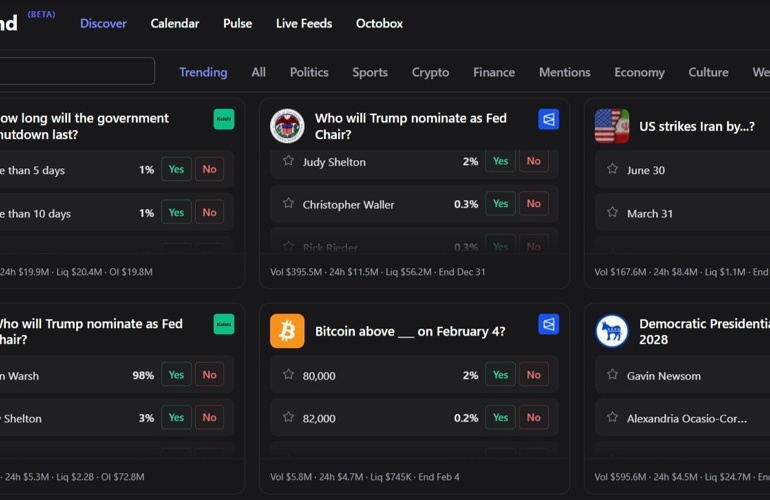
The Kalshi app is often praised for its intuitive interface, but here’s what you really need to know about its mobile usability: The Kalshi mobile app provides a streamlined, stock-exchange-like experience, boasting quick onboarding and intuitive navigation, but recent updates have separated key profit metrics, potentially hindering at-a-glance decision-making. This separation can slow down traders who need immediate insights. So, is it truly the best for on-the-go trading? Let’s find out.
Navigation & Layout
The Kalshi app’s navigation is generally one-handed-friendly, requiring approximately 3-4 taps to place a trade. The layout mirrors a stock exchange, making it familiar to finance-savvy users. But does this simplicity sacrifice crucial data visibility? Some users report that the placement of key profit metrics requires extra steps, potentially slowing down decision-making in fast-moving markets. This design choice reflects Kalshi’s focus on regulated, mainstream appeal (Casino.org, 2026).
Onboarding Experience
Account verification on Kalshi is impressively swift, often completed within minutes. The information required is standard KYC/AML compliance: proof of identity and address. But is this speed consistent during peak trading times? While AI Overviews suggest rapid verification, user experiences may vary. Remember, regulatory compliance is paramount, and Kalshi’s adherence ensures a secure trading environment, even if it means slightly more stringent onboarding than unregulated platforms.
Mobile-Specific Challenges
The app adeptly handles limited screen real estate by prioritizing essential data. Charts and data visualizations remain clear and legible on mobile devices. However, the compact design necessitates strategic use of collapsible menus and tabs. Are these compromises intuitive enough for new users? Experienced traders will likely adapt quickly, but newcomers might benefit from a more customizable interface that allows them to prioritize the data most relevant to their strategies.
Accessibility
Kalshi’s commitment to accessibility is evident in its support for screen readers and adjustable font sizes, catering to users with visual impairments. However, further investigation is needed to assess its compliance with WCAG guidelines fully. In 2026, accessibility is not just a feature; it’s a responsibility. Kalshi’s proactive approach positions it favorably compared to platforms that neglect inclusivity.
Combos Feature
The “Combos” feature, allowing users to link multiple related predictions for higher potential payouts, is relatively intuitive on mobile. However, the desktop version offers more advanced customization options. Is this limitation a deal-breaker for serious traders? For those who primarily trade on the go, the mobile Combos feature provides a streamlined way to amplify potential returns. Keep in mind, though, that the complexity of Combos requires careful analysis, and mobile’s smaller screen might make this more challenging.
Polymarket Mobile App: Usability and Interface Details
Polymarket is known for its high volume and crypto integration, but how does its mobile app stack up in terms of usability? The Polymarket mobile app delivers a sharp, intuitive trading experience, excelling with its responsive design and seamless integration of real-time data, though its usability for new users could be improved with more comprehensive onboarding. So, does its mobile interface truly live up to the hype? Let’s dive in.
Mobile Layout
Polymarket’s mobile layout organizes information efficiently, making it relatively easy to find specific markets. The app employs a tabbed interface, separating active markets, portfolio positions, and account settings. However, does this structure adequately surface trending markets and emerging opportunities? Some users may find the sheer volume of markets overwhelming, necessitating robust search and filtering capabilities. A personalized dashboard, highlighting markets aligned with individual trading preferences, could further enhance usability.
Trading Experience
Placing trades on the Polymarket mobile app is a straightforward process. The order entry interface is intuitive, allowing users to quickly specify the quantity and price they wish to trade. But how does this process compare to the speed and efficiency of desktop trading? While the mobile app excels in simplicity, advanced traders may miss the nuanced order types and charting tools available on desktop platforms. For quick entries and exits, however, the mobile experience is more than adequate.
Chart & Data Visualization
Charts and data visualizations are clear and easy to read on a mobile device, thanks to Polymarket’s responsive design. The app utilizes interactive charts, allowing users to zoom in on specific timeframes and access historical data. However, are these visualizations sufficient for in-depth technical analysis? While the mobile charts provide a general overview, serious technical traders may prefer the more comprehensive tools offered by dedicated charting platforms. For gauging overall market sentiment, however, Polymarket’s mobile charts are a valuable asset.
User Experience for New Users
While Polymarket’s interface is generally intuitive, new users may find the platform initially daunting. The sheer volume of markets and the complexities of crypto integration can be overwhelming. Is Polymarket doing enough to onboard new users effectively? A more guided onboarding experience, with interactive tutorials and simplified explanations of key concepts, could significantly improve the user experience for those new to prediction markets. Providing clear definitions of terms like “liquidity pools” and “oracle resolutions” would also be beneficial. (Prediction Market News, 2026)
Notifications
The app’s notifications are highly customizable, allowing users to set up alerts for specific events or price movements. This feature is invaluable for traders who need to stay informed about rapidly changing market conditions. But how reliable are these notifications in practice? Real-time alerts are crucial, but delayed or missed notifications can lead to missed opportunities. Polymarket’s notification system is generally robust, but users should verify its reliability under various network conditions.
App Performance Speed: Load Times and Trade Execution
Speed is crucial for prediction market traders. How quickly do these apps perform under pressure? The Kalshi and Polymarket mobile apps generally offer fast trade execution, but during high-volume events, Kalshi users have reported occasional data mismatches, while Polymarket’s speed can be affected by network congestion on the Polygon network. A few seconds could mean the difference between profit and loss. Let’s get into the nitty-gritty.
Load Times
Both apps generally exhibit fast load times for market data and charts under normal conditions. However, during periods of high volatility or network congestion, load times can increase noticeably. How significant are these delays? Users report that Kalshi’s load times remain relatively stable, while Polymarket’s can fluctuate more dramatically depending on network conditions on the Polygon network. (Action Network, 2026). This difference may be attributed to Kalshi’s centralized infrastructure versus Polymarket’s reliance on a decentralized blockchain.
Trade Execution Speed
Trade execution speed is generally swift on both platforms, with trades typically executed within seconds. However, latency can become a factor during high-volume events. How does latency affect profitability? Even a slight delay can result in slippage, where the actual execution price deviates from the intended price. Kalshi’s regulated environment may provide a slight advantage in minimizing slippage, while Polymarket’s decentralized nature may introduce additional latency due to network congestion.
Latency
Latency, the delay between the app and the server, is a critical factor affecting trade execution speed. While both apps strive to minimize latency, various factors can influence it, including network conditions, server load, and geographical location. Measuring latency accurately requires specialized tools, but anecdotal evidence suggests that Kalshi generally exhibits lower latency than Polymarket, particularly during peak trading hours. This difference may be attributed to Kalshi’s more centralized infrastructure.
Stability
App stability is paramount, especially during periods of heavy load. Both Kalshi and Polymarket have demonstrated reasonable stability, but occasional crashes or freezes can occur. How often do these issues arise, and what is their impact on trading activity? User reports suggest that Kalshi experiences fewer stability issues than Polymarket, possibly due to its more mature infrastructure and rigorous testing procedures. However, both platforms are continuously working to improve stability and reliability.
Impact of Network Conditions
Network conditions significantly impact app performance. Both apps perform optimally on 5G networks, but performance can degrade on slower Wi-Fi connections. How can traders mitigate the impact of poor network conditions? Using a wired connection whenever possible, closing unnecessary apps, and optimizing device settings can help improve app performance. Additionally, traders should be aware of the potential for increased latency and slippage during periods of network congestion.
Polymarket’s US Return vs. Kalshi’s Full Regulation: Impact on Mobile Users
Polymarket’s return to the US market is exciting, but how does it compare to Kalshi’s full regulatory compliance in terms of mobile accessibility and security? While Kalshi offers a fully regulated experience for US users, Polymarket’s return focuses on sports and select categories, creating a trade-off between market availability and regulatory oversight for mobile traders. The choice depends on your priorities.
Geographic Restrictions
Kalshi is available in a limited number of US states due to regulatory constraints, while Polymarket’s US return has even more restrictions, focusing on specific states and categories. How do these restrictions impact mobile users? Traders in restricted states may be unable to access either platform, limiting their participation in prediction markets. It’s crucial to check the availability of each app in your specific location before attempting to trade. These restrictions reflect the complex regulatory landscape governing prediction markets in the US.
Regulatory Compliance
Kalshi operates as a CFTC-regulated Designated Contract Market (DCM), ensuring compliance with US regulations. Polymarket, on the other hand, operates under a different regulatory framework, focusing on specific categories and jurisdictions. How does this difference affect mobile users? Kalshi’s regulatory compliance provides a higher level of security and consumer protection, while Polymarket’s approach allows for greater flexibility and market availability in certain areas. Understanding these differences is crucial for making informed trading decisions.
Security Measures
Both apps employ security measures to protect user data and funds, but the specific measures vary depending on the platform’s regulatory status. Kalshi’s regulated environment mandates robust security protocols, including encryption, multi-factor authentication, and regular security audits. Polymarket also implements security measures, but the level of oversight may be less stringent due to its decentralized nature. Mobile users should be aware of these differences and take appropriate precautions to protect their accounts.
Market Availability
Kalshi offers a wide range of regulated markets, including political, economic, and cultural events. Polymarket’s US return focuses primarily on sports, with limited availability in other categories. (Legalsportsreport.com, 2026). How does this difference impact mobile users? Traders interested in a broad range of markets may prefer Kalshi, while sports enthusiasts may find Polymarket more appealing. Market availability is a key factor to consider when choosing a prediction market app. Consider also tracking prediction market whale activity tracking to see where the big money is flowing.
User Eligibility
Both apps have restrictions on who can use their platforms, including age and residency requirements. Kalshi requires users to be at least 18 years old and reside in an approved state. Polymarket has similar requirements, but the specific details may vary depending on the jurisdiction. Mobile users should carefully review the eligibility requirements before attempting to register for either platform. Failure to meet these requirements may result in account suspension or termination, which can impact how to withdraw from Polymarket. It’s also important to understand prediction market withdrawal fees before you get started.
Ready to trade on the go? Download the Kalshi and Polymarket apps today and experience the excitement of prediction markets firsthand. Share your own mobile app experiences in the comments below! Before you dive in, consider analyzing prediction market price movements to improve your odds. You might also want to check out how to scalp prediction markets for quick profit techniques. For those interested in political events, exploring prediction market correlation with polls can provide valuable insights. Finally, understanding prediction market sentiment indicators is crucial for making informed decisions.