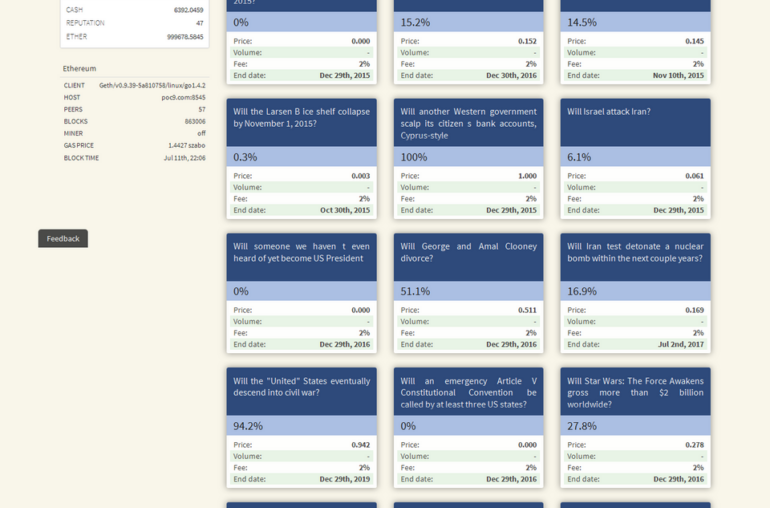
Prediction market mispricing detection is the systematic identification of contracts trading at prices that deviate from their true probability, creating arbitrage opportunities worth millions annually. With prediction markets reaching approximately $44 billion in 2025 volume across platforms like Kalshi, Polymarket, and Robinhood Predictions, traders who can identify mispriced contracts gain a significant competitive edge.
- Statistical analysis compares market-implied probabilities against historical data and forecasting models
- Cross-platform arbitrage identifies price discrepancies between different prediction market apps
- Time series analysis reveals patterns in price movements using MACD, Bollinger Bands, and RSI indicators
- Machine learning models can detect complex mispricing patterns beyond human analysis
- Sentiment analysis integration helps identify when emotional trading drives prices away from rational valuations
Statistical Techniques for Mispricing Detection

Statistical techniques form the foundation of mispricing detection, providing traders with quantitative methods to identify when contract prices deviate from their theoretical fair value.
Probability Distribution Analysis for Contract Valuation
The most fundamental approach to mispricing detection involves calculating implied probabilities from contract prices and comparing them against statistical models. For binary contracts trading at $0.60, the market implies a 60% probability of the event occurring.
Key calculation methods:
- Implied probability formula: Contract price × 100 = percentage probability
- Historical frequency comparison: Compare market-implied probability against actual historical event occurrence rates
- Statistical forecasting models: Use regression analysis, Bayesian updating, and other statistical methods to generate probability estimates
For example, if a political election contract trades at $0.70 but historical data and polling models suggest only a 55% chance of victory, this $0.15 discrepancy represents a potential mispricing opportunity. The same principles apply to sports events, economic indicators, and other prediction market categories.
Cross-Platform Arbitrage Opportunity Identification
When the same event is traded across multiple prediction market platforms, price discrepancies can indicate mispricing opportunities. This cross-platform arbitrage is one of the most accessible methods for traders to identify mispriced contracts.
Cross-platform arbitrage formula:
- If Contract A on Platform X trades at $0.60
- And the same contract on Platform Y trades at $0.65
- The $0.05 difference represents a potential arbitrage opportunity
Popular events for cross-platform arbitrage:
- Major political elections and referendums
- High-profile sports championships and tournaments
- Significant economic indicators and Federal Reserve decisions
- Celebrity events and entertainment outcomes
The arbitrage opportunity exists because different platforms may have varying user bases, fee structures, and liquidity levels, causing prices to diverge from their true value. Traders can exploit these differences by simultaneously buying the undervalued contract and selling the overvalued one.
Time Series Analysis for Price Pattern Recognition
Time series analysis helps traders identify mispricing patterns by examining how contract prices move over time. Technical indicators can reveal when prices deviate from their expected range or trend.
Key technical indicators:
- Moving Average Convergence Divergence (MACD): Identifies momentum shifts and potential price reversals
- Bollinger Bands: Shows price volatility and identifies when contracts are overbought or oversold
- Relative Strength Index (RSI): Measures the speed and change of price movements to identify extreme conditions
These indicators work together to create a comprehensive view of price behavior. For instance, when a contract’s price touches the upper Bollinger Band while RSI indicates overbought conditions, it may signal a potential mispricing that could correct downward.
Advanced Detection Methods
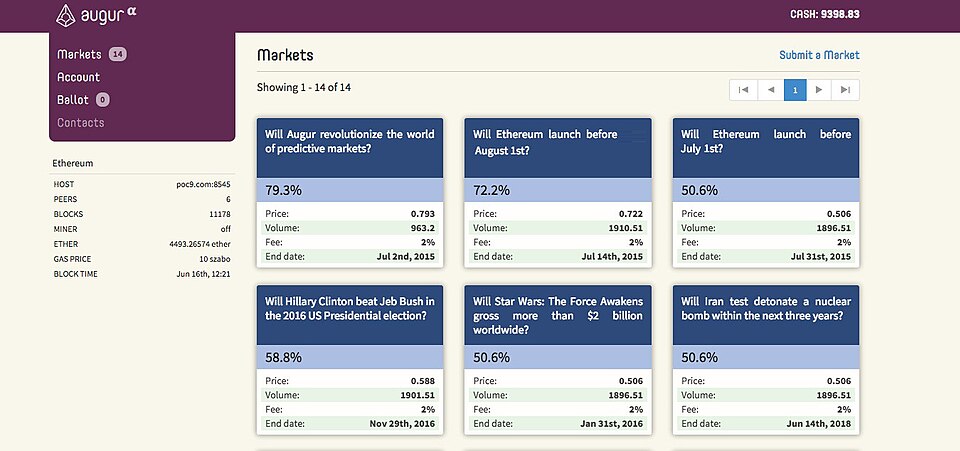
Advanced detection methods leverage sophisticated algorithms and data analysis techniques to identify mispricing opportunities that may be invisible to traditional statistical approaches.
Machine Learning Models for Complex Mispricing Detection
Machine learning algorithms can process vast amounts of market data to identify complex patterns and relationships that human traders might miss. These models can analyze multiple variables simultaneously to detect subtle mispricing opportunities.
Machine learning approaches:
- Neural networks: Trained on historical market data to recognize complex patterns and relationships
- Random forest models: Analyze feature importance to identify which factors most strongly influence pricing
- Support vector machines: Classify contracts as potentially mispriced based on multiple input variables
These models can incorporate factors like trading volume, order book depth, time to event resolution, and historical volatility to generate more accurate probability estimates than simple statistical methods. The key advantage is their ability to identify non-linear relationships and interactions between variables.
Sentiment Analysis Integration with Market Data
Social media sentiment and news coverage can significantly impact prediction market prices, often creating temporary mispricing opportunities when emotional reactions drive prices away from rational valuations.
Sentiment analysis implementation:
- Twitter/X sentiment monitoring: Track sentiment for event-related keywords and hashtags
- News article analysis: Use natural language processing to analyze news sentiment and its impact on prices
- Social media volume tracking: Monitor discussion volume as an indicator of potential price movements
For example, a breaking news story might cause immediate price movements in related prediction market contracts before the full implications are understood. Traders who can quickly analyze sentiment and its likely impact on event probabilities can identify mispricing opportunities before the broader market adjusts.
Liquidity Analysis and Volume-Based Detection
Liquidity conditions play a crucial role in prediction market pricing accuracy. Low trading volume can cause prices to drift from their true probabilities, creating mispricing opportunities that disappear when volume increases.
Liquidity analysis factors:
- Trading volume thresholds: Identify when low volume creates pricing inefficiencies
- Order book depth: Analyze the number and size of outstanding orders to assess market stability
- Bid-ask spreads: Wide spreads often indicate potential mispricing in illiquid markets
High-volume events typically have more accurate pricing due to greater market efficiency, while obscure or niche markets may exhibit more significant mispricing opportunities. Understanding this relationship helps traders focus their analysis efforts on markets where mispricing is most likely to occur.
Understanding Prediction Market Mispricing
Understanding why mispricing occurs is essential for developing effective detection strategies. Several factors contribute to price deviations from their theoretical fair value.
Causes of Prediction Market Mispricing
Mispricing in prediction markets arises from various market inefficiencies and structural factors that create opportunities for arbitrage and profit.
Primary causes of mispricing:
- Liquidity imbalances: Low trading volume prevents efficient price discovery
- Information asymmetry: Some traders may have access to information others don’t
- Market sentiment: Emotional trading can push prices away from rational valuations
- Platform-specific factors: Different fee structures and trading rules across platforms
Each of these factors contributes to price deviations in different ways. For instance, information asymmetry can create significant mispricing when a small group of informed traders knows something the broader market doesn’t, while liquidity imbalances typically cause smaller, more temporary pricing inefficiencies.
The Economics of Mispricing Opportunities
Mispricing creates arbitrage opportunities because prediction markets, like all markets, are not perfectly efficient. The existence of these opportunities is actually evidence of market efficiency rather than its absence.
Economic principles:
- Arbitrage profit potential: Mispricing represents the difference between market price and true value
- Risk-reward relationship: Higher potential profits often come with higher risk of price correction
- Market efficiency theory: The fact that mispricing opportunities exist proves markets are not perfectly efficient
The economics of mispricing opportunities explain why they persist despite the presence of many sophisticated traders. Transaction costs, information delays, and capital constraints all limit the ability of traders to eliminate all pricing inefficiencies.
Platform-Specific Mispricing Factors
Different prediction market platforms have unique characteristics that can create platform-specific mispricing opportunities. Understanding these differences is crucial for effective cross-platform arbitrage.
Platform-specific factors:
- Fee structures: Different platforms charge different fees, affecting net profitability of arbitrage
- Settlement rules: Variations in how contracts are settled can impact pricing
- User base demographics: Different platforms attract different types of traders with varying information access
For example, Kalshi’s CFTC regulation creates a different trading environment than Polymarket’s crypto-native platform, leading to different pricing behaviors and potential mispricing opportunities. Traders who understand these platform differences can identify arbitrage opportunities that others might miss.
The most counter-intuitive finding is that the most profitable mispricing opportunities often occur in high-volume, high-profile events rather than obscure markets. The specific actionable step is to start with cross-platform arbitrage on major political or sports events before advancing to machine learning models, as these high-volume markets provide the best combination of liquidity and price discovery inefficiencies.
Download Prediction Market Apps: iOS vs Android Installation Guide 2026