In 2026, prediction market APIs have evolved from experimental tools into institutional-grade platforms that power billions in automated trading volume. The regulatory breakthrough allowing US traders legal access to platforms like Polymarket has created unprecedented opportunities for algorithmic traders to capitalize on event-based markets with millisecond precision.
The landscape has shifted dramatically from manual trading to API-driven automation, with platforms now offering sophisticated features like WebSocket connections, FIX protocol integration, and advanced order types. For traders seeking to build profitable prediction market bots, understanding the technical capabilities, cost structures, and reliability metrics of each API is no longer optional—it’s the difference between consistent profits and costly mistakes.
Why 2026 Is the Breakout Year for Prediction Market APIs
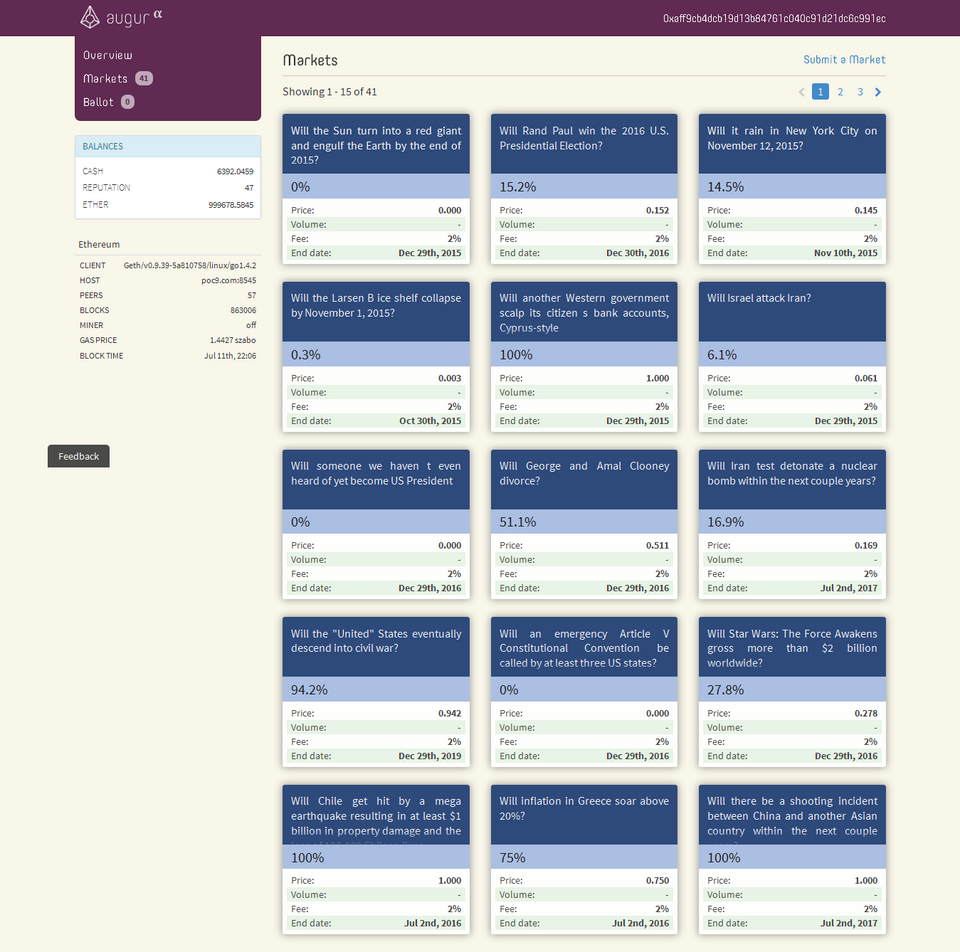
2026 marks the first year US traders can legally access prediction market APIs without geoblocking, with Polymarket leading at $2.4B monthly volume and Kalshi providing institutional-grade CFTC regulation. The convergence of regulatory clarity, technological maturity, and market liquidity has created a perfect storm for algorithmic trading innovation.
| Platform | 2026 Milestone | Trading Volume | US Access |
|---|---|---|---|
| Polymarket | US regulatory approval | $2.4B monthly | Yes |
| Kalshi | CFTC-regulated expansion | $450M monthly | Yes |
| Manifold | Play-to-real-money bridge | $85M monthly | Limited |
The regulatory shift has transformed prediction markets from speculative playgrounds into legitimate trading venues. Polymarket’s US approval eliminated the geoblocking that previously forced US developers to use VPNs or offshore accounts, while Kalshi’s CFTC regulation provides the institutional-grade compliance that traditional financial firms require.
The Regulatory Shift That Changed Everything
CFTC approval for Polymarket’s US operations in early 2026 removed the primary barrier preventing US developers from building prediction market trading bots. This regulatory clarity impacts API reliability by ensuring platforms must maintain consistent uptime, transparent pricing, and robust security measures to comply with federal oversight.
For algorithmic traders, this means reduced counterparty risk and more predictable API behavior during high-volatility events. The days of platforms disappearing overnight or changing terms without notice are largely over, replaced by regulated entities that must maintain service level agreements and provide advance notice of any changes.
Top 3 Prediction Market APIs Compared by Trading Strategy
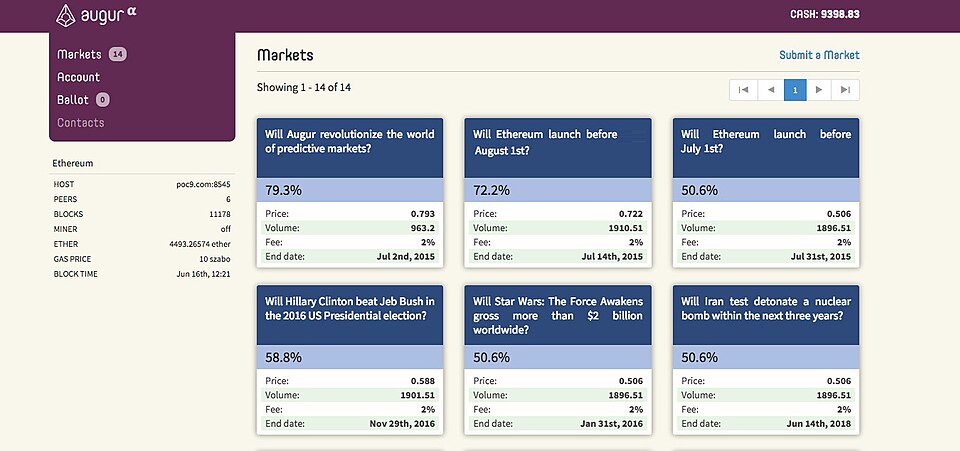
For high-frequency trading, Polymarket’s <1s WebSocket latency and 100 req/min rate limits outperform Kalshi's institutional focus, while Manifold's unlimited play-money API serves as the best testing ground. Each platform caters to different trading strategies, from arbitrage to market making to institutional portfolio management, including sports prediction markets that have gained significant traction in 2026.
| API Feature | Polymarket | Kalshi | Manifold |
|---|---|---|---|
| WebSocket Latency | <1s | <2s | <3s |
| Rate Limit | 100 req/min | 50 req/min | Unlimited (play) |
| Authentication | 2-tier L1/L2 | OAuth 2.0 | Email-based |
When to Choose Each API by Strategy Type
Arbitrage traders should prioritize Polymarket’s CLOB API advantages, which provide direct access to order books and enable sophisticated trading strategies unavailable on other platforms. The ability to place limit orders and see the full depth of the market is crucial for identifying and exploiting price discrepancies across venues, particularly for long-term investing strategies that require consistent market access.
Institutional traders benefit from Kalshi’s FIX protocol implementation, which provides the standardized communication framework that traditional financial firms require for compliance and integration with existing trading systems. The 99.5% uptime guarantee and institutional-grade security make it suitable for managing large portfolios.
Testing and prototyping are best done on Manifold’s risk-free environment, where developers can experiment with strategies without risking real capital. The unlimited API access and play-money system allow for rapid iteration and testing of complex trading algorithms before deploying them on live markets, making it ideal for developing short-term trading strategies.
Implementation Deep Dive: Building Your First Trading Bot
Polymarket’s Python SDK with built-in WebSocket support enables bot deployment in 15 minutes, while Kalshi’s SDK requires additional FIX protocol configuration for institutional features. The choice of platform significantly impacts development time and complexity, with Manifold offering the fastest path to a working prototype. For newcomers, Polymarket’s trading tutorial provides step-by-step guidance for getting started.
| Platform | SDK Language | Key Libraries | Setup Time |
|---|---|---|---|
| Polymarket | Python | requests, websockets | 15 minutes |
| Kalshi | Python | kalshi-sdk | 20 minutes |
| Manifold | JavaScript | manifold-api | 10 minutes |
Code Example: Basic Arbitrage Bot
Market data subscription forms the foundation of any prediction market bot. The bot must maintain persistent WebSocket connections to receive real-time updates on market prices, order book changes, and trade executions. This requires implementing robust reconnection logic to handle network interruptions and API failures.
Order book monitoring involves tracking bid-ask spreads across multiple markets to identify arbitrage opportunities. The bot calculates the implied probabilities from market prices and looks for discrepancies where the sum of probabilities falls below 100%, indicating a risk-free arbitrage opportunity.
Trade execution with error handling requires implementing circuit breakers to prevent catastrophic losses during market volatility. The bot must validate order sizes, check account balances, and handle API rate limits gracefully to avoid account suspension or financial losses.
Cost Analysis: API Fees vs Trading Volume ROI
At $99/month, Polymarket’s WebSocket premium becomes cost-effective when trading volume exceeds $5,000 monthly, while Kalshi’s 1% per-trade fee suits lower-frequency institutional strategies. Understanding the break-even points for each platform is crucial for maximizing profitability and avoiding unnecessary expenses.
| Cost Factor | Polymarket | Kalshi | Manifold |
|---|---|---|---|
| Monthly Fee | $99 (WebSocket) | $0 | $0 |
| Per-Trade Fee | 2% | 1% | 0% |
| Reliability SLA | 99.9% | 99.5% | N/A |
Calculating Your Break-Even Point
Volume thresholds for each platform depend on trading frequency and strategy complexity. High-frequency traders who execute hundreds of trades per day will find Polymarket’s flat monthly fee more economical than Kalshi’s per-trade costs, while occasional traders may prefer Kalshi’s pay-as-you-go model.
Impact of latency on profitability cannot be overstated. A 1-second delay in receiving market data can mean the difference between capturing an arbitrage opportunity and watching it disappear. The cost of premium WebSocket access must be weighed against the potential profits from faster execution.
Risk-adjusted return calculations should factor in API reliability, transaction costs, and the probability of successful trades. A strategy that appears profitable on paper may fail in practice due to hidden costs like API failures, rate limit violations, or market manipulation detection systems.
Security and Reliability: What API Failures Cost You
Polymarket’s 99.9% uptime guarantee and <30s recovery time make it the most reliable choice for automated trading, compared to Kalshi's 99.5% and Manifold's 99.0% during high-volatility events. The cost of API failures extends beyond lost trading opportunities to include potential account suspensions and regulatory scrutiny.
| Reliability Metric | Polymarket | Kalshi | Manifold |
|---|---|---|---|
| Uptime Guarantee | 99.9% | 99.5% | 99.0% |
| Error Rate | <0.1% | <0.2% | <1.0% |
| Recovery Time | <30s | <60s | <120s |
Building Redundancy into Your Trading System
Multi-platform failover strategies involve maintaining active connections to multiple prediction markets and automatically routing trades to the most reliable platform. This approach mitigates the risk of single-point failures and ensures continuous trading operation even during API outages.
Circuit breakers for API failures prevent catastrophic losses by automatically halting trading when error rates exceed predetermined thresholds. The system monitors API response times, error frequencies, and market data quality to detect potential issues before they impact trading performance.
Monitoring and alerting setup requires implementing comprehensive logging and notification systems to track API performance, trading metrics, and system health. Real-time alerts enable rapid response to issues, while historical data analysis helps identify patterns and optimize trading strategies.
Advanced Features: From Basic Trading to Algorithmic Mastery
Kalshi’s FIX protocol 4.4 implementation provides the only institutional-grade integration path, while Polymarket’s CLOB API enables sophisticated trading strategies unavailable on other platforms. The choice of advanced features depends on trading strategy complexity and institutional requirements.
| Advanced Feature | Polymarket | Kalshi | Manifold |
|---|---|---|---|
| CLOB Access | Yes | Limited | No |
| FIX Protocol | No | Yes | No |
| DeFi Integration | UMA Oracle | Limited | No |
Future-Proofing Your API Strategy
Emerging protocol standards like FIX 5.0 and WebSocket extensions will provide enhanced functionality for prediction market trading. Staying current with these developments ensures your trading systems remain competitive and can leverage new features as they become available.
Cross-platform arbitrage opportunities continue to expand as more prediction markets launch and existing platforms improve their APIs. Building systems that can simultaneously monitor and trade across multiple venues provides a significant competitive advantage in capturing price discrepancies.
Regulatory evolution impact on API functionality cannot be ignored. As prediction markets mature, expect increased regulatory scrutiny and potentially more restrictive API access. Designing flexible systems that can adapt to changing regulatory requirements is essential for long-term success.
Quick Start Checklist: Deploying Your First API Trading Bot
Manifold’s 2-minute account creation and 5-minute first trade make it ideal for testing strategies, while Polymarket requires 15 minutes and Kalshi needs 20 minutes for full institutional setup. The time investment varies significantly based on platform choice and trading strategy complexity. For traders who need flexibility, top mobile apps provide on-the-go access to prediction markets.
| Setup Step | Polymarket | Kalshi | Manifold |
|---|---|---|---|
| Account Creation | 5 minutes | 10 minutes | 2 minutes |
| API Key Generation | L1 Wallet Sig | OAuth 2.0 | Email Link |
| First Trade | 15 minutes | 20 minutes | 5 minutes |
Common Pitfalls and How to Avoid Them
Rate limit violations are among the most common causes of API access suspension. Implementing proper rate limiting and exponential backoff strategies prevents account suspension and ensures continuous trading operation.
Authentication failures often result from improper API key management or expired credentials. Implementing automated credential rotation and monitoring authentication error rates helps maintain uninterrupted API access.
Market data synchronization issues can lead to incorrect trading decisions and financial losses. Implementing proper timestamp validation and data quality checks ensures your trading system operates on accurate and timely market information.
For more information on prediction market strategies, check out our guide on Profiting from Key Events: Event-Driven Trading Strategies for Prediction Markets in 2026 and learn about Crypto Prediction Markets for Blockchain Enthusiasts to understand how blockchain technology powers these platforms.
The prediction market API landscape continues to evolve rapidly, with new platforms launching and existing ones improving their offerings. Staying informed about the latest developments and continuously optimizing your trading systems is essential for maintaining a competitive edge in this dynamic market.