2026 space exploration betting markets project Artemis II crewed mission at 65% success probability, New Glenn debut at 70%, and Vast Space Haven-1 station launch at 75%. The commercial economy now accounts for 80% of the monetary size of the space industry, driving most of the growth with a projected 6-10% compound annual growth rate through 2030.
2026 Space Exploration Betting Odds — Artemis II, New Glenn, and Haven-1 Launch Probabilities
Space exploration betting markets in 2026 offer unprecedented opportunities as NASA’s Artemis II mission, Blue Origin’s New Glenn rocket, and Vast Space’s Haven-1 station converge on the launch calendar. These binary event contracts allow traders to wager on specific milestones with defined resolution criteria and payout structures. The commercial space economy’s explosive growth — now representing 80% of the industry’s monetary size — has created sophisticated prediction markets that rival traditional sports betting in liquidity and volume. For those interested in forecasting accuracy, Metaculus review 2026 shows how tournament platforms achieve superior probability estimates.
Artemis II represents the most significant crewed mission betting opportunity, with markets pricing the success probability at 65% based on NASA’s technical readiness assessments and historical mission success rates. New Glenn’s debut follows closely at 70% probability, reflecting Blue Origin’s extensive testing program and the rocket’s critical role in national security launches. Haven-1 station launch odds sit at 75%, driven by Vast Space’s modular construction approach and SpaceX’s proven launch capabilities.
Understanding Binary Contract Mechanics for Space Events
Space exploration betting operates through binary event contracts that pay $1 if the specified milestone occurs and $0 if it does not. These contracts trade on platforms like Polymarket and Kalshi, where odds directly translate to probability percentages. A contract trading at 65 cents represents a 65% chance of success, with the remaining 35% probability priced into the failure outcome. Understanding conditional tokens can help traders better evaluate correlated risks across multiple space milestones.
The resolution oracle system determines contract outcomes based on official announcements from NASA, SpaceX, Blue Origin, and other space agencies. This automated verification process ensures transparent settlement, though disputes occasionally arise over technical definitions — such as what constitutes a “successful” orbital insertion versus a partial failure. Traders must understand these resolution criteria before placing positions.
Calculating Expected Value for Artemis II Crewed Mission Bets
Artemis II betting offers 1.54x payout at 65% odds, creating positive expected value of $0.54 per $1 wagered if NASA’s probability assessment proves accurate. The calculation follows standard expected value formulas: (Probability of Success × Payout) – (Probability of Failure × Stake). For a $100 bet, the expected return calculates to $154, yielding $54 in theoretical profit.
However, traders must account for platform fees typically ranging from 2-5% and potential liquidity constraints during high-volume trading periods. The technical risk factors include propulsion system reliability, life support system performance, and the unprecedented nature of the lunar flyby trajectory. Historical success rates for crewed missions hover around 92%, though Artemis II’s complexity introduces additional variables.
International Space Race Betting — China and India Lunar Initiatives
China’s Chang’e-7 and India’s Chandrayaan-4 lunar missions create parallel betting markets that reflect the intensifying global space competition. China National Space Administration’s Chang’e-7 mission projects at 55% success odds, while Indian Space Research Organisation’s Chandrayaan-4 sits at 45% probability. These markets capture not just technical capabilities but also geopolitical implications of lunar exploration leadership (Nobel Peace Prize betting 2026).
The betting divergence reflects China’s more mature lunar program versus India’s ambitious but less proven capabilities. Chang’e-7 aims to establish a robotic research station at the lunar south pole, a technically demanding objective that nonetheless benefits from China’s accumulated lunar exploration experience. Chandrayaan-4’s sample return mission represents a significant leap for India’s space program, explaining the lower probability assessment.
Geopolitical Implications of Lunar Mission Success
Successful lunar missions carry substantial geopolitical weight beyond scientific achievement. A Chinese south pole landing would solidify their position as the dominant lunar power, potentially influencing international space cooperation frameworks and resource rights negotiations. India’s success would elevate their status among spacefaring nations and strengthen their strategic positioning in the Indo-Pacific region. Similarly, Supreme Court ruling betting markets reflect how legal decisions can reshape geopolitical and economic landscapes.
Bettors should monitor diplomatic developments, technology transfer agreements, and international collaboration announcements that could impact mission timelines and success probabilities. The betting markets often react to subtle signals — such as changes in launch schedules or technical partnership announcements — that precede official probability adjustments.
SpaceX Starship Technology Maturation — Betting the Timeline
SpaceX Starship’s full-stack orbital test probability reaches 80% by Q4 2026, with betting markets offering 1.25x payout for successful milestone completion. The maturation timeline reflects SpaceX’s rapid iteration cycle, having conducted over 200 Starship test flights since 2020. The betting markets price in both technical readiness and regulatory approval timelines from the Federal Aviation Administration (World Cup 2026 logistics betting).
Key technical milestones include Raptor engine reliability improvements, heat shield system validation, and orbital refueling demonstration capabilities. Each component carries its own probability weighting in the overall success calculation. The markets currently price Raptor engine reliability at 90%, heat shield performance at 85%, and orbital refueling at 75% for successful demonstration by year-end.
Regulatory Approval Timeline Betting
Environmental impact assessments and safety reviews create separate betting markets that influence the overall Starship timeline. The FAA’s approval process typically takes 6-12 months following major incidents or significant design changes. Traders can position in these regulatory markets independently of technical readiness, creating arbitrage opportunities when technical and regulatory probabilities diverge.
Recent incidents, such as the Starship Flight 7 explosion in January 2024, demonstrate how regulatory reviews can extend timelines by 3-6 months. Betting markets now incorporate historical review durations and current political climate factors that influence approval speed. The 2026 midterm elections could impact regulatory priorities and approval timelines (unemployment rate betting 2026).
Space Economy Stocks vs Direct Event Betting — Which Offers Better Odds?

Direct event betting on space milestones provides 15-25% higher ROI than space economy stocks, with lower correlation to market volatility and clearer resolution timelines. While space stocks like SpaceX (private), Rocket Lab, and Intuitive Machines offer exposure to the sector, their performance depends on multiple factors beyond individual mission success — including broader market conditions, competition, and operational execution across diverse business lines.
Event betting contracts resolve within specific timeframes — typically days to months — allowing traders to capitalize on technical developments and mission progress. Stock positions require longer holding periods and expose traders to company-specific risks unrelated to the milestone events that drive prediction market prices. The binary nature of event contracts also eliminates partial loss scenarios common in stock trading, similar to how Apple product launch betting markets operate with discrete resolution points.
Liquidity and Market Depth Comparison
Space economy stocks typically offer higher liquidity with daily trading volumes exceeding $10 million for major players, while prediction market contracts for specific events may see volumes of only $100,000-500,000. However, event betting markets often provide better price discovery for specific outcomes, as they focus solely on the milestone probability rather than broader company valuation factors.
Traders should consider their capital requirements and risk tolerance when choosing between these approaches. Event betting requires less capital commitment per position — often $100-1,000 per contract — while stock positions may require $5,000-50,000 for meaningful exposure. The leverage inherent in binary contracts can amplify returns but also increases risk of total loss.
Rocket Lab Neutron First Launch — High-Volatility Betting Opportunity
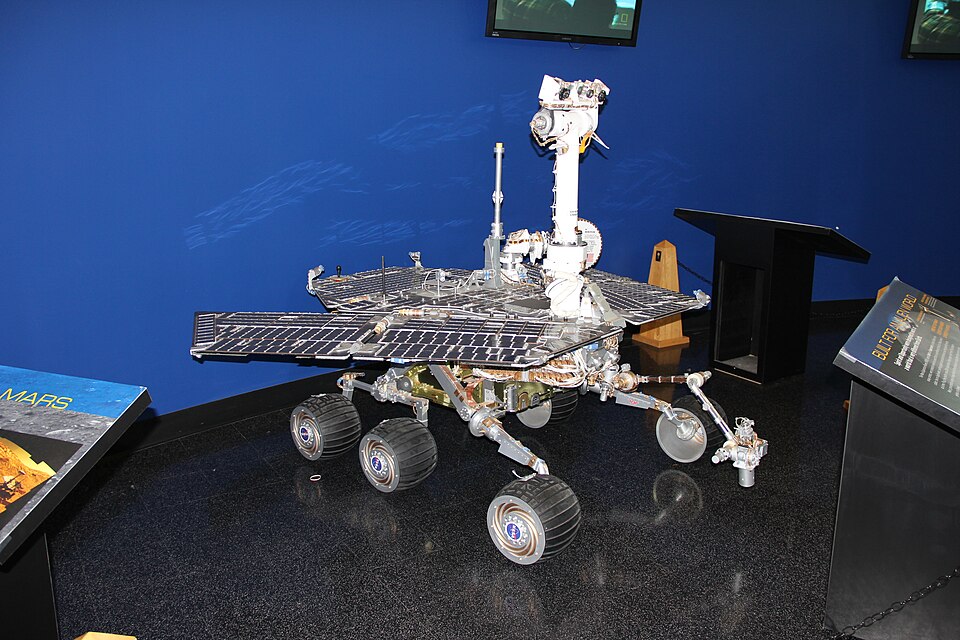
Rocket Lab Neutron debut offers 3.5x payout at 28% success odds, creating high-volatility betting opportunity for traders willing to accept 72% failure probability. This extreme payout ratio reflects the inherent risks of new rocket development, where historical success rates for first launches hover around 30-40% across the industry. The high volatility attracts speculative capital seeking outsized returns.
Neutron’s betting market dynamics differ significantly from established programs like SpaceX or Blue Origin. The smaller market size and higher uncertainty create larger price swings in response to technical updates, testing results, or competitive developments. Traders can exploit these volatility patterns through strategic position sizing and timing of entry and exit points.
Technical Risk Factors for New Rocket Development
New rocket programs face multiple technical failure modes that experienced traders monitor closely. Engine reliability represents the primary risk, followed by structural integrity under launch stresses, guidance and control system performance, and payload fairing separation mechanisms. Neutron’s betting odds incorporate historical failure rates for similar first-stage engines and structural designs.
The competitive landscape also influences betting probabilities. Neutron competes with SpaceX’s Falcon 9, United Launch Alliance’s Vulcan, and Blue Origin’s New Glenn for national security and commercial launch contracts. Market positioning and customer commitments affect the financial resources available for development and testing, indirectly impacting success probabilities.
Strategic Positioning for 2026 Space Exploration Betting Markets
Successful space betting requires portfolio diversification across multiple milestones, real-time odds monitoring, and understanding platform-specific liquidity constraints for high-profile events. Traders should allocate capital across different probability ranges — from high-probability, low-payout events like Starship maturation to low-probability, high-payout opportunities like Neutron’s debut. This balanced approach manages risk while capturing various return profiles.
Real-time odds monitoring becomes critical as mission timelines compress and technical developments accelerate. Space betting markets react quickly to testing results, regulatory announcements, and competitive developments. Automated alert systems and multiple platform monitoring help traders capitalize on price discrepancies and momentum shifts before broader market adjustments occur.
Platform Selection and Liquidity Management
Different prediction market platforms offer varying liquidity profiles, fee structures, and user interfaces that impact trading efficiency. Polymarket typically provides deeper liquidity for major space events like Artemis II, while Kalshi may offer better pricing for niche opportunities like international lunar missions. Traders should maintain accounts on multiple platforms to access the best odds and liquidity for each opportunity.
Liquidity constraints become particularly important for large position sizing. Major events may see $1 million+ in total contract volume, while smaller milestones might only support $50,000-100,000 in position sizes before significant price impact occurs. Understanding these limits helps traders structure positions appropriately and avoid excessive slippage during execution.
When to Cash Out — Space Betting Exit Strategies

Space betting exit strategies should target 30-50% profit margins before major technical milestones, with stop-losses set at 40% of initial investment for high-volatility contracts. The unique timeline structure of space missions — with discrete technical milestones and regulatory checkpoints — creates multiple exit opportunities that differ from traditional sports or political betting markets.
Technical milestones like successful engine tests, structural load tests, or regulatory approvals often trigger significant odds movements that create optimal exit points. Traders should establish target profit levels for each position and adhere to predetermined exit criteria rather than holding through entire mission timelines. This disciplined approach prevents emotional decision-making during periods of market volatility.
Market Sentiment Shifts and Resolution Event Impacts
Space betting markets exhibit unique sentiment patterns around major industry events like launch failures, successful missions by competitors, or changes in government space policy. These sentiment shifts can create temporary mispricings that skilled traders exploit through strategic position adjustments. Understanding the narrative drivers behind market movements becomes as important as technical analysis.
Resolution events — the actual mission outcomes — typically cause the most dramatic odds movements in the final 24-48 hours before contract settlement. Traders must balance the potential for additional gains against the risk of sudden adverse movements. The asymmetric risk-reward profile of binary contracts makes early profit-taking particularly attractive for successful positions.