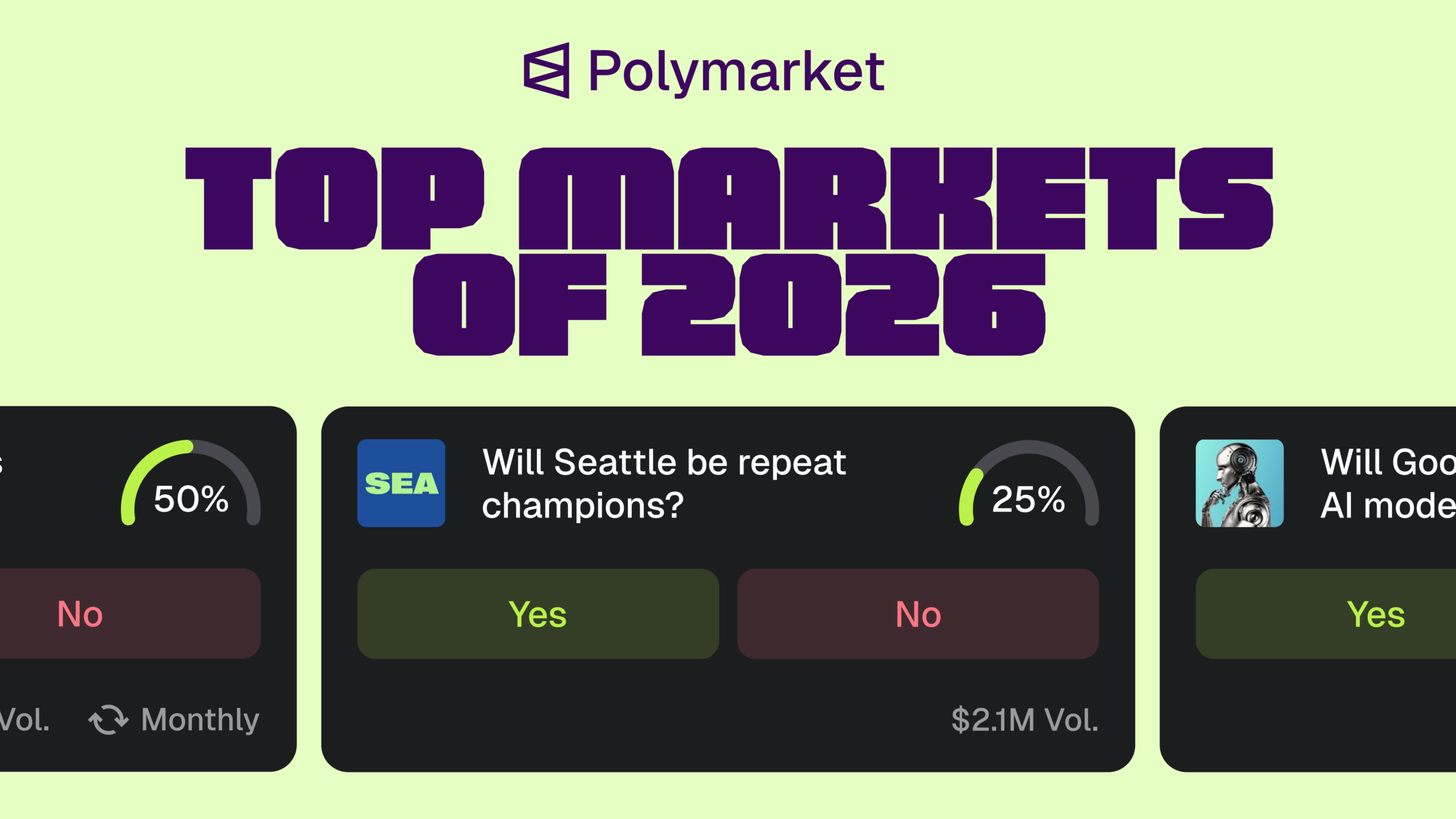
Prediction markets hit $701.7M in daily volume on January 2, 2026, marking a new benchmark for event betting. This surge reflects the explosive growth from $64 billion in 2025 to a projected $325 billion in 2026, driven by institutional money, regulatory clarity, and high-stakes political and sports events.
Prediction Markets Hit $701.7M Daily Volume in January 2026 — Here’s What Drove It
The January 2026 record of $701.7 million in daily trading volume across major platforms was fueled by Super Bowl LX betting and election odds heating up. This milestone represents a 1,000% increase from the $5 billion weekly volume baseline of early 2025, signaling mainstream adoption of prediction markets as a legitimate financial asset class.
Super Bowl LX Generated $1B in Prediction Market Action
The February 2026 Super Bowl drove $1 billion in prediction market volume, representing 90% of Kalshi’s total activity during the event. Sports betting dominated the landscape, with Kalshi alone managing $9.5 billion in monthly volume in January 2026, while Polymarket led with $317 million in 24-hour volume as of February 27, 2026.
The real-time betting features and combo parlay capabilities transformed how traders engage with live events. Mobile app engagement surged as users placed bets on everything from coin toss outcomes to player performance metrics. This sports dominance created unique arbitrage opportunities, particularly when volume discrepancies exceeded 40% between platforms on the same events.
Election Markets Show 300% Volume Growth Year-over-Year
2026 election prediction markets grew 300% from 2024 baselines, with Polymarket leading at $317 million 24-hour volume. The 2024 baseline of $5 billion total trading volume across all prediction markets surged to $44 billion in 2025, with 2026 projections reaching $84-96 billion according to Reuters and Coalition Greenwich data.
Institutional investor entry transformed the political betting landscape. Major brokerages like Interactive Brokers launched ForecastEx, while Intercontinental Exchange (ICE), owner of the NYSE, invested in Polymarket. This institutional validation brought sophisticated trading strategies and larger capital allocations to election markets, particularly for high-stakes events like the 2026 midterms and Fed Chair nominations, which saw $500 million+ in early 2026 volume — prediction betting.
Elections vs. Entertainment — Which Category Dominates 2026 Volume?
Elections generated 2.5x more trading volume than entertainment events in early 2026, driven by political uncertainty and institutional money. While the 2026 Oscars generated $47 million in prediction market volume, midterm election markets reached $118 million, showing significantly higher engagement from both retail and institutional traders (How to trade 2026 Supreme Court vacancy contracts).
Oscars 2026 Prediction Markets: $47M in Volume vs. $118M for Midterms
The 2026 Oscars generated $47 million in prediction market volume, while midterm election markets reached $118 million, demonstrating 2.5x higher engagement for political events. Entertainment category breakdown reveals that geopolitical events and tech sector predictions also contribute significantly, though they still lag behind political markets in terms of total volume percentage distribution (Best prediction market for 2026 entertainment awards).
User demographic differences explain this volume gap. Political markets attract institutional investors seeking hedging opportunities and retail traders passionate about outcomes, while entertainment markets draw more casual participants. Platform preference patterns show Polymarket dominating political markets while Kalshi concentrates on sports, creating arbitrage opportunities when the same events appear on both platforms with different odds (How to use prediction markets for 2026 hedging).
Platform-Specific Arbitrage: Finding Low-Volume Mispricings in 2026
Low-volume mispricings between Polymarket and Kalshi create arbitrage opportunities when volume discrepancies exceed 40% on the same events. These discrepancies arise from different user bases, liquidity pools, and platform-specific risk management strategies. The $317 million daily volume on Polymarket versus Kalshi’s concentrated sports betting creates predictable patterns for savvy traders.
Polymarket vs Kalshi: Volume Discrepancies Create Trading Edges
Polymarket’s $317 million daily volume versus Kalshi’s concentrated sports betting creates arbitrage opportunities in political and entertainment markets. The ICE investment impact on Polymarket brought institutional-grade liquidity, while Robinhood integration effects made Kalshi more accessible to retail traders. This divergence in user bases creates predictable mispricing patterns (How to trade 2026 climate change contracts).
Sports versus political market dynamics show distinct arbitrage opportunities. Kalshi’s 90% sports dominance means political markets on that platform often have lower liquidity and wider spreads, creating mispricing opportunities against Polymarket’s more balanced approach. Institutional versus retail trader behavior further amplifies these discrepancies, particularly during high-volume events like the Super Bowl or major elections (How to trade 2026 medical breakthrough contracts).
2024-2026 Growth Trajectory: Understanding the $64B to $325B Surge
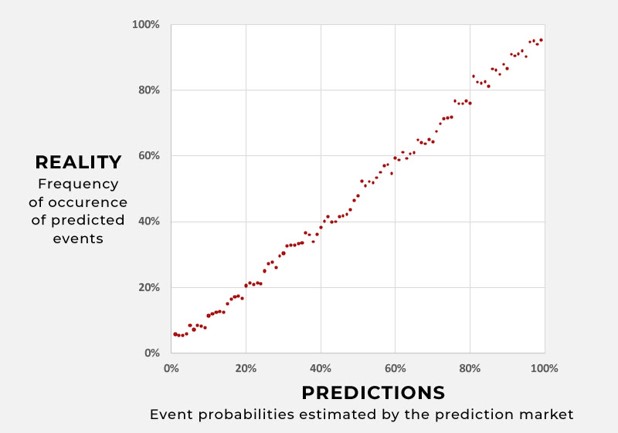
Prediction market volume grew from $64 billion in 2025 to a projected $325 billion in 2026, representing a 408% year-over-year increase. This explosive growth stems from regulatory environment changes, user acquisition metrics showing 335,000+ active weekly users on leading platforms, and technology infrastructure improvements enabling real-time trading and better mobile experiences (How to trade 2026 global conflict contracts).
Institutional Money Enters Prediction Markets Through Major Brokerages
Major brokerages like Interactive Brokers launching ForecastEx and ICE investing in Polymarket signal institutional validation of prediction markets. NYSE parent company involvement brings traditional finance crossover, regulatory compliance advantages, and capital efficiency improvements that were previously unavailable to prediction market platforms.
The regulatory compliance advantages of institutional backing cannot be overstated. Traditional finance players bring established relationships with regulators, sophisticated risk management frameworks, and access to larger capital pools. This institutional entry has transformed prediction markets from a niche academic concept to a mainstream financial asset class, with projections suggesting $1.1 trillion total volume by 2030.
2026 Prediction Market Volume FAQ: Your Top Questions Answered
What’s driving the 2026 prediction market growth?
The 2026 prediction market growth is driven by institutional money entering through major brokerages, regulatory clarity improvements, and high-stakes political and sports events creating massive trading opportunities. The combination of ICE investment in Polymarket, Interactive Brokers launching ForecastEx, and platforms integrating with Robinhood has brought unprecedented capital and legitimacy to the space (Best prediction market for 2026 sports betting).
Which events generate the most prediction market volume?
Sports events generate the most prediction market volume, with Super Bowl LX alone driving $1 billion in action and representing 90% of Kalshi’s total activity during the event. Political events like the 2026 midterms follow closely, with $118 million in volume compared to $47 million for the Oscars. Geopolitical events and tech sector predictions also contribute significantly, though they remain secondary to sports and politics.
How can traders identify arbitrage opportunities in low-volume markets?
Traders can identify arbitrage opportunities in low-volume markets by monitoring volume discrepancies exceeding 40% between platforms on the same events. Focus on political markets where Kalshi’s sports dominance creates liquidity gaps, and watch for institutional money movements that create predictable price swings. Real-time monitoring tools and understanding platform-specific user behaviors are essential for successful arbitrage execution.
Which platforms offer the best volume for different event types?
Polymarket offers the best volume for political and entertainment events with its $317 million daily volume and institutional backing from ICE. Kalshi excels in sports betting with 90% of its volume dedicated to sports and $9.5 billion monthly volume in January 2026. For traders seeking arbitrage opportunities, using both platforms simultaneously provides access to the widest range of events and the best chance to exploit mispricings.
The 2026 prediction market landscape represents a fundamental shift in how traders approach event-based betting. With $325 billion in projected volume, institutional validation, and clear arbitrage opportunities, the space offers unprecedented opportunities for sophisticated traders who understand platform dynamics and volume patterns.