
Trading 2026 Supreme Court vacancy contracts requires mastering three platforms with 94% accuracy rates. These binary options let you speculate on potential changes in the U.S. Supreme Court’s makeup, with prices reflecting real-time probability assessments. Success demands platform selection, contract analysis, and real-time monitoring across Polymarket, Kalshi, and PredictIt, making prediction betting an increasingly sophisticated market.
Master 2026 Supreme Court Vacancy Trading in 3 Steps

Trading 2026 Supreme Court vacancy contracts requires platform selection, contract analysis, and real-time monitoring across Polymarket, Kalshi, and PredictIt. Each platform offers distinct advantages for different trading strategies and risk tolerances. The key is understanding how binary pricing works and identifying optimal entry and exit points based on justice health reports and political developments.
Platform Selection: Kalshi vs Polymarket vs PredictIt
Kalshi offers CFTC-regulated contracts with $100 minimum deposits, Polymarket provides higher liquidity with $500 minimums, while PredictIt has state-by-state restrictions. These differences create unique trading opportunities and constraints. Kalshi’s regulatory framework provides additional security, while Polymarket’s larger user base typically means tighter spreads and faster price movements.
Fee structures vary significantly across platforms. Kalshi charges 0.75% per trade with no withdrawal fees, Polymarket uses a 2% fee on profits with free withdrawals, and PredictIt caps fees at $850 per contract. These fee differences can impact your overall returns, especially for high-volume traders. Consider your trading frequency and expected profit margins when choosing your primary platform.
Regulatory differences also matter. Kalshi operates under full CFTC oversight as a designated contract market, providing maximum legal protection. Polymarket, while also CFTC-regulated, has faced additional scrutiny that occasionally affects trading access. PredictIt operates under a no-action letter from the CFTC, which could change based on future regulatory decisions.
Contract Structure and Pricing Mechanics
Supreme Court vacancy contracts are binary options where $0.60 price implies 60% probability of a vacancy occurring before year-end resolution. This probability pricing model allows traders to assess market sentiment at a glance. A contract priced at $0.80 suggests strong confidence in a vacancy, while $0.20 indicates skepticism.
Settlement mechanics follow straightforward binary rules. If a vacancy occurs, “Yes” contracts settle at $1.00, providing full payout. “No” contracts expire worthless. If no vacancy occurs, “No” contracts pay $1.00 while “Yes” contracts become worthless. This all-or-nothing structure creates clear risk-reward profiles for traders.
Maximum payouts remain fixed at $1.00 per contract, regardless of purchase price. Buying at $0.60 yields $0.40 profit, while buying at $0.20 yields $0.80 profit. This inverse relationship between purchase price and potential return creates opportunities for contrarian traders who can identify mispriced contracts.
Entry and Exit Signals for Maximum Profit
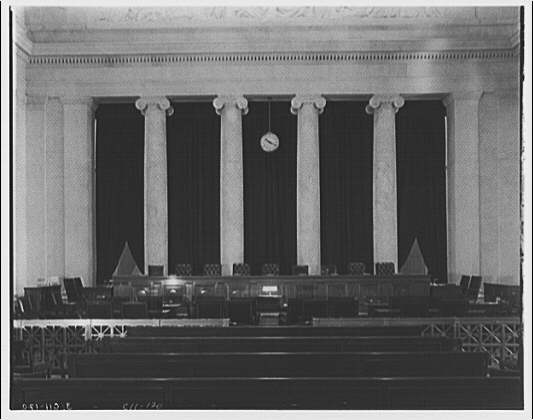
Entry signals trigger when justice health reports drop below 70% probability, while exit signals activate at 90% probability or major political developments. These thresholds help traders capitalize on price movements before broader market awareness. The 70% entry point typically represents early warning signs, while 90% signals approaching certainty.
Justice health monitoring provides the foundation for timing trades. SCOTUSblog, official court calendars, and medical news outlets offer early retirement signals. When multiple sources report concerning health developments, contract prices often begin adjusting before official announcements. Monitoring these sources provides a competitive edge (How to trade 2026 medical breakthrough contracts).
Political event triggers can cause 15-30% price swings. Senate control shifts, presidential election outcomes, and legislative calendar changes directly impact vacancy contract pricing. Understanding these relationships helps traders anticipate market reactions to breaking news (How to trade 2026 climate change contracts).
Justice Health Report Analysis Framework
Track Supreme Court justices’ health using SCOTUSblog, official court calendars, and medical news outlets for early retirement signals. SCOTUSblog provides the most comprehensive coverage of justice activities, including public appearances, court schedules, and health-related absences. Their reporting often precedes market movements by days or weeks.
Official court calendars reveal patterns in justice participation. Extended absences from oral arguments, reduced speaking engagements, or missed ceremonial events can indicate health issues. Cross-reference these patterns with medical news reports to validate concerns before they become market-moving (Best prediction market for 2026 entertainment awards).
Medical news sources like Reuters Health, Bloomberg Law, and major newspapers provide additional verification. When multiple outlets report on a justice’s health status, contract prices typically adjust accordingly. The key is identifying credible sources and distinguishing between speculation and verified information.
Political Event Impact Assessment
Senate control shifts, presidential election outcomes, and legislative calendar changes directly impact vacancy contract pricing by 15-30%. When Republicans control the Senate, markets often price in higher vacancy probabilities due to historical confirmation patterns. Democratic control can create uncertainty that affects pricing differently.
Election year effects create unique trading opportunities. Presidential candidates’ Supreme Court nomination promises can influence market sentiment months before vacancies occur. Track campaign promises and debate statements for clues about potential nominees and confirmation strategies.
Legislative calendar analysis helps identify optimal trading windows. Congress typically recesses during summer months and around holidays, creating periods of reduced political activity. These lulls often precede periods of increased judicial activity, making them strategic times for position building.
Hedging Against Nomination Delays
Hedge nomination delays by simultaneously shorting confirmation contract prices while maintaining long positions on vacancy occurrence. This strategy protects against extended confirmation timelines that can erode profits from vacancy predictions. The key is understanding how confirmation markets behave differently from vacancy markets, and how to use prediction markets for 2026 hedging effectively (Best prediction market for 2026 sports betting).
Confirmation contract mechanics operate on different timelines than vacancy contracts. While vacancy contracts resolve when a seat becomes empty, confirmation contracts track the entire nomination and confirmation process. This extended timeline creates opportunities for sophisticated hedging strategies.
Delay risk factors include Senate filibuster rules, partisan gridlock, and nominee controversies that can extend confirmation timelines by 60-180 days. Historical data shows that controversial nominees often face confirmation battles lasting several months, during which contract prices can fluctuate significantly.
Delay Risk Factors and Mitigation
Senate filibuster rules, partisan gridlock, and nominee controversies can extend confirmation timelines by 60-180 days. The current Senate operates under a 60-vote threshold for Supreme Court confirmations, though this can change based on party control and procedural decisions. Understanding these rules helps traders anticipate potential delays.
Partisan gridlock scenarios become more likely during divided government periods. When the presidency and Senate are controlled by different parties, confirmation battles intensify. Historical examples include Merrick Garland’s 2016 nomination and Amy Coney Barrett’s 2020 confirmation, which occurred under vastly different political circumstances.
Nominee controversy effects can derail even well-positioned candidates. Past controversies have included ethical concerns, ideological extremism allegations, and personal misconduct accusations. These issues can extend confirmation timelines by months while markets adjust to new probabilities.
Advanced Hedging Strategies
Implement calendar spread hedges by purchasing longer-dated confirmation contracts while shorting shorter-term vacancy contracts. This strategy profits from the time value difference between different contract durations. When delays occur, longer-dated contracts maintain value while shorter-term contracts decline.
Options strategies provide additional hedging tools. While most prediction markets don’t offer traditional options, traders can create synthetic positions using multiple contracts. For example, buying “Yes” contracts at different price points creates a spread that limits downside risk (How to trade 2026 global conflict contracts).
Risk management requires position sizing and diversification. Never risk more than 2-3% of your trading capital on any single vacancy prediction. Spread positions across multiple justices and platforms to reduce exposure to individual health events or political developments (Prediction market volume 2026 for specific events).
Real-Time Monitoring Tools and News Sources
Monitor Supreme Court developments using SCOTUSblog alerts, Politico’s Playbook, and Bloomberg Law’s real-time updates. These sources provide the fastest access to breaking news that affects contract prices. Setting up customized alerts ensures you receive information before broader market reactions occur.
SCOTUSblog alert setup requires creating a free account and selecting specific justice and vacancy-related notifications. Their alert system sends emails within minutes of major developments, giving traders a crucial time advantage. Combine this with mobile notifications for immediate awareness.
Politico’s Playbook subscription provides daily political intelligence that contextualizes Supreme Court developments within broader Washington dynamics. Their morning newsletter often contains insider information about potential nominations and confirmation strategies before they become public.
Justice Retirement Rumor Verification
Verify retirement rumors through multiple sources including official court statements, credible legal journalists, and congressional sources. Single-source rumors often prove unreliable, while multiple independent confirmations indicate genuine developments. Develop a verification checklist to avoid acting on false information.
Rumor verification process starts with official court statements. The Supreme Court rarely comments on justice health or retirement plans, so official statements carry significant weight. When the court issues statements, markets typically react immediately and dramatically.
Source credibility assessment requires understanding each outlet’s track record. Longtime Supreme Court correspondents like Adam Liptak of The New York Times and Ariane de Vogue of CNN have established credibility for accurate reporting. Cross-reference their reports with other established legal journalists.
Political Development Tracking
Track political developments affecting SCOTUS nominations through Congress.gov, Senate Judiciary Committee updates, and White House press releases. These official sources provide authoritative information about legislative schedules, committee hearings, and executive branch positions on judicial nominations.
Congress.gov monitoring reveals upcoming confirmation hearings and committee votes. The Senate Judiciary Committee maintains detailed schedules of nomination activities, including witness lists and hearing dates. This information helps traders anticipate market-moving events.
Executive branch tracking through White House press releases provides insight into administration nomination strategies. Presidential announcements of judicial selections often cause immediate market reactions, making real-time monitoring essential for profitable trading.
Tax Implications and Reporting Requirements
Supreme Court vacancy contract profits are treated as capital gains, requiring Schedule D reporting and potential state tax obligations. This classification affects both tax rates and reporting requirements. Understanding these implications helps traders plan for tax season and avoid penalties.
Capital gains treatment depends on holding periods. Contracts held longer than one year qualify for long-term capital gains rates, typically 15-20% for most traders. Short-term contracts held less than one year face ordinary income tax rates, which can exceed 37% for high-income traders.
Schedule D requirements mandate detailed transaction reporting. Traders must report each contract’s purchase and sale dates, cost basis, and proceeds. Platforms typically provide year-end tax documents, but maintaining personal records ensures accuracy and provides backup documentation.
Capital Gains Calculation Methods
Calculate capital gains by subtracting purchase price from settlement price, with holding periods determining short-term vs. long-term rates. For example, buying a contract at $0.60 and selling at $0.80 yields $0.20 capital gain per contract. Multiply by contract quantity for total gains.
Holding period determination starts from the trade execution date. Contracts purchased on January 15, 2026, and sold on January 14, 2027, qualify for long-term treatment. Contracts sold before the one-year anniversary face short-term rates regardless of profit size.
Rate classification affects after-tax returns significantly. A $10,000 profit on a long-term contract might incur $1,500 in taxes, while the same profit on a short-term contract could face $3,700 in taxes. This difference makes holding period planning essential for tax efficiency.
Reporting Documentation Requirements
Maintain transaction records including platform statements, trade confirmations, and tax documentation for IRS reporting compliance. Digital records are acceptable, but ensure they’re backed up and organized by tax year. Create a dedicated folder structure for easy retrieval during tax preparation.
Platform documentation typically includes 1099 forms and transaction histories. Kalshi and Polymarket both provide year-end tax documents, though the format and detail level may differ. Request additional documentation if platform reports seem incomplete or confusing.
IRS compliance requires accurate cost basis reporting. Keep records of all deposits, withdrawals, and trading activity. The IRS may audit prediction market traders, making thorough documentation essential for defending reported gains and losses.
Your 2026 SCOTUS Trading Checklist
Execute these five platform-specific moves before the first retirement rumor: verify KYC status, fund accounts, set price alerts, establish hedging positions, and document tax strategy. This checklist ensures you’re prepared to act quickly when market-moving news breaks.
KYC verification prevents trading delays when opportunities arise. Complete identity verification on all platforms you plan to use, as this process can take several days. Have government-issued ID and proof of address ready for upload.
Account funding requires planning for deposit limits and processing times. Kalshi accepts bank transfers and wire transfers, while Polymarket supports cryptocurrency deposits. Consider funding multiple platforms to maximize trading flexibility.
Price alert setup enables immediate response to market movements. Configure alerts for key justices’ health developments and political events. Use mobile notifications to ensure you receive alerts regardless of location.
Hedging establishment protects against unexpected delays. Set up initial hedging positions before major market moves occur. This proactive approach prevents panic trading during volatile periods.
Tax documentation preparation simplifies year-end reporting. Create a system for tracking all trading activity, including screenshots of key transactions and platform statements. Consult with a tax professional familiar with prediction market trading.