The prediction market landscape is experiencing explosive growth in 2026, with trading volumes projected to exceed $325 billion—nearly four times the $64 billion recorded in 2025. This surge represents a fundamental shift from niche speculation to mainstream financial infrastructure, driven by institutional adoption, regulatory clarity, and technological innovation. As platforms like Polymarket and Kalshi dominate the duopoly, traders are witnessing unprecedented liquidity and market depth that’s reshaping how we forecast everything from election outcomes to economic indicators; new participants can consult a prediction market beginner guide 2026 to get started.
What is Driving the Prediction Market Trading Volume Surge in 2026?
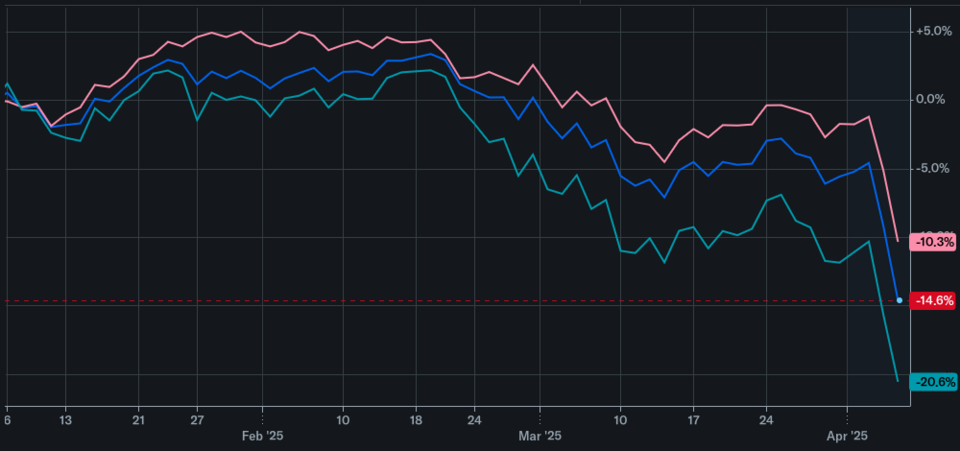
The surge in prediction market trading volume in 2026 is driven by increased institutional adoption, broader event coverage, and easier platform access. This explosive growth reflects a maturation of the prediction market ecosystem that’s attracting both retail speculators and sophisticated trading firms.
- Exponential Growth Metrics: Prediction market volumes are projected to exceed $325B in 2026, a nearly 4x increase from $64B in 2025, according to industry analysts tracking platform data.
- High-Frequency Trading Impact: January 2026 saw record volumes of $27B, with single-day highs of $701 million, driven by high-frequency trading algorithms exploiting arbitrage opportunities across platforms.
- Post-Election Sustained Interest: Unlike previous cycles, trading volumes remained above $13B monthly after the 2024 US election, indicating a shift towards more consistent engagement rather than event-driven spikes.
The sustained volume growth suggests prediction markets are evolving from election-focused speculation to year-round trading venues. This transformation is particularly evident in how platforms are expanding beyond traditional political markets to cover economic indicators, sports events, and crypto-related outcomes. The ability to trade on Fed rate decisions, inflation forecasts, and major corporate events has attracted a new class of traders who view prediction markets as legitimate hedging instruments rather than pure speculation.
Polymarket vs. Kalshi: Market Share and Liquidity Analysis
Polymarket and Kalshi dominate the prediction market landscape, accounting for 85-90% of the total trading volume. This duopoly creates a concentrated ecosystem where traders must understand the distinct advantages and limitations of each platform to optimize their strategies.
- Duopoly Dominance: Polymarket and Kalshi control 85-90% of the total prediction market trading volume, a key factor for traders to consider when evaluating platform liquidity and market depth.
- Open Interest Comparison: As of January 31, 2026, both platforms reported approximately $400M in open interest (OI), demonstrating deep liquidity on both and creating a neck-and-neck competition for market share.
- Platform-Specific Advantages: Kalshi’s CFTC regulation allows for USD-based trading, while Polymarket’s use of USDC on Polygon enables global access, creating distinct user bases with different regulatory constraints.
The concentration of volume between these two platforms creates both opportunities and risks for traders. While the deep liquidity on both platforms enables large position sizes and tight spreads, the duopoly structure means traders have limited alternatives if either platform experiences technical issues or regulatory challenges. The $400M open interest figure represents a significant milestone, as it indicates sufficient market depth for institutional-sized trades without causing substantial price impact.
Institutional Adoption: The Next Frontier for Prediction Markets
Institutional adoption is rapidly increasing, with proprietary trading firms entering the prediction market space and bringing sophisticated trading algorithms and risk management techniques. This institutional influx is driving volume and legitimizing prediction markets as a serious financial instrument.
- Growing Institutional Interest: 10% of proprietary trading firms traded prediction contracts in late 2025, with 35% expressing interest, suggesting further institutional involvement in 2026 and beyond.
- Sophisticated Trading Strategies: Institutions bring sophisticated trading algorithms and risk management techniques, driving volume through high-frequency arbitrage and statistical arbitrage strategies.
- Regulatory Clarity: Increased regulatory clarity, particularly around platforms like Kalshi, is encouraging institutional participation by providing the compliance framework that large firms require.
The institutional wave represents a fundamental shift in how prediction markets are perceived within the broader financial ecosystem. Unlike retail traders who may focus on single-event outcomes, institutional players are deploying systematic strategies across multiple markets, creating more efficient pricing and deeper liquidity. The 35% interest figure from proprietary trading firms suggests that institutional adoption could accelerate significantly in the coming quarters, potentially pushing total volumes well beyond current projections (how to make money on prediction markets).
Beyond Elections: Emerging Prediction Market Niches
Prediction markets are expanding beyond traditional political events to cover a wider range of topics, including economics and sports. This diversification is attracting new user segments and creating year-round trading opportunities that don’t depend on election cycles, and increasingly, crypto price prediction markets are gaining traction (prediction market vs sports betting).
- Economic Indicators: Prediction markets are increasingly used to forecast economic indicators like inflation rates and GDP growth, attracting sophisticated traders who view these as alternative data sources for investment decisions.
- Sports Betting Alternatives: Prediction markets offer an alternative to traditional sports betting, with event contracts on outcomes beyond just wins and losses, including player statistics and in-game events.
- Crypto-Related Events: The crypto market continues to drive significant trading volume in prediction markets, with contracts on token prices and blockchain developments creating 24/7 trading opportunities.
The expansion into economic and sports markets represents a strategic evolution for prediction platforms. While political markets still dominate in terms of volume, the growth rates in economic and sports categories are outpacing traditional markets. The ability to trade on Fed decisions or major economic releases provides traders with new hedging tools and information advantages; to understand this further, see this analysis of a Fed rate decision prediction market.
Risk Factors and Regulatory Considerations for Traders
Traders should be aware of the risks associated with prediction markets, including platform risk, regulatory uncertainty, and the potential for manipulation. Understanding these risks is crucial for developing effective trading strategies and protecting capital, so employing sound prediction market risk management is essential.
- Platform Risk: Traders should carefully evaluate the security and stability of the prediction market platform they use, considering factors like regulatory compliance, insurance, and historical performance during high-volume periods.
- Regulatory Uncertainty: The regulatory landscape for prediction markets is still evolving, and traders should be aware of potential changes that could impact their trading activity, particularly regarding cross-border transactions and tax treatment.
- Market Manipulation: Like any financial market, prediction markets are susceptible to manipulation, and traders should be aware of the risks of trading in illiquid or opaque markets where price discovery may be compromised.
The regulatory environment remains one of the most significant risk factors for prediction market participants. While Kalshi’s CFTC regulation provides some clarity, the broader regulatory framework is still developing, particularly regarding international operations and tax reporting requirements, so it is important to understand the implications of CFTC regulated prediction markets. Traders must also consider the counterparty risk inherent in any prediction market, as platform failures or regulatory actions could result in frozen funds or contract disputes.
The $325 billion volume projection for 2026 represents more than just impressive growth numbers—it signals the maturation of prediction markets into a legitimate asset class that bridges information aggregation and financial speculation. As institutional players continue to enter the space and platforms expand their event coverage, traders who understand the unique dynamics of this market will be well-positioned to capitalize on the opportunities while managing the inherent risks. The future of prediction markets lies not in replacing traditional financial instruments, but in complementing them with a new form of information-driven trading that rewards those who can accurately forecast real-world outcomes.