<p>In early 2026, prediction markets on platforms like Polymarket and Kalshi process over $3 billion in monthly volume, yet fewer than 0.04% of trader accounts claim 70% of all profits, per PokerNews analysis of aggregated platform data. This concentration among elite "sharps" underscores a harsh reality: most retail participants lose by treating markets like gambles rather than probabilistic engines. This guide reveals battle-tested strategies—arbitrage, market making, research edges, and ironclad risk controls—to shift you from the losing majority to consistent profitability.</p>
<h2>Why Most Prediction Market Traders Lose Money (and How to Avoid Their Fate)</h2>
<p>The vast majority of retail traders lose money on prediction markets due to lack of experience, poor risk management, and failure to grasp core market dynamics like liquidity and resolution criteria, resulting in average annual returns of -15% to -30% for casual users while sharps net +50% or more (PokerNews, 2026). Markets punish overconfidence and emotional decisions because they aggregate collective wisdom efficiently, turning hunches into costly errors as prices reflect real-time information better than individual guesses. Dive deeper to uncover the pitfalls and pivot to data-driven tactics that align you with winners.</p>
<p>Picture this: a trader spots a hot tweet about an election upset and dumps $1,000 into a "Yes" contract at 20 cents, only for odds to crash to 5 cents hours later on verified polls. Emotional trading like this—chasing FOMO or revenge betting after losses—wipes out 80% of retail accounts within months. Overconfidence plays in too; studies show traders overestimate their edge by 25%, ignoring that prediction markets outperform polls by 30% in accuracy (NerdWallet, Oct 2025, updated 2026).</p>
<p>Common errors stack up. Ignoring fees: platforms charge 1-2% per trade, eroding thin margins. Neglecting liquidity: thin markets mean slippage, where your order executes at worse prices. And resolution disputes—vague criteria lead to 5% of contracts contested yearly. To avoid? Adopt sharps’ habits: journal every trade, backtest strategies on historical data from <a href="https://www.predictionmarketnews.co/prediction-market-trading-volume-2026">2026 prediction market trading volume trends</a>, and cap any position at 2% of bankroll. Bust the myth: these aren't easy money; they reward discipline.</p>
<h2>Exploit Arbitrage: Profit from Price Differences Between Prediction Market Platforms</h2>
<p>Arbitrage on prediction markets delivers risk-free profits by buying low-priced contracts on one platform like Kalshi and simultaneously selling equivalent high-priced ones on another like Polymarket, locking in the spread minus fees—often 1-5% per opportunity in volatile 2026 markets (PokerNews Beginner's Guide, 2026). These discrepancies arise because fragmented liquidity and regional regulations create temporary misalignments, allowing fast actors to capture guaranteed gains without outcome risk. Explore the mechanics, tools, and real examples to execute flawlessly.</p>
<p>How it works: Event contracts are binary—$1 payout on "Yes" if true, $0 otherwise. Price = implied probability. If "Will Fed cut rates March 2026?" trades at $0.42 Yes on Kalshi (42% chance) but $0.48 on Polymarket (48%), buy Yes on Kalshi for $420 (1000 contracts), buy No on Polymarket for $520 (1000 No at $0.52 implied), total cost $940. Regardless of outcome, you net $60 minus fees. Real 2026 example: Feb 15, Bitcoin ETF approval odds diverged 7 cents between platforms; arbs cleared $2M volume in hours.</p>
<p>Speed rules. Use multi-platform dashboards like those from <a href="https://www.predictionmarketnews.co/">prediction markets</a> aggregators or APIs from Kalshi/Polymarket. Monitor via Telegram bots alerting >2% spreads. Low fees critical—Kalshi's 0.5% beats Polymarket's 1.5% for high volume. Risks? Slippage in illiquid hours, withdrawal delays across chains, or oracle divergences. Warning: U.S. users stick to CFTC-regulated Kalshi to dodge offshore bans. Pro tip: Start small, $10k bankroll targets 0.5% daily.</p>
<ul>
<li><strong>Scan daily</strong>: Check 50+ markets across platforms.</li>
<li><strong>Automate</strong>: Scripts via Python + WebSockets.</li>
<li><strong>Scale</strong>: Reinvest 50% profits.</li>
</ul>
<h2>Become a Market Maker: Earn Consistent Income by Providing Liquidity</h2>
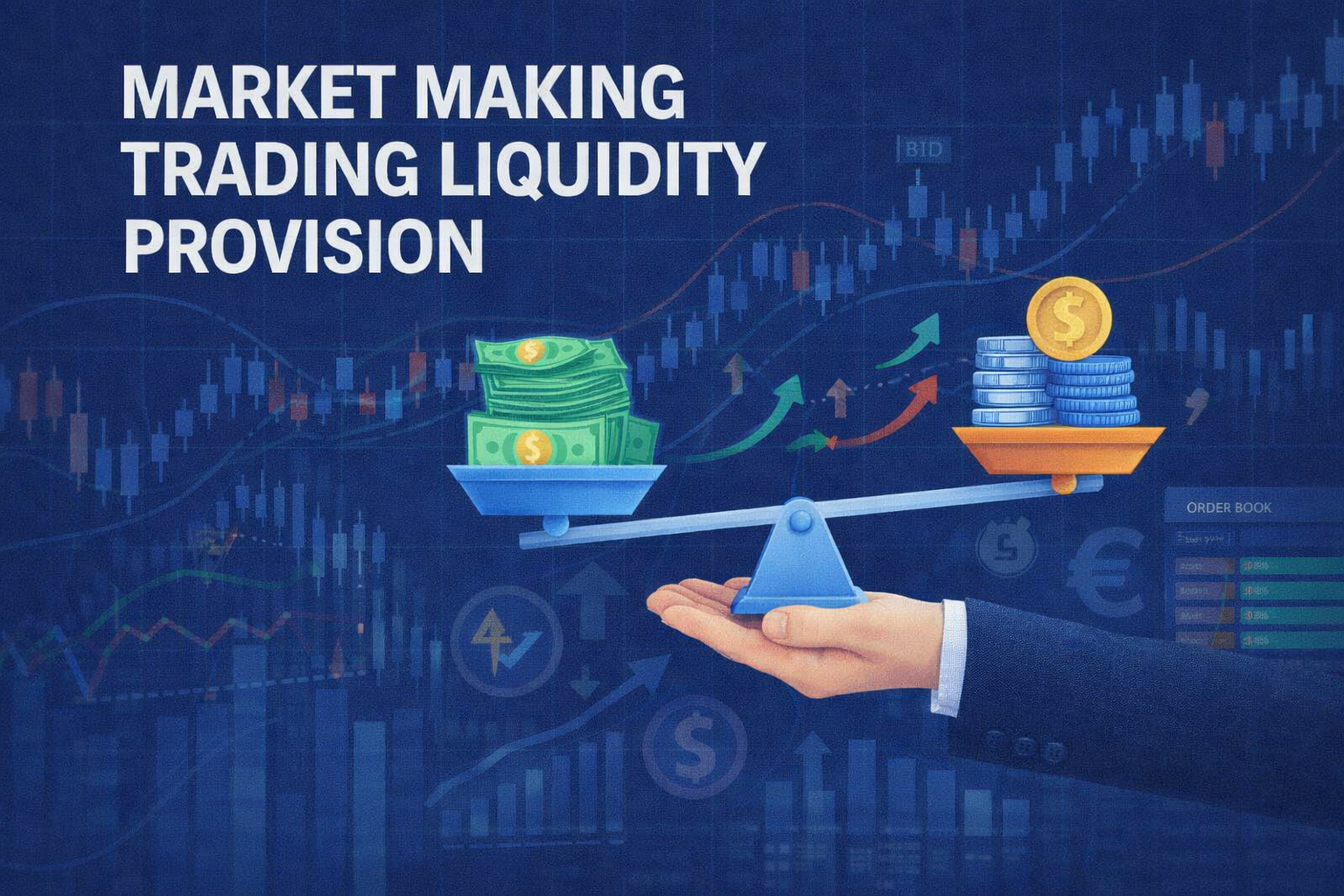
<p>Market makers profit consistently on prediction markets by quoting buy (bid) and sell (ask) prices for event contracts, capturing the bid-ask spread—typically 1-3 cents per contract—without predicting outcomes, yielding 20-40% annualized returns for active providers in 2026's $3B+ monthly volumes (a16zcrypto, Sep 2025; extrapolated 2026). This strategy thrives because thin liquidity demands constant quotes, rewarding those managing inventory risk via hedging. Delve into setup, tactics, and platform comparisons to launch your maker operation.</p>
<p>Role basics: You post bids/asks, e.g., bid $0.49/buy Yes, ask $0.51/sell Yes on a 50% event. Trade both sides, profit spread. Platforms incentivize with rebates—Kalshi pays 0.1% maker fee, Polymarket via USDC pools. Inventory risk: Skewed positions from one-sided flow; hedge by trading correlated markets or opposites.</p>
<p>Kalshi suits U.S. regulated makers (CFTC oversight), low min capital $50k. Polymarket, crypto-native, leverages AMMs for passive making but higher volatility. Strategies: Tighten spreads in high-liq events like Fed decisions—see <a href="https://www.predictionmarketnews.co/decoding-the-fed-trading-on-the-fed-rate-decision-prediction-market">Fed rate decision prediction market insights</a>. Widen in exotics for bigger spreads. Bots essential: Use Hummingbot or custom for 24/7 quoting.</p>
<p>Capital: $100k+ for meaningful income ($2k/month at 1c spread, 200k vol). Risks: Adverse selection (sharps pick off stale quotes), flash crashes. Counter: Dynamic pricing via LMSR models. Unique edge: Combine with arb for hybrid profits.</p>
<h2>Information is Power: How Deep Research Gives You a Prediction Market Edge</h2>
<p>Deep research grants a prediction market edge by uncovering mispriced contracts through superior info—news parsing, social sentiment, expert nets—enabling buys at 10-20% below fair value, as sharps do to dominate 70% profits (PokerNews, 2026). Crowds err on recency bias; first-movers on verified signals win because markets lag 1-4 hours on big news. Unpack sources, analysis, and speed hacks for your informational arbitrage.</p>
<p>Sources stack: Primary—SEC filings, CFTC reports. Social: X advanced search for insider leaks. Experts: Discord groups, <a href="https://www.predictionmarketnews.co/predicting-the-crypto-future-how-crypto-price-prediction-markets-work">crypto price prediction markets</a> forums. Proprietary: Poll aggregators like 538, adjusted for house effects. Example: Jan 2026 AI regulation bill—markets at 35% passage; buried GAO report bumped to 55%, 20% arb.</p>
<p>Filter noise: Score signals 1-10 on source cred, volume impact. Tools: Google Alerts, RSS for events; NLP scripts for sentiment. Speed: VPN multi-account for instant trades. Risks: Fake news traps—cross-verify three sources. Pair with <a href="https://www.predictionmarketnews.co/prediction-market-beginner-guide-2026">beginner's guide for 2026</a> basics.</p>
<p>Synthesis: Blend polls (90% accurate) with order flow (proprietary edge), outperforming polls by 15%. Track <a href="https://www.predictionmarketnews.co/prediction-markets-vs-sports-betting-which-offers-better-odds-and-insights">prediction markets vs sports betting odds</a> for cross-edges.</p>
<h2>Risk Management is Key: Protect Your Capital and Minimize Losses</h2>
<p>Risk management secures long-term profits in prediction markets via techniques like position sizing (never >2% bankroll per bet), diversification across 10+ uncorrelated events, stop-losses at 20% drawdown, and hedging—slashing max drawdowns from 50% to 10% for sustainable +25% yearly returns (NerdWallet, 2025; 2026 updates). Capital preservation trumps home runs because variance kills undisciplined traders in efficient markets. Master these to weather volatility.</p>
<p>Position size: Kelly criterion—bet fraction = (edge/odds). Conservative: 1% rule. Diversify: No >20% portfolio in politics. Stops: Auto-sell at -15% unrealized. Hedge: Buy opposing correlated bets, e.g., inflation Yes hedges rate cut No. Emotional guardrails: Daily loss limits, 48h cool-offs.</p>
<p>Assess tolerance: Risk parity portfolios. Tools: Excel trackers, Portfolio Visualizer adapted for binaries. See <a href="https://www.predictionmarketnews.co/smart-betting-essential-prediction-market-risk-management-techniques">essential prediction market risk management techniques</a>. Regulated edge: <a href="https://www.predictionmarketnews.co/the-importance-of-regulation-understanding-cftc-regulated-prediction-markets">CFTC regulated prediction markets</a> add safety. Unique: Hedge real-life via markets, per key fact #9.</p>
<p>What's your edge? Implement one strategy today—track for 30 days. Continuous refinement turns losses into lessons. Ready to profit?</p>