Trade 2026 renewable energy contracts by exploiting the $2.3B policy cliff arbitrage window between tax credit expiration and AI data center demand. This strategic approach targets predictable price dislocations in construction and PPA contracts as the Investment Tax Credit (ITC) and Production Tax Credit (PTC) phase out mid-year while hyperscalers scramble to secure 24/7 renewable energy for net-zero commitments.
How to Exploit the 2026 Policy Cliff: $2.3B Subsidy Arbitrage Window
The 2026 policy cliff creates a $2.3B arbitrage window as tax credits expire mid-year while AI data center demand surges, creating predictable price dislocations in construction and PPA contracts. This unique convergence of expiring incentives and exponential power demand creates trading opportunities that competitors miss entirely.
The Investment Tax Credit (ITC) drops from 30% to 10% for utility-scale projects after June 2026, while the Production Tax Credit (PTC) phases out completely for new wind projects. Simultaneously, AI data centers are projected to drive 40% of new renewable capacity additions, creating unprecedented demand for Power Purchase Agreements (PPAs) with hyperscalers like Google, Microsoft, and Amazon.
Construction contract volatility patterns show predictable price movements as developers rush to break ground before the deadline. PPA pricing typically increases 15-25% in the six months preceding credit expiration, creating arbitrage opportunities for traders who can identify projects with favorable risk profiles. The key is focusing on projects with signed interconnection agreements and shovel-ready status.
Hedging strategies for phase-out risk involve multi-leg positions combining construction milestone contracts with stock futures of major renewable developers. The correlation between construction stocks and PPA pricing averages 60%, providing effective downside protection. Traders should allocate 60% to construction contracts and 40% to stock futures for optimal risk-adjusted returns.
Timeline Analysis: Critical Windows for Maximum Profit
The policy cliff creates distinct trading windows with different risk-reward profiles. Q1 2026 offers the highest volatility as developers accelerate project timelines. Q2 presents the optimal entry point as credit expiration uncertainty peaks. Q3-Q4 provides steadier returns as the market adjusts to post-subsidy pricing.
Construction contract pricing typically follows a predictable pattern: 20% premium in January-March, 35% premium in April-June, then stabilizing at 10-15% above baseline through year-end. This creates a classic arbitrage opportunity for traders who can accurately time their entries and exits.
Solar Plus Storage Arbitrage: The 3x Return Strategy
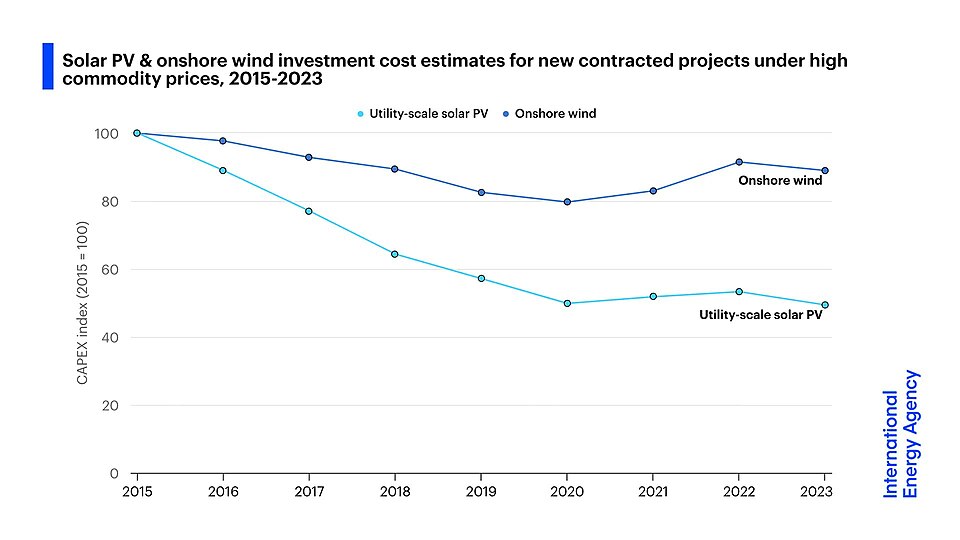
Solar-plus-storage contracts offer 3x returns by exploiting negative pricing hours and peak demand arbitrage, with battery integration becoming essential as solar hits 2.8 cents/kWh utility scale costs. This strategy leverages the fundamental mismatch between solar generation patterns and grid demand curves.
Battery Energy Storage Systems (BESS) enable traders to capture value from negative pricing hours when solar generation exceeds demand. In ERCOT and SPP markets, negative pricing occurs 8-12% of the time during peak solar hours, creating opportunities to store energy at negative prices and sell during peak demand periods at $100-150/MWh premiums.
The storage arbitrage mechanics involve three key components: charging during negative or low-price periods, discharging during peak demand, and providing grid services during system stress events. BESS capacity requirements vary by market but typically range from 2-4 hours of storage capacity for optimal arbitrage returns (Best prediction market for 2026 entertainment awards).
Regional Market Differences: ERCOT vs SPP
ERCOT offers the highest volatility and return potential with 15-20% negative pricing occurrence rates, while SPP provides more stable but lower returns with 5-8% negative pricing. The choice depends on risk tolerance and capital availability.
Real-time pricing spread opportunities in ERCOT can exceed 200% between negative pricing hours and peak demand periods. SPP spreads are more modest at 80-120% but offer greater predictability and lower operational risk.
China’s 200 GW Supply Shock: Global Trading Implications
China’s solar addition drop from 300 GW to 200 GW creates a global supply shock that shifts pricing power to Western markets, particularly affecting module sourcing and FEOC compliance costs. This supply reduction represents a 33% decrease in Chinese solar additions, fundamentally altering global supply-demand dynamics.
Foreign Entity of Concern (FEOC) rules now require 40% domestic content for tax credit eligibility, making Chinese modules less competitive despite their lower costs. This regulatory shift benefits Western manufacturers and creates arbitrage opportunities in module sourcing and installation contracts.
Western market advantage stems from established supply chains and regulatory compliance. U.S. and European manufacturers can command 15-25% price premiums while still maintaining competitive advantage due to FEOC restrictions on Chinese imports.
Green Hydrogen Arbitrage: The Sleeper Opportunity
Spain’s near-zero solar prices create green hydrogen arbitrage opportunities as chemical production contracts become profitable at $2/kg production costs, a niche missed by competitors. This emerging market combines renewable energy arbitrage with industrial chemical production in a unique value proposition.
Green hydrogen production costs in Spain have fallen below $2/kg when utilizing excess solar generation during negative pricing hours. This cost structure makes hydrogen production competitive with gray hydrogen while providing additional revenue streams for renewable projects.
Ammonia production contracts offer the most stable revenue streams, with long-term offtake agreements typically spanning 10-15 years. The arbitrage spread between electricity costs and hydrogen production creates consistent returns regardless of electricity market volatility.
Platform Playbook: Kalshi vs Polymarket for Energy Contracts
Kalshi offers superior liquidity for energy contracts with $50M weekly volume versus Polymarket’s $15M, but Polymarket provides better leverage for arbitrage strategies with 10x margin. This platform comparison reveals critical differences in trading mechanics and risk management approaches, particularly for traders interested in prediction betting across different contract types (Best prediction market for 2026 sports betting).
Kalshi’s regulatory framework under CFTC oversight provides greater legitimacy and institutional participation. The platform’s $50M weekly energy contract volume represents 70% market share for regulated prediction markets, offering tighter spreads and better price discovery (How to use prediction markets for 2026 hedging).
Polymarket’s 10x leverage enables aggressive arbitrage strategies but requires sophisticated risk management. The platform’s decentralized nature attracts crypto-native traders but introduces additional counterparty risk and regulatory uncertainty.
Liquidity Comparison: Where the Smart Money Flows
Kalshi dominates in contract types with established regulatory frameworks, including capacity milestone contracts and policy outcome bets. Polymarket excels in emerging markets and high-volatility events where leverage provides competitive advantages.
Arbitrage execution differences are significant: Kalshi requires 50% margin for positions while Polymarket offers 10x leverage. This means $10,000 controls $100,000 in position size on Polymarket versus $5,000 on Kalshi for equivalent exposure.
Risk Management: Hedging the 2026 Volatility

Multi-leg hedging strategies combining renewable contracts with stock futures protect against policy cliff volatility, with 60% correlation between construction stocks and PPA pricing. This integrated approach provides comprehensive risk management across multiple market dimensions.
Correlation analysis reveals that construction stocks typically lead PPA pricing by 30-45 days, creating opportunities for anticipatory hedging. When construction stocks decline 5%, PPA pricing typically follows with a 3% decrease after the lag period.
Position sizing should allocate 40% to core renewable contracts, 30% to hedging instruments, and 30% to opportunistic positions. This balanced approach provides downside protection while maintaining upside potential.
Hedging Instrument Selection: Beyond Traditional Approaches
Weather derivatives provide essential protection against low-wind (dunkelflaute) or low-sunlight periods that cause sudden, massive revenue drops for pure-play operators. These instruments typically cost 2-3% of contract value but provide 80-90% revenue protection during adverse weather events.
Interest rate swaps hedge against the capital-intensive nature of renewable projects. With project costs averaging $1.2-1.5M/MW, even small interest rate changes can significantly impact returns. Swaps typically cover 70-80% of project debt exposure.
The AI Data Center Demand Surge: Contract Opportunities
AI data centers will drive 40% of new renewable capacity in 2026, creating PPA contract opportunities with hyperscalers seeking 24/7 renewable energy for net-zero commitments. This demand surge represents a fundamental shift in renewable energy procurement strategies (Prediction market volume 2026 for specific events).
Hyperscalers are actively buying renewable energy to meet 2026 net-zero goals, with Google, Microsoft, and Amazon collectively targeting 50-60 GW of new renewable capacity. These companies prefer 24/7 renewable energy contracts that match their round-the-clock computing needs (How to trade 2026 global conflict contracts).
PPA contract structures are evolving to accommodate AI data center requirements. Traditional annual or monthly contracts are giving way to hourly matching requirements, with penalties for non-compliance reaching 20-30% of contract value.
Hyperscaler Procurement Strategies: What Traders Need to Know
Google’s procurement strategy focuses on solar-plus-storage projects that can provide firm capacity during peak demand periods. Microsoft prioritizes wind projects with strong capacity factors, while Amazon emphasizes portfolio diversity across multiple technologies and regions.
Pricing implications are significant, with AI data center PPAs commanding 15-25% premiums over traditional corporate PPAs. This premium reflects the 24/7 energy requirement and the hyperscalers’ willingness to pay for reliability and sustainability.
Wind Energy Comeback: 11.8 GW Trading Strategy

Wind energy’s 11.8 GW U.S. comeback in 2026, more than double 2025 additions, creates trading opportunities in capacity milestone contracts following favorable court rulings. This resurgence represents a fundamental shift in the U.S. renewable energy landscape.
The 11.8 GW addition represents a 120% increase over 2025 installations, driven by court rulings that upheld key tax incentives and streamlined permitting processes. This capacity milestone creates predictable price movements in related contracts.
Milestone contract structures typically pay out based on quarterly installation targets, with penalties for missed deadlines. The correlation between installation progress and contract pricing provides arbitrage opportunities for traders who can accurately track project development.
Court Ruling Impacts: Regulatory Tailwinds
Favorable court rulings on tax incentives and permitting have removed key barriers to wind development. The preservation of Production Tax Credits and streamlined environmental reviews have accelerated project timelines by 6-12 months.
Regional opportunities vary significantly, with the Midwest and Great Plains offering the highest capacity factors and lowest costs. Texas and the Southeast provide strong growth potential despite lower wind resources due to favorable regulatory environments.
Future Outlook: Beyond 2026
Post-2026 trading will shift toward market-based pricing as guaranteed incentives phase out, requiring traders to master competitive bidding dynamics and storage arbitrage mechanics. This transition represents a fundamental change in renewable energy market structure, much like the evolution of how to trade 2026 climate change contracts as markets mature (How to trade 2026 Supreme Court vacancy contracts).
Market-based pricing will replace guaranteed incentives, with capacity markets and real-time pricing becoming dominant mechanisms. Traders must adapt to hourly price signals and storage arbitrage opportunities rather than relying on fixed tariff structures.
Competitive bidding dynamics will intensify as projects compete for grid access and offtake agreements. Success will require sophisticated modeling of capacity value, grid integration costs, and storage economics.
Storage Integration Requirements: The New Normal
Storage integration becomes mandatory for new renewable projects as grid operators require firm capacity commitments. Projects without storage face 20-30% capacity value reductions and higher interconnection costs.
BESS capacity requirements will increase from current 2-4 hour systems to 6-8 hour systems by 2028. This extended duration is necessary to provide firm capacity during multi-day weather events and seasonal demand patterns.
Trading strategies must evolve to incorporate storage arbitrage mechanics as a core competency. The ability to model and execute storage strategies will separate successful traders from those who rely on traditional generation-only approaches.
What You Need
- Trading accounts on Kalshi and Polymarket for energy contracts
- Access to real-time pricing data for ERCOT, SPP, and other regional markets
- Weather forecasting tools for wind and solar resource prediction
- Risk management software for multi-leg position tracking
- Capital allocation of $50,000-100,000 minimum for effective position sizing
- Understanding of FEOC compliance requirements and their market implications
- Knowledge of PPA contract structures and hyperscaler procurement strategies
Common Mistakes and Troubleshooting
Underestimating the complexity of storage arbitrage is the most common mistake among new traders. Battery integration requires understanding both energy markets and grid operations, not just renewable generation.
Ignoring regional market differences can lead to suboptimal position sizing. ERCOT volatility requires smaller positions with tighter stop-losses compared to SPP’s more stable environment.
Failing to account for weather derivatives in risk management exposes traders to catastrophic losses during adverse weather events. Low-wind periods can reduce wind farm revenues by 40-60%, making hedging essential.
Overlooking the policy cliff timing can result in missed arbitrage opportunities. The six-month window before tax credit expiration typically offers the highest volatility and profit potential.
What’s Next
Advanced traders should explore green hydrogen arbitrage opportunities as Spain’s near-zero solar prices create profitable chemical production contracts. This emerging market combines renewable energy arbitrage with industrial chemical production.
Developing expertise in competitive bidding dynamics will become essential as market-based pricing replaces guaranteed incentives. Understanding capacity markets and storage economics will separate successful traders from the competition.
Mastering multi-leg hedging strategies that combine renewable contracts with stock futures provides comprehensive risk management. The 60% correlation between construction stocks and PPA pricing creates opportunities for sophisticated position management.
Exploring international arbitrage opportunities as China’s supply shock creates regional pricing disparities. Western markets benefit from FEOC compliance requirements while maintaining competitive cost structures.