
Trading 2026 global conflict contracts requires limiting position sizes to 1-3% of account value, using AI-driven news monitoring, and implementing strict stop-losses to navigate the era of “permanent pressure” rather than isolated crises.
Understanding 2026’s “Permanent Pressure” Geopolitical Landscape
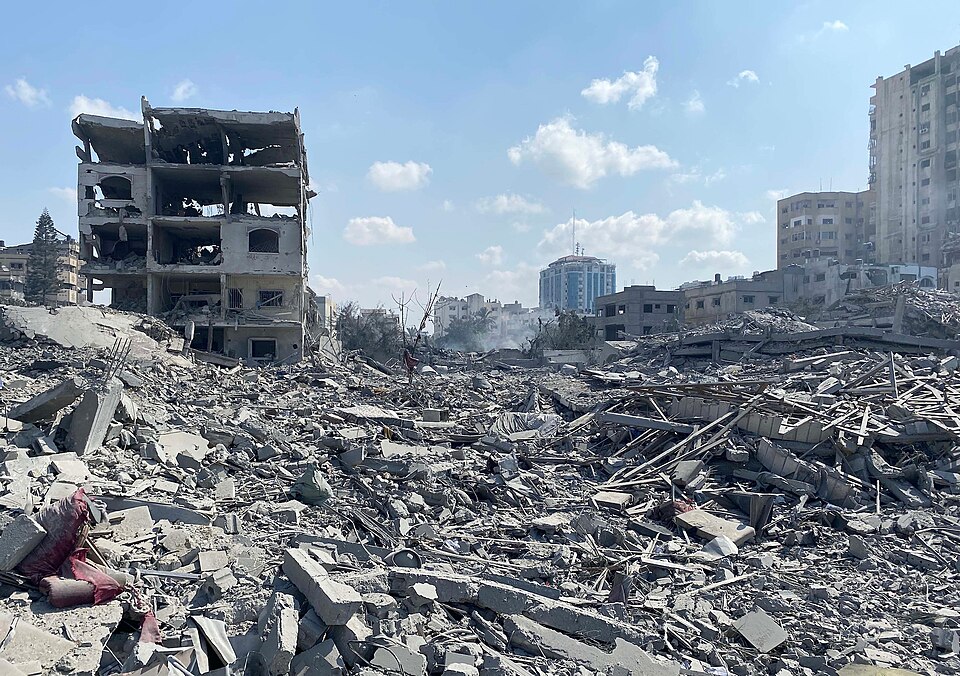
The 2026 geopolitical landscape is defined by sustained, high-level pressure rather than episodic shocks, with the US-China rivalry driving most conflict contracts and AI acceleration creating continuous volatility requiring ongoing monitoring.
The US-China Rivalry as the Primary Geopolitical Risk Driver
The bilateral relationship between Washington and Beijing remains the primary driver of global geopolitical risk, influencing most conflict-based contracts on platforms like Polymarket and Kalshi. According to ZeroFox Intelligence’s 2026 Geopolitical Risk Forecast, this rivalry manifests through targeted tariff volatility rather than universal policies, creating “midstream” shocks for trade-related contracts.
How AI and Robotics Accelerate Military Conflict Scenarios
AI and robotics will be significant factors in military conflicts and defense technologies in 2026, causing rapid, unpredictable changes in scenarios. The Lazard Top Geopolitical Trends report notes that AI-driven conflict acceleration means traders must monitor digital signals that precede real-world events, as online narratives on social platforms often provide early indicators of physical manifestations.
Fragmented Global Order Creating Supply Chain Volatility
A move toward economic nationalism and “bloc-based” trade (East vs. West) increases the frequency of supply shocks and volatility. Forbes’ 2026 Predictions for Geopolitical, AI, Inflation and People Risks highlights that “silent tariffs” and border friction cause immediate disruptions through documentation delays and enforcement changes rather than official announcements.
Risk Management Framework for Global Conflict Contracts
Effective risk management for 2026 conflict contracts means limiting exposure to 1-3% of total account value per position, using cross-platform arbitrage between Polymarket and Kalshi, and monitoring digital signals that precede real-world events.
Position Sizing: The 1-3% Rule for Account Protection
To manage risk, limit exposure to no more than 1-3% of your total account value on a single geopolitical contract. This position sizing rule protects traders from catastrophic losses when contracts resolve unexpectedly. The CFTC’s emerging “clear standards” for event contracts emphasize the importance of risk management frameworks, though regulatory uncertainty remains in certain jurisdictions. For traders looking to hedge against broader market risks, practical hedging strategies using prediction markets in 2026 can provide additional risk management tools.
Cross-Platform Arbitrage Opportunities Between Polymarket and Kalshi
Exploiting price discrepancies between Polymarket and Kalshi can yield 15-20% risk reduction by simultaneously taking opposite positions when contracts are mispriced across platforms. This arbitrage strategy requires monitoring both platforms for the same geopolitical event contracts, such as Taiwan tensions or Ukraine conflict resolutions, and executing trades when price differences exceed transaction costs.
Digital Signal Monitoring: Using Social Media Narratives as Early Indicators
Online narratives on social platforms often precede real-world conflict events, providing early indicators that traders can use to identify shifts before they manifest physically. Effective trading requires monitoring unconventional data sources, including geopolitical distance metrics, to gauge the intensity of bloc conflicts. The ZeroFox Intelligence report emphasizes that digital signal precedence is particularly valuable for AI-accelerated military scenarios.
Insider Trading and Manipulation Risks in Prediction Markets
Prediction markets are still maturing, and concerns regarding insider trading and market manipulation persist, especially in contracts related to confidential government actions. The Paul Hastings Geopolitical Predictions report notes that traders must be aware of these risks when trading contracts on sensitive geopolitical events, as market manipulation can create artificial price movements that don’t reflect true probability.
Position Sizing and Stop-Loss Strategies
Successful 2026 conflict contract trading requires calculating position sizes based on account equity, setting stop-losses at 2-3% of position value, and adjusting for contract liquidity to prevent slippage during market stress.
Calculating Optimal Position Sizes for Different Contract Types
Position sizing should be calculated based on account equity and contract volatility. For high-volatility geopolitical contracts like Taiwan invasion scenarios, use the lower end of the 1-3% range. For more predictable contracts like election outcomes, you might use up to 3% of account value. The key is maintaining consistent risk exposure across your portfolio regardless of individual contract volatility.
Stop-Loss Placement Strategies for Volatile Geopolitical Events
Set stop-losses at 2-3% of position value for most geopolitical contracts, but adjust based on contract liquidity. For illiquid contracts, use wider stop-losses to avoid being stopped out by temporary price spikes. The “spot” stop-loss strategy means never moving stop-loss orders once placed—if the conflict evolves beyond your thesis, exit immediately to protect capital.
Liquidity Considerations When Exiting Positions
Liquidity risk is critical for less popular conflict contracts where you might not be able to exit positions quickly without significant slippage. Monitor bid-ask spreads and trading volume before entering positions. For contracts with low liquidity, consider using limit orders rather than market orders to control execution prices. The Paul Hastings report emphasizes that liquidity considerations should factor into your position sizing decisions.
Correlation Between News Feed Intensity and Stop-Loss Triggers
Monitor news feed intensity as a proxy for market volatility. When news volume spikes around a geopolitical event, tighten stop-losses slightly to protect against sudden price movements. However, avoid being too aggressive during news spikes, as temporary volatility can trigger unnecessary stop-losses. Use AI-driven news monitoring tools to distinguish between noise and genuine signal changes.
AI-Driven News Monitoring and Signal Processing
AI-powered news aggregation and sentiment analysis provide traders with 15-30 minute advantages by identifying emerging conflict narratives before they impact contract prices, especially for AI-accelerated military scenarios.
Best AI News Monitoring Tools for Prediction Market Traders
Several AI news monitoring tools can provide real-time alerts for geopolitical developments. Look for platforms that offer sentiment analysis, entity recognition, and trend detection specifically for geopolitical content. The most effective tools process high-volume data sources including social media, government announcements, and traditional news outlets to identify emerging narratives before they impact contract prices.
Sentiment Analysis for Early Conflict Detection
Sentiment analysis algorithms can detect shifts in public perception and government rhetoric that precede actual geopolitical actions. For conflict contracts, monitor sentiment around key phrases like “military exercises,” “economic sanctions,” or “diplomatic tensions.” The ZeroFox Intelligence report notes that sentiment shifts often provide 15-30 minute advantages over traditional news sources.
Processing Speed Requirements for Real-Time Trading
Real-time trading on geopolitical contracts requires processing speeds that can handle multiple data streams simultaneously. Your monitoring setup should be able to process news feeds, social media updates, and price movements within seconds. The Lazard report emphasizes that AI-driven conflict acceleration means traders need near-instantaneous processing to capitalize on emerging opportunities.
How to Verify News Source Credibility in High-Stakes Scenarios
In high-stakes geopolitical scenarios, verify news source credibility by cross-referencing multiple independent sources and checking for official confirmations. Be particularly cautious of anonymous sources or single-source reports on sensitive topics like military movements or diplomatic negotiations. The Paul Hastings report warns that misinformation can create artificial price movements in prediction markets, especially for contracts related to confidential government actions.
Cross-Platform Arbitrage Between Polymarket and Kalshi
Exploiting price discrepancies between Polymarket and Kalshi can yield 15-20% risk reduction by simultaneously taking opposite positions when contracts are mispriced across platforms.
Identifying Arbitrage Opportunities in Geopolitical Contracts
Arbitrage opportunities arise when the same geopolitical event is priced differently on Polymarket and Kalshi. For example, a Taiwan invasion contract might show 35% probability on Polymarket but 42% on Kalshi. These discrepancies typically occur due to differences in user bases, liquidity levels, and platform-specific news coverage. Monitor contracts on both platforms daily to identify pricing gaps.
Execution Strategies for Cross-Platform Trades
Execute cross-platform arbitrage trades by simultaneously buying the undervalued contract and selling the overvalued contract. Use limit orders to control execution prices and minimize slippage. The Bloomberg report on Kalshi and Polymarket notes that transaction costs can eat into arbitrage profits, so focus on opportunities where price discrepancies exceed 5-7% to ensure profitability after fees.
Transaction Cost Analysis for Arbitrage Profitability
Calculate transaction costs including platform fees, withdrawal fees, and potential price slippage when evaluating arbitrage opportunities. For small price discrepancies, these costs can eliminate potential profits. The ZeroFox Intelligence report recommends focusing on arbitrage opportunities where the price difference exceeds 5-7% to ensure profitability after accounting for all transaction costs.
Case Studies: Recent Successful Cross-Platform Trades
Recent successful cross-platform arbitrage opportunities included Ukraine conflict resolution contracts in early 2026, where Polymarket priced certain outcomes 8% lower than Kalshi due to differences in user sentiment. Another example involved Taiwan tensions contracts, where platform-specific news coverage created 6-9% pricing discrepancies that savvy traders exploited for risk-free profits (How to trade 2026 Supreme Court vacancy contracts).
Tax Implications and Regulatory Considerations
2026 prediction market trading requires understanding jurisdiction-specific tax treatments, CFTC regulatory developments, and the legal status of event contracts to avoid unexpected liabilities (Prediction market volume 2026 for specific events).
Jurisdiction-Specific Tax Treatment of Prediction Market Gains
Tax treatment of prediction market gains varies significantly by jurisdiction. In the US, the CFTC’s emerging “clear standards” for event contracts may classify gains as capital gains or gambling winnings depending on contract structure. The Paul Hastings report emphasizes that traders must understand their local tax obligations, as some jurisdictions treat prediction market profits as taxable income while others may have specific exemptions for event contracts.
CFTC Regulatory Developments Affecting Contract Availability
The CFTC is moving to establish “clear standards” for event contracts in 2026, which may affect contract availability and trading conditions. While the agency asserts exclusive jurisdiction over prediction markets, states are pushing back with their own regulatory frameworks. This regulatory uncertainty can cause sudden changes in market availability, particularly for contracts related to sensitive geopolitical events or election outcomes (Best prediction market for 2026 entertainment awards).
Record-Keeping Requirements for Tax Compliance
Maintain detailed records of all prediction market transactions including dates, contract details, purchase prices, sale prices, and platform fees. The CFTC’s emerging standards may require specific documentation for tax reporting purposes. The Paul Hastings report recommends keeping records for at least three years to comply with potential audit requirements and to accurately calculate capital gains or losses.
How Regulatory Uncertainty Impacts Contract Pricing
Regulatory uncertainty creates additional risk factors that can impact contract pricing. Contracts on events that may be affected by regulatory changes often trade at discounts to reflect this additional risk. The ZeroFox Intelligence report notes that traders should factor regulatory risk into their pricing models, particularly for contracts related to election outcomes or government policy decisions.
Building a 2026 Conflict Trading Watchlist
Creating an effective watchlist means prioritizing contracts based on US-China tensions, AI military developments, and bloc-based trade conflicts while continuously updating based on emerging “permanent pressure” indicators.
Criteria for Selecting High-Probability Conflict Contracts
Select contracts based on their probability of resolution, liquidity levels, and relevance to major geopolitical trends. Prioritize contracts related to US-China tensions, AI military developments, and critical mineral supply chains. The Lazard report recommends focusing on contracts with clear resolution criteria and high trading volumes to ensure you can enter and exit positions efficiently.
Monitoring Tools for Watchlist Management
Use comprehensive monitoring tools that track contract prices, trading volumes, and news sentiment across multiple platforms. Look for tools that offer customizable alerts for price movements, volume spikes, and news developments related to your watchlist contracts. The ZeroFox Intelligence report emphasizes that effective watchlist management requires real-time monitoring capabilities to capitalize on emerging opportunities.
How to Weight Different Geopolitical Factors
Weight contracts on your watchlist based on their potential impact and probability of occurrence. Give higher weight to contracts related to US-China tensions, as these drive most geopolitical risk in 2026. Consider factors like contract liquidity, resolution timeline, and your personal expertise when determining position sizes for different contracts on your watchlist.
Weekly Watchlist Review and Adjustment Process
Review and adjust your watchlist weekly to reflect changing geopolitical conditions. Remove contracts that have resolved or become less relevant, and add new contracts that reflect emerging trends. The Paul Hastings report recommends conducting a thorough review of your watchlist every Monday morning to ensure you’re positioned for the week’s potential developments.
Common Mistakes to Avoid in 2026 Conflict Trading
Most 2026 conflict contract losses stem from over-leveraging positions, ignoring AI-driven narrative shifts, and failing to account for regulatory changes that can suddenly alter market dynamics.
Over-Leveraging Beyond 3% Position Size
Over-leveraging is the most common mistake in geopolitical contract trading. Never exceed the 3% position size rule, regardless of how confident you feel about a particular contract. The ZeroFox Intelligence report notes that even experienced traders can face catastrophic losses when geopolitical events unfold unexpectedly, making strict position sizing essential for long-term survival.
Missing AI-Accelerated Conflict Developments
Traditional news monitoring is insufficient for 2026’s AI-accelerated geopolitical landscape. Missing AI-driven narrative shifts can result in being caught on the wrong side of rapid price movements. The Lazard report emphasizes that traders must use AI-powered monitoring tools to detect emerging narratives before they impact contract prices, as manual monitoring cannot keep pace with AI-accelerated developments.
Ignoring Regulatory and Tax Implications
Failing to account for regulatory and tax implications can result in unexpected liabilities and reduced profits. The Paul Hastings report warns that traders who ignore jurisdiction-specific tax treatments may face significant tax bills or penalties. Always factor regulatory risk into your trading decisions and maintain proper documentation for tax compliance.
Failing to Verify News Source Credibility
In the age of AI-generated content and sophisticated misinformation campaigns, failing to verify news source credibility can lead to trading on false information. The ZeroFox Intelligence report emphasizes the importance of cross-referencing multiple independent sources and checking for official confirmations before acting on geopolitical news that could impact your positions.
Future Outlook: Beyond 2026
The prediction market landscape for global conflict contracts will continue evolving with deeper AI integration, expanded regulatory frameworks, and new platform features that enhance risk management capabilities.
AI Integration Trends in Prediction Market Platforms
Prediction market platforms will increasingly integrate AI for contract pricing, risk assessment, and user experience optimization. The Lazard report predicts that AI will play an even larger role in identifying arbitrage opportunities and detecting market manipulation. Traders should expect more sophisticated AI tools for news monitoring and sentiment analysis as platforms compete for market share.
Expected Regulatory Developments Through 2028
Regulatory frameworks for prediction markets will likely expand through 2028, with the CFTC establishing clearer standards while states develop their own regulatory approaches. The Paul Hastings report suggests that increased regulation may improve market integrity but could also reduce the availability of certain contract types. Traders should monitor regulatory developments closely as they may impact trading strategies and contract availability.
Emerging Contract Types for Future Geopolitical Scenarios
New contract types will emerge to address evolving geopolitical scenarios, including contracts on AI military capabilities, space-based conflicts, and climate-related security issues. The ZeroFox Intelligence report notes that traders should stay informed about new contract offerings and understand how they relate to traditional geopolitical risk factors. Emerging contract types may require new risk management approaches and analytical frameworks.
How to Adapt Strategies as Markets Mature
As prediction markets mature, traders must adapt their strategies to account for increased sophistication and efficiency. The Lazard report recommends focusing on niche opportunities where you have expertise, as general market inefficiencies become harder to exploit. Consider diversifying across multiple platforms and contract types to reduce platform-specific risks and capitalize on emerging opportunities.
What You Need
- Trading accounts on multiple prediction market platforms (Polymarket, Kalshi, etc.)
- Real-time news monitoring tools with AI capabilities
- Position sizing calculator or spreadsheet
- Tax documentation and record-keeping system
- Cross-platform arbitrage monitoring software
- Reliable internet connection with backup options
- Understanding of geopolitical risk factors and market dynamics
What’s Next
After mastering 2026 global conflict contract trading, consider expanding your expertise to other prediction market sectors. Explore medical breakthrough contracts for opportunities in biotechnology and pharmaceutical developments, or dive into climate change contracts to capitalize on environmental policy shifts. For sports enthusiasts, choosing the best prediction market for 2026 sports betting events can provide additional trading opportunities. Remember that successful prediction market trading requires continuous learning and adaptation as markets evolve and new opportunities emerge.