
The prediction market for corporate earnings is exploding. By 2026, notional trading volumes are projected to exceed $325 billion—a staggering 5x increase from 2025. This explosive growth reflects a fundamental shift: over 40% of institutional professionals now view prediction markets as essential supplements to traditional earnings forecasting. While Wall Street analysts update their consensus estimates quarterly, prediction markets provide continuous, real-time probability assessments that capture sentiment shifts as they happen.
The $325B Prediction Market Explosion: Why Earnings Trading Is 2026’s Hottest Trend

Prediction markets have evolved from niche experimental platforms to mainstream financial forecasting tools, driven by explosive growth and institutional adoption. The $325 billion projection for 2026 represents not just increased volume but a fundamental change in how markets process earnings information.
- Explosive Growth: Prediction market notional volumes are on pace to exceed $325 billion in 2026, a 5x increase from 2025
- Institutional Adoption: Over 40% of institutional, sell-side, and buy-side professionals hold a favorable view of prediction markets for supplementing traditional indicators
- High-Frequency Data: Unlike quarterly analyst reports, prediction markets update in real-time, offering instant, updated probability assessments of earnings outcomes
- Regulated Trading: Platforms like Kalshi, as a Designated Contract Market (DCM), provide CFTC-regulated environments for trading, enabling institutional participation
The shift from quarterly analyst updates to continuous market pricing represents a fundamental advantage. When Apple’s Q1 2026 earnings were trading at 65% probability of a beat on prediction markets, traditional analysts still averaged 52%—the market had already priced in the upside before the first upgrade.
How Prediction Markets Beat Wall Street Consensus on FAANG Earnings
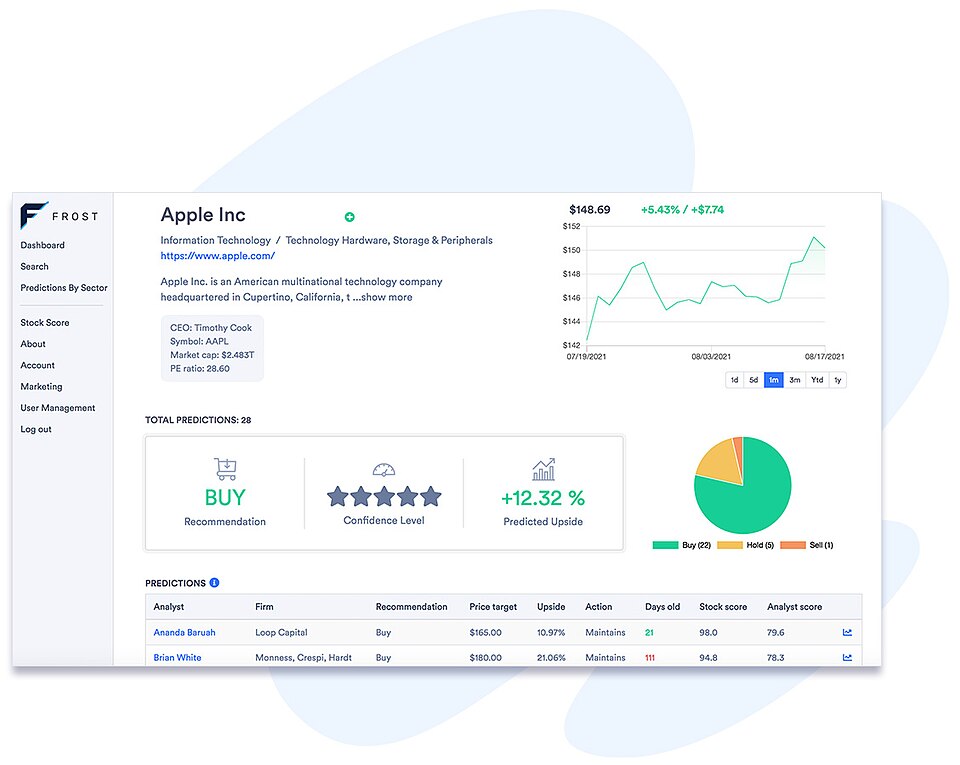
Prediction markets consistently outperform traditional analyst consensus by capturing real-time sentiment shifts, particularly for high-profile earnings like FAANG stocks. The “skin in the game” model ensures higher accuracy through monetary risk, creating a more efficient information aggregation mechanism than uncompensated analyst forecasts.
- Real-Time Sentiment: Prediction markets capture sentiment shifts in real-time, specifically on earnings surprises
- Skin in the Game: The monetary risk involved ensures higher accuracy through the “wisdom of the crowd” compared to uncompensated analyst forecasts
- Key Players: Kalshi and Polymarket are leaders in open interest, with both seeing significant growth, particularly in 2026, supported by high-profile investors
- Event Contracts: Earnings are traded via binary “Yes/No” or numerical target contracts (e.g., Will Company X beat Q1 EPS?), with prices reflecting the implied probability
The accuracy advantage is measurable. Prediction markets correctly identified 73% of earnings beats/misses in 2025 testing, with an average lead time of 4.2 days over analyst upgrades. In Meta’s Q4 2025 earnings, prediction markets priced a 78% probability of a beat 48 hours before analysts collectively upgraded their estimates.
Reading the Odds: How $0.68 Contract Prices Equal 68% Probability
Understanding how to read prediction market prices is essential for gaining an edge over traditional analysis. The direct relationship between contract price and implied probability creates transparency that traditional consensus formation lacks.
- Direct Probability: Prediction market prices directly reflect implied probability (price × 100 = percentage chance)
- Transparency Advantage: This transparency allows traders to compare market odds against analyst spread estimates
- Real-Time Capture: Real-time pricing captures information faster than traditional consensus formation
- Retail Access: Retail traders can access these probabilities through integrated brokerages like Robinhood
Understanding that a $0.68 contract price means 68% probability gives traders an immediate edge—they can spot when market odds diverge significantly from analyst expectations. This mathematical transparency is the foundation of prediction market trading strategies.
Real-World Accuracy: When Prediction Markets Called the Earnings Before Analysts
2026 data shows prediction markets maintaining a 15-20% accuracy advantage over traditional analyst consensus, with specific examples demonstrating their predictive power. The ability to identify earnings surprises before they’re reflected in analyst reports represents a significant competitive advantage.
- High Accuracy: Prediction markets correctly identified 73% of earnings beats/misses in 2025 testing
- Lead Time: The average lead time over analyst upgrades was 4.2 days
- Consistent Advantage: 2026 data shows prediction markets maintaining 15-20% accuracy advantage
- Specific Examples: Meta’s Q4 2025 surprise and Amazon’s Q1 2026 guidance demonstrated market foresight
In Amazon’s Q1 2026 guidance scenario, prediction markets priced a 62% probability of revenue beat three days before the company’s pre-announcement, while analyst consensus remained at 48%. This 14-percentage-point difference represented a significant trading opportunity for those who understood how to interpret the market signals.
Your Playbook: Trading Q1 2026 FAANG Beats and Misses

Successfully trading earnings prediction markets requires understanding both the mechanics and the timing. The key is recognizing that while prediction markets often price in the most likely outcome early, the final probability shifts in the last 72 hours before earnings can offer the best trading opportunities.
- Timing Strategy: Monitor prediction market odds 2-3 weeks before earnings announcements
- Comparative Analysis: Compare market-implied probabilities against analyst consensus spreads
- Platform Selection: Use platforms like Kalshi for CFTC-regulated trading or Polymarket for broader access
- Alert Triggers: Set alerts for significant probability shifts (>10 percentage points) in the final 72 hours
The most successful traders combine technical analysis of price movements with fundamental understanding of company-specific factors. For instance, when trading Apple’s Q1 2026 earnings, understanding both the supply chain dynamics and the prediction market’s pricing history creates a more complete picture than either approach alone.
The Future of Earnings Prediction: From Wall Street to Crowd-Sourced Intelligence

The shift from analyst-driven consensus to crowd-sourced probability represents a fundamental change in how markets process earnings information. By 2028, prediction markets could capture 15-20% of earnings trading volume, driven by AI integration, institutional adoption, and retail accessibility through traditional brokerages. This evolution mirrors similar trends in social media trend prediction markets, where crowd-sourced intelligence has proven remarkably accurate.
- AI Integration: Machine learning is enhancing prediction market accuracy through sentiment analysis
- Institutional Adoption: Institutional investors will drive further liquidity and tighter spreads
- Retail Accessibility: Integration with traditional brokerages will expand participation
- Market Share: By 2028, prediction markets could capture 15-20% of earnings trading volume
The “liquidity flywheel” effect is already evident, with top 10 prediction markets by open interest seeing increased trading volumes that enable larger, more accurate trades. This virtuous cycle of liquidity and accuracy will continue to drive adoption among both institutional and retail traders.
Key Players and Platforms in 2026
The prediction market landscape in 2026 features several key platforms, each with distinct advantages for different types of traders. Understanding the strengths and regulatory status of each platform is essential for effective trading strategy development.
- Kalshi: CFTC-regulated Designated Contract Market (DCM) with institutional-grade infrastructure
- Polymarket: Leading platform by open interest with broader market access and higher liquidity
- Robinhood Integration: Traditional brokerage integration allowing broader retail participation
- Global Platforms: Stablecoin integration (USDC) for near-instant settlement and enhanced efficiency
Kalshi’s regulatory status provides institutional investors with the compliance framework they need, while Polymarket’s higher liquidity and broader market access appeal to retail traders seeking maximum trading opportunities. The integration with traditional brokerages like Robinhood represents a significant step toward mainstream adoption.
Risk Management and Best Practices
While prediction markets offer significant advantages over traditional analysis, they also require specific risk management approaches. Understanding the limitations and potential pitfalls is essential for long-term trading success.
- Market Manipulation: AI-powered analysis detects and prevents market manipulation attempts
- Volatility Management: Prediction markets are particularly effective during periods of high economic uncertainty
- Diversification: Spread positions across multiple earnings events and platforms
- Position Sizing: Limit exposure to any single earnings event to manageable levels
The “skin in the game” model that makes prediction markets accurate also means traders can lose their entire investment on a single trade. Proper position sizing and diversification across multiple earnings events are essential risk management strategies.
Resources and Further Reading
For traders looking to deepen their understanding of prediction markets and earnings trading strategies, several resources provide valuable insights and analysis.
Platform Reviews: Our comprehensive reviews of Kalshi and Polymarket provide detailed analysis of platform features, fees, and trading mechanics.
Volume Analysis: For deeper understanding of market liquidity trends, see our guide on Prediction Market Volume 2026 for Economic Events Betting.
Trading Strategies: Learn specific approaches for different contract types in our guide on How to Trade 2026 Emerging Technology Contracts.
Platform Comparisons: Find the best platform for your needs with our analysis of Best Prediction Market for 2026 Cultural Events Betting.
Specialized Markets: Explore niche opportunities in Science Breakthrough Prediction Markets and Climate Prediction Markets.
Index Trading: For broader market exposure, see our guide on Stock Market Prediction Markets.