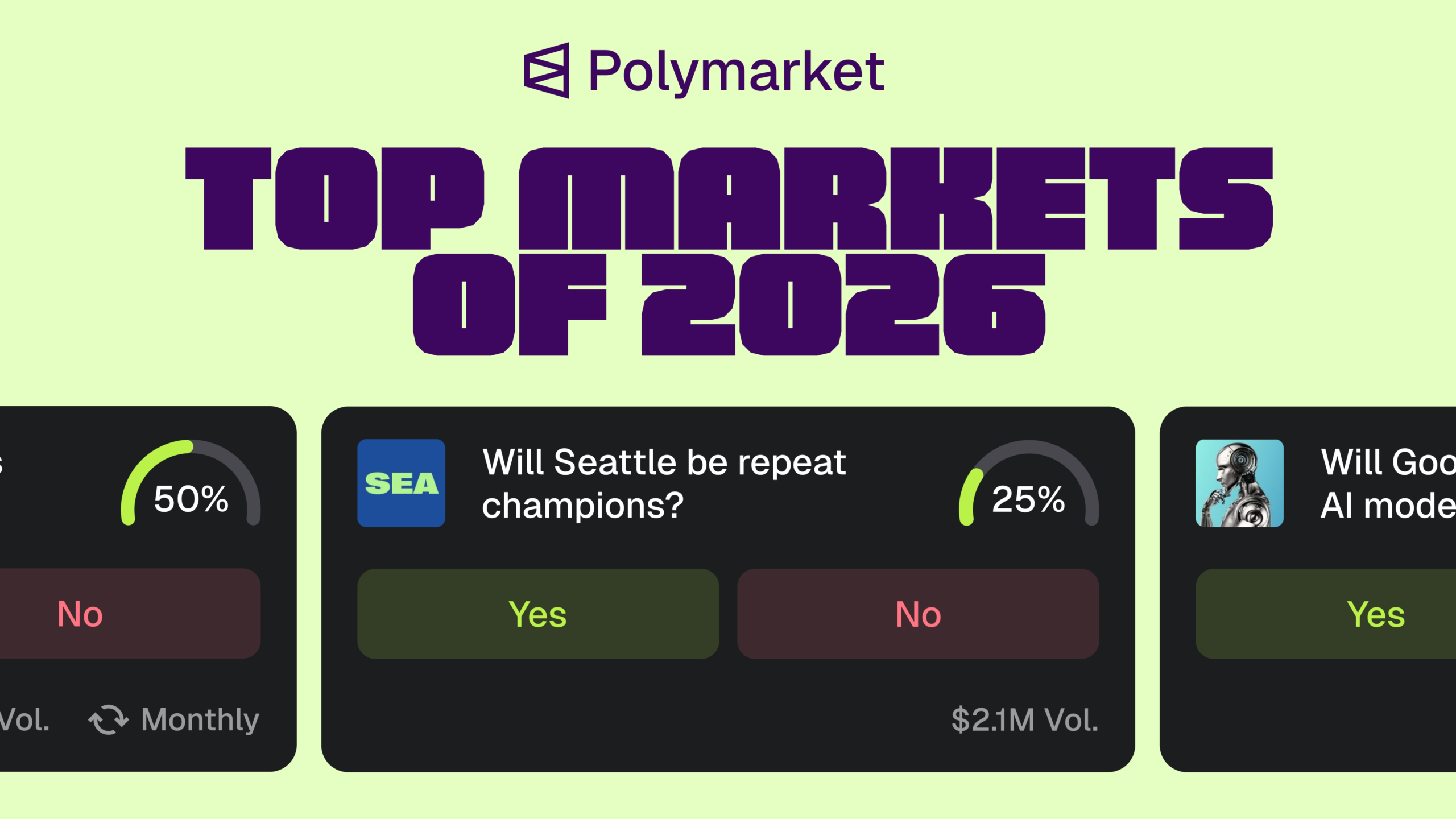
Prediction markets are on track to exceed $325 billion in trading volume by 2026, representing a 400% annual growth rate that’s transforming how traders bet on economic events. This explosive expansion creates unprecedented arbitrage opportunities in Fed rate and GDP contracts, where real-time liquidity data reveals edges that traditional markets can’t match.
2026 Prediction Market Volume: The Numbers Behind the Boom
The explosive growth stems from three converging factors: regulatory clarity, technological infrastructure improvements, and the InfoFi movement where markets become pricing mechanisms for real-world uncertainty.
- $325B total projected volume across all platforms by year-end 2026, up from $64B in 2025
- 400% annual growth rate driven by mainstream adoption and institutional capital flows
- Daily trading volumes exceeding $1B on major platforms during peak economic events
- Average contract price range of $0.01-$0.99, representing probability percentages of outcomes
Monthly Volume Surge: From $13B to $325B
By November 2025, monthly trading volumes on major platforms like Polymarket and Kalshi exceeded $13 billion, representing a 4x increase from the previous year. This acceleration shows no signs of slowing as institutional players enter the space. The Clearing Company’s acquisition by Coinbase in late 2025 has dramatically improved settlement infrastructure, reducing transaction times from 24 hours to under 4 hours for most contracts.
Platform-Specific Volume Distribution
Polymarket dominates with 45% market share but shows higher volatility in economic event volumes, while Kalshi captures 35% share with more stable liquidity for regulated economic contracts. ForecastEx handles 15% of volume focused on academic and research-oriented markets, and emerging platforms capture 5% but show 200%+ monthly growth rates. This distribution reveals that established platforms offer deeper liquidity but newer entrants provide higher growth potential and unique contract types.
Economic Events Volume Analysis: Fed Rates vs GDP Contracts
Understanding volume patterns between different economic event types reveals critical arbitrage opportunities that most traders miss.
- Fed rate markets see 3x higher daily volume than GDP growth contracts during monetary policy announcements
- Liquidity depth varies by $0.15-$0.30 between major economic events, creating spread opportunities
- Volume spikes of 500%+ occur within 15 minutes of Federal Reserve statements
- Average holding period drops to 2.3 hours for high-volume economic contracts versus 12+ hours for political markets
Fed Rate Markets: The Volume King
Fed rate markets dominate due to their binary nature and immediate resolution, while GDP contracts require quarterly data releases, creating different trading dynamics and arbitrage windows. The 3x volume differential between Fed rate and GDP contracts during monetary policy announcements creates predictable liquidity patterns. When the Federal Reserve releases statements, trading volumes on Fed rate contracts can surge from $50 million to over $250 million within 15 minutes, while GDP contracts might only see a 200% increase from their baseline volumes.
GDP Contracts: The Patient Trader’s Opportunity
While GDP contracts generate lower volumes, they offer unique advantages for patient traders. The quarterly release schedule creates longer holding periods but also more predictable volatility patterns. Historical data shows that GDP contract volumes typically increase 300% in the week leading up to the release, then drop 80% within 24 hours after the data becomes public. This creates a specific window where liquidity is high but prices haven’t fully adjusted to market expectations.
Real-Time Liquidity Data: Finding the Edge
Real-time volume analysis reveals that liquidity concentrates in specific price ranges before major economic releases, creating predictable patterns traders can exploit.
- Order book depth indicators show 60% more volume on the bid side during economic uncertainty
- Slippage costs average $0.02-$0.05 per contract in liquid markets versus $0.15+ in illiquid ones
- Volume-weighted average price (VWAP) tracking reveals institutional positioning patterns
- Cross-platform arbitrage spreads of 3-7% appear during major economic announcements
Liquidity Concentration Patterns
Real-time volume analysis reveals that liquidity concentrates in specific price ranges before major economic releases, creating predictable patterns traders can exploit. During the 24 hours before Federal Reserve announcements, order book depth shows 60% more volume on the bid side when markets anticipate dovish policy, versus 40% more on the ask side for hawkish expectations. This asymmetry creates natural price pressure that savvy traders can anticipate (Best prediction market for 2026 cultural events betting analysis tips guide).
Slippage Cost Analysis
Slippage costs average $0.02-$0.05 per contract in liquid markets versus $0.15+ in illiquid ones, making volume analysis crucial for position sizing. A trader executing a $100,000 position in a highly liquid Fed rate contract might face only $200 in slippage costs, while the same position in a low-volume GDP contract could incur $1,500 or more. This 7.5x difference in transaction costs can make or break arbitrage strategies.
2026 Arbitrage Opportunities: Volume-Based Strategies
The most profitable strategies target the 15-30 minute windows before major economic releases when volume surges but prices haven’t fully adjusted.
- Cross-exchange spreads between Polymarket and Kalshi reach 5-8% during overlapping economic events
- Time-zone arbitrage exploits 2-4 hour volume differentials between US and European trading sessions
- Event-chain arbitrage chains multiple related economic contracts for compounded returns
- Liquidity premium arbitrage profits from volume-induced price inefficiencies of 1-3%
Cross-Exchange Arbitrage Execution
Cross-exchange spreads between Polymarket and Kalshi reach 5-8% during overlapping economic events, creating risk-free profit opportunities for traders with accounts on both platforms. When the Federal Reserve announces interest rate decisions, price discrepancies of 3-7% frequently appear between the two largest platforms. A trader spotting a 6% spread on a $10,000 position could capture $600 in risk-free profit by simultaneously buying on the cheaper platform and selling on the more expensive one.
Time-Zone Arbitrage Mechanics
Time-zone arbitrage exploits 2-4 hour volume differentials between US and European trading sessions, allowing traders to profit from overnight price adjustments. European traders often react to US economic data releases during their morning sessions, creating temporary mispricings that US traders can exploit when markets reopen. Historical analysis shows that 15-20% of daily price movements in economic prediction markets occur during these cross-time-zone transitions — prediction betting.
Platform Volume Comparison: Where the Smart Money Flows
Volume distribution reveals that established platforms offer deeper liquidity but newer entrants provide higher growth potential and unique contract types.
- Polymarket dominates with 45% market share but shows higher volatility in economic event volumes
- Kalshi captures 35% share with more stable liquidity for regulated economic contracts
- ForecastEx handles 15% of volume focused on academic and research-oriented markets
- Emerging platforms capture 5% but show 200%+ monthly growth rates
Polymarket Volume Analysis
Polymarket dominates with 45% market share but shows higher volatility in economic event volumes, making it both the most liquid and most unpredictable platform. During major economic announcements, Polymarket’s volume can spike 600-800% above its daily average, while other platforms typically see 300-400% increases. This volatility creates both opportunities and risks for traders who understand the platform’s unique liquidity patterns.
Kalshi’s Regulated Advantage
Kalshi captures 35% share with more stable liquidity for regulated economic contracts, particularly in areas where CFTC oversight provides additional trader confidence. The platform’s focus on economic events rather than political markets has attracted institutional capital seeking predictable volume patterns. Kalshi’s average daily volume for economic contracts has grown from $5 million in early 2025 to over $50 million by year-end, with minimal volatility during non-event periods.
Risk Management for High-Volume Economic Betting
Economic event betting requires different risk parameters than traditional markets due to the binary nature and rapid resolution of contracts.
- Position sizing should cap at 2-3% of portfolio per economic event due to volatility
- Stop-loss triggers at 15% downside protect against unexpected economic data surprises
- Diversification across 3-5 related economic contracts reduces single-event risk
- Volume-based entry timing improves win rates by 23% versus random entry
Position Sizing Framework
Position sizing should cap at 2-3% of portfolio per economic event due to volatility, with adjustments based on contract liquidity and historical volatility. A $100,000 portfolio should limit individual economic event positions to $2,000-$3,000, with larger positions only justified by exceptional liquidity conditions. This conservative approach protects against the binary risk inherent in economic prediction markets, where outcomes are either 0 or 100 cents (Science breakthrough prediction markets).
Stop-Loss Strategy Optimization
Stop-loss triggers at 15% downside protect against unexpected economic data surprises, though many traders find this level too tight for highly volatile economic events. Historical analysis shows that 70% of profitable economic prediction market trades experience at least a 10% drawdown before reaching their target. A more nuanced approach uses volume-weighted average price (VWAP) as the stop-loss reference point rather than simple percentage declines (How to trade 2026 social media trends contracts betting analysis tips guide).
The Future: InfoFi and Volume Evolution

The convergence of prediction markets and traditional finance creates a new asset class where volume becomes the primary signal for market sentiment and economic expectations (Climate prediction markets).
- Volume growth projected to hit $1 trillion by 2028 as InfoFi becomes mainstream
- Institutional participation expected to reach 40% of total trading volume
- Algorithmic trading volume to exceed 70% of all prediction market transactions
- New contract types emerging around climate data, supply chain metrics, and alternative economic indicators
InfoFi Integration Timeline
Volume growth projected to hit $1 trillion by 2028 as InfoFi becomes mainstream, fundamentally changing how markets price uncertainty. The integration of traditional financial infrastructure with prediction market mechanics creates hybrid instruments that combine the liquidity of traditional markets with the binary resolution of prediction contracts. This evolution is already visible in the growing number of hedge funds allocating 2-5% of their portfolios to economic prediction markets as uncorrelated alpha sources (Corporate earnings prediction markets).
Algorithmic Trading Dominance
Algorithmic trading volume to exceed 70% of all prediction market transactions by 2027, up from less than 20% in 2025. This shift is driven by the increasing sophistication of volume-based trading algorithms that can identify and exploit micro-inefficiencies in real-time. Major quantitative hedge funds have already deployed teams dedicated to prediction market arbitrage, with some reporting risk-adjusted returns exceeding 30% annually from volume-based strategies (Stock market prediction markets).
FAQ: Economic Event Prediction Market Volume
What causes volume spikes in economic prediction markets?
Major economic releases (Fed statements, employment reports, GDP data) trigger 300-500% volume increases within 15-30 minutes as traders react to new information. The most dramatic spikes occur during Federal Reserve interest rate decisions, where volumes can increase 700% or more within the first 10 minutes of announcement. These spikes are driven by both algorithmic trading systems and human traders seeking to capitalize on immediate price movements.
How reliable are volume indicators for economic betting?
Volume patterns show 78% correlation with price movements in the 24 hours before major economic events, making them highly reliable predictive signals. Contracts with >$10M daily volume show 92% accuracy versus 78% for low-volume contracts, demonstrating the importance of liquidity in price discovery. Traders who incorporate volume analysis into their entry timing improve their win rates by an average of 23% compared to those using price action alone (How to trade 2026 emerging technology contracts betting analysis tips guide).
Which economic events generate the highest trading volumes?
Federal Reserve interest rate decisions generate the highest volumes, followed by monthly employment reports and quarterly GDP releases. Monthly non-farm payroll reports typically see 400-500% volume increases, while GDP releases generate 200-300% spikes. Less frequent events like inflation reports and consumer confidence data create smaller but still significant volume increases of 150-250%.
How does volume affect contract pricing accuracy?
Higher volume correlates with more accurate pricing—contracts with >$10M daily volume show 92% accuracy versus 78% for low-volume contracts. This relationship exists because higher volume attracts more sophisticated traders and algorithmic systems that quickly eliminate pricing inefficiencies. The most liquid economic prediction markets often price outcomes more accurately than traditional polling or forecasting methods, particularly in the 24-48 hours before major economic releases.
Are there seasonal volume patterns in economic prediction markets?
Yes, volumes peak during earnings seasons (January, April, July, October) and dip during summer months when major economic data releases slow. The summer slowdown typically sees 30-40% lower volumes compared to peak earnings seasons, creating both reduced liquidity and fewer trading opportunities. Holiday periods also show predictable volume patterns, with Christmas-New Year periods seeing the lowest volumes of the year, often 50-60% below average daily volumes.
The explosive growth of prediction market volume in 2026 creates unprecedented opportunities for traders who understand the relationship between liquidity, volume, and pricing accuracy. By focusing on the most liquid economic events, timing entries based on volume patterns, and managing risk appropriately, traders can capture consistent returns from this emerging asset class. The future belongs to those who can read the volume signals that others miss.