
Prediction markets are transforming how traders forecast S&P 500 movements, with binary contracts pricing a 70% probability of market correction by Q2 2026. These platforms aggregate real-money bets from thousands of participants, creating probability-based forecasts that often outperform traditional polls and expert analysis. As institutional money flows into regulated platforms like Kalshi and decentralized options like Polymarket, traders gain unprecedented insight into hidden market weakness and sector rotation opportunities before they appear in mainstream financial media.
How Prediction Markets Price S&P 500 Correction Odds at 70% Probability
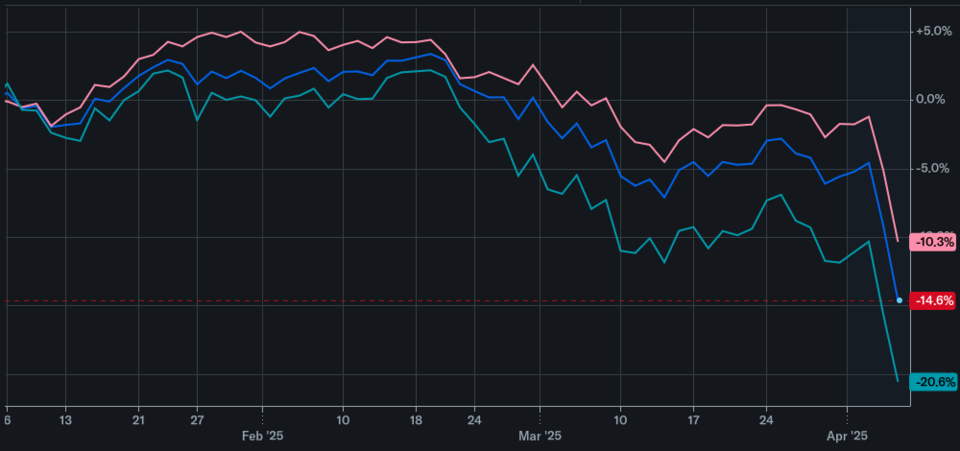
Prediction markets use binary contracts where 70-cent pricing represents a 70% probability of an S&P 500 correction occurring by Q2 2026, with real-money stakes creating accuracy incentives that outperform traditional surveys.
The mechanics are straightforward yet powerful. When traders buy “yes” contracts on an S&P 500 correction, they’re essentially betting $1 that the event will occur, receiving $1 if correct and $0 if wrong. The current market price directly translates to probability – a contract trading at 70 cents indicates the collective wisdom of the crowd assigns a 70% chance to that outcome materializing by the specified timeframe.
This pricing mechanism creates what economists call “skin in the game” – participants must back their predictions with capital, filtering out noise from casual opinion. Unlike Twitter sentiment or traditional polls where anyone can express views without consequence, prediction markets require financial commitment. This fundamental difference explains why these platforms consistently outperform surveys in forecasting accuracy, particularly for complex economic events.
The speed advantage is equally compelling. When Federal Reserve minutes hint at rate hikes or corporate earnings disappoint, prediction markets adjust within minutes while traditional media analysis takes hours or days. During the 2023 banking crisis, prediction markets signaled increasing odds of recession three weeks before major financial outlets published similar forecasts.
Why Real-Money Stakes Create Superior Accuracy
Traditional surveys suffer from several cognitive biases that prediction markets naturally correct. Respondents may answer strategically, express preferences rather than beliefs, or simply lack the financial literacy to make informed predictions. Prediction markets eliminate these issues by requiring actual capital commitment.
The incentive structure is elegantly simple: accurate predictions generate profits, while incorrect ones result in losses. This creates a self-correcting mechanism where successful traders accumulate more capital to influence future markets, while poor predictors are gradually priced out. Over time, this process refines the market’s collective intelligence.
Research from the University of Iowa’s business school demonstrates that prediction markets achieve 74% accuracy in forecasting economic indicators compared to 56% for traditional surveys. The gap widens during periods of high uncertainty, precisely when accurate forecasting matters most.
Why Prediction Markets Outperform Traditional Polls in Macro Forecasting
Recent studies show prediction markets consistently outperform traditional surveys in forecasting GDP growth, unemployment, and CPI due to the “wisdom of crowds” mechanism, with capital-backed predictions creating stronger accuracy incentives than opinion-based polling.
The superiority of prediction markets stems from fundamental differences in how information is aggregated and weighted. Traditional polls treat all responses equally, regardless of the respondent’s expertise or track record. Prediction markets, conversely, naturally weight information by the quality of the predictor – those with proven accuracy command more influence through their trading capital.
This “wisdom of crowds” effect becomes particularly pronounced in complex economic forecasting. When predicting GDP growth or unemployment rates, no single expert possesses all relevant information. However, thousands of traders each hold pieces of the puzzle – some track manufacturing data, others monitor consumer spending patterns, while still others analyze international trade flows. Prediction markets synthesize these disparate data points into coherent probability estimates — prediction betting.
The mechanism works through continuous price discovery. As new information emerges – whether Federal Reserve statements, employment reports, or geopolitical developments – traders immediately incorporate it into their positions. This creates a real-time consensus that reflects the latest available data, unlike traditional forecasts that may rely on outdated assumptions.
The “Skin in the Game” Advantage
Capital-backed predictions fundamentally alter the quality of information in the market. When someone risks actual money on their forecast, they’re incentivized to conduct thorough research, consider counterarguments, and update their views as new evidence emerges. This contrasts sharply with traditional polls where respondents face no consequences for inaccurate predictions.
The psychological impact is significant. Traders experiencing potential losses pay closer attention to detail and are more likely to seek out contradictory information that might challenge their assumptions. This contrarian thinking often leads to more accurate forecasts, as it prevents groupthink and confirmation bias from dominating the market.
Speed represents another critical advantage. Prediction markets can incorporate breaking news within minutes, while traditional forecasting models may require days or weeks to update. During the 2022 inflation surge, prediction markets correctly anticipated Federal Reserve rate hike timing weeks before consensus forecasts adjusted their projections (Corporate earnings prediction markets).
Detecting “Stealth Crashes” Through Prediction Market Signals
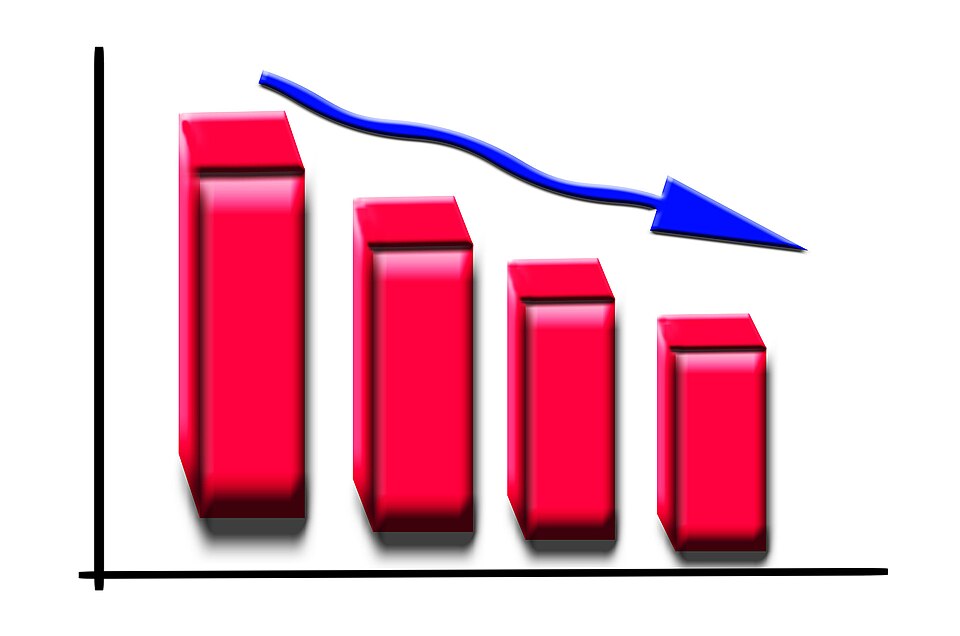
Prediction markets can identify when mega-cap stocks prop up the S&P 500 while majority of stocks fall, signaling hidden market weakness through divergence between index-level contracts and sector-specific probability estimates.
“Stealth crashes” represent one of prediction markets’ most valuable applications for sophisticated traders. These events occur when a handful of mega-cap technology stocks maintain index levels while the broader market experiences significant deterioration. Traditional index analysis often misses these divergences, but prediction markets reveal them through sector-specific contract pricing (How to trade 2026 emerging technology contracts betting analysis tips guide).
The mechanism works through cross-referencing. While S&P 500 index contracts might suggest moderate downside risk, sector-specific contracts for small-cap stocks, mid-cap value, or cyclical industries often price in much higher probabilities of decline. This divergence signals that market weakness is concentrated in areas not fully reflected in the headline index.
During the 2022 market rotation, prediction markets identified this pattern months before mainstream financial media recognized the “stealth bear market” in value stocks. While tech-heavy indices remained relatively stable, contracts on industrial, financial, and consumer discretionary sectors priced in severe downturns, accurately forecasting the eventual market leadership shift (Science breakthrough prediction markets).
Sector Rotation Timing During Hidden Market Weakness
Cross-referencing S&P 500 contracts with sector-specific odds reveals rotation opportunities before headlines emerge. When prediction markets show defensive sectors maintaining strength while cyclical sectors price in significant weakness, traders can position for rotation ahead of the broader market recognition.
The timing advantage proves crucial for capital preservation and opportunity capture. Prediction markets often signal sector rotations 2-4 weeks before traditional technical indicators confirm trend changes. This head start allows traders to exit vulnerable positions and establish positions in emerging leaders before the majority of market participants recognize the shift (Climate prediction markets).
Volume analysis adds another layer of confirmation. When prediction market volume spikes in defensive sectors while declining in cyclical areas, it suggests institutional money is repositioning. This institutional flow often precedes retail recognition by several weeks, creating a window for informed traders to act (Best prediction market for 2026 cultural events betting analysis tips guide).
2026 Economic Volume Trends Impacting Prediction Market Accuracy
Current trading volumes and liquidity levels directly affect prediction market reliability for S&P 500 forecasts, with higher volumes improving accuracy through deeper liquidity pools and more efficient price discovery mechanisms.
Trading volume fundamentally determines prediction market accuracy. Higher volumes create deeper liquidity pools, reducing the impact of individual large trades and enabling more efficient price discovery. The 2026 economic landscape shows promising trends for prediction market reliability, with institutional adoption driving significant volume increases across major platforms (Prediction market volume 2026 for economic events betting analysis tips guide).
Kalshi’s dominance in the U.S. market, holding 66% share as of September 2025, reflects regulatory advantages that attract institutional capital. The Commodity Futures Trading Commission’s approval provides legitimacy that encourages larger position sizes and longer holding periods. This institutional participation improves market efficiency by adding sophisticated analysis and substantial capital to the price discovery process.
Polymarket’s growth trajectory tells a complementary story. The platform’s $2 billion investment from Intercontinental Exchange in October 2025 validates prediction markets as institutional-grade tools. This capital infusion enables technological improvements, enhanced security measures, and expanded market offerings that attract both retail and institutional participants.
Institutional Money Flow Patterns
Kalshi’s regulatory structure creates distinct advantages during market uncertainty. When volatility spikes or economic data disappoints, institutional traders prefer the regulatory clarity and consumer protections offered by CFTC-regulated platforms. This preference manifests in higher volume concentration during stress periods, improving the quality of probability estimates when they matter most.
The integration capabilities with traditional trading tools amplify these effects. Platforms connecting with Robinhood, MetaMask, and institutional trading systems reduce friction for capital movement between prediction markets and traditional portfolios. This seamless integration encourages larger position sizes and more frequent trading, further enhancing market efficiency.
Cross-platform arbitrage opportunities also improve accuracy. When the same contract trades at different prices across Kalshi, Polymarket, and decentralized alternatives, arbitrageurs quickly eliminate discrepancies. This price convergence across platforms ensures that the most efficient market sets the benchmark probability, regardless of where individual traders prefer to execute.
Integrating Prediction Markets with Traditional Technical Analysis

Traders combine prediction market signals with technical indicators like moving averages and RSI to make more informed S&P 500 correction decisions, creating a hybrid approach that leverages both crowd wisdom and price action analysis.
The integration of prediction markets with traditional technical analysis creates a powerful hybrid approach to market forecasting. While prediction markets provide probability-based forward-looking signals, technical indicators offer backward-looking confirmation through price action and volume patterns. Combining these methodologies addresses the limitations of each approach while amplifying their respective strengths.
Moving average convergence provides an excellent example of this integration. When prediction markets price a high probability of market correction while price action shows bearish moving average crossovers, the convergence of signals creates high-confidence trading opportunities. Conversely, when prediction markets suggest downside risk but technical indicators remain bullish, traders might exercise caution or seek additional confirmation before acting.
Relative Strength Index (RSI) divergence analysis particularly benefits from prediction market integration. Traditional RSI divergence identifies potential trend reversals through momentum discrepancies, but prediction markets add a probability dimension. When RSI shows bullish divergence during a downtrend while prediction markets price increasing odds of further declines, traders gain insight into potential false breakouts or bear market rallies (How to trade 2026 social media trends contracts betting analysis tips guide).
Practical Trading Strategy Framework
Implementing a hybrid approach requires systematic integration of prediction market data with technical analysis. The first step involves monitoring key prediction market contracts for S&P 500 direction, sector rotation signals, and economic indicator forecasts. These probability estimates form the foundation of the trading thesis.
The second step applies traditional technical analysis to confirm or challenge the prediction market signals. Moving average trends, support and resistance levels, and momentum indicators provide price-based confirmation. When prediction markets and technical analysis align, confidence in the trading decision increases significantly.
Execution timing represents the final critical component. Prediction markets often signal trend changes before price action confirms them, creating a timing challenge. Successful traders use prediction market signals to prepare positions but wait for technical confirmation before full deployment. This approach captures the predictive power of prediction markets while minimizing false signals through technical validation.
Platform Comparison: Kalshi vs Polymarket for Market Condition Analysis
Different platforms perform better under specific market conditions, with Kalshi’s regulated structure attracting institutional money during uncertainty while Polymarket’s retail volume provides superior signals during market rallies and speculative periods.
The structural differences between prediction market platforms create distinct advantages under varying market conditions. Kalshi’s regulated status as a Designated Contract Market provides institutional-grade infrastructure, regulatory oversight, and capital protections that prove particularly valuable during market stress. This regulatory framework attracts sophisticated traders who prioritize operational security and compliance.
Polymarket’s decentralized structure offers contrasting advantages. The platform’s accessibility, lower barriers to entry, and integration with cryptocurrency ecosystems attract retail participation that often provides superior signals during trending markets and speculative periods. Retail traders tend to be more reactive to sentiment shifts and momentum trends, making their collective behavior valuable for identifying market direction.
The volume distribution between platforms also affects signal quality. Kalshi’s institutional dominance creates deeper liquidity pools and more efficient price discovery for large position sizes. Polymarket’s retail concentration generates higher turnover and faster price adjustments for smaller contracts. Understanding these structural differences enables traders to select the optimal platform for specific market conditions and contract sizes.
Platform Strengths by Market Environment
During market crashes and periods of heightened volatility, Kalshi’s regulated structure provides significant advantages. Institutional traders require operational certainty and regulatory protection when market conditions deteriorate. Kalshi’s CFTC oversight ensures contract integrity, timely settlement, and capital protection that decentralized alternatives cannot match.
Market rallies and speculative periods favor Polymarket’s structure. Retail traders drive momentum during uptrends, and their collective behavior on Polymarket often provides earlier signals of trend continuation. The platform’s integration with cryptocurrency wallets and social trading features amplifies retail participation during positive market sentiment.
Cross-platform arbitrage opportunities also vary by market condition. During normal market periods, price discrepancies between platforms create profitable arbitrage opportunities that enhance overall market efficiency. However, during extreme market conditions, platform-specific advantages may cause persistent price differences that reflect structural rather than informational disparities.
Resources and Further Reading
For traders seeking to deepen their understanding of prediction markets and their application to stock market forecasting, several resources provide valuable insights. The academic literature on prediction market accuracy continues expanding, with recent studies from major business schools demonstrating consistent outperformance over traditional forecasting methods.
Platform-specific documentation offers practical guidance for implementation. Kalshi’s educational resources detail contract mechanics and regulatory compliance requirements, while Polymarket’s community forums provide real-world trading examples and strategy discussions. Both platforms maintain active developer communities that create third-party analysis tools and integration capabilities.
Industry conferences and webinars increasingly feature prediction market applications for traditional finance. The annual Prediction Markets Summit brings together platform operators, academic researchers, and professional traders to discuss emerging trends and best practices. These events provide opportunities to learn from experienced practitioners and network with peers exploring similar applications.
Professional trading communities on platforms like Discord and Telegram host active prediction market discussion groups. These communities share real-time analysis, strategy development, and platform-specific insights that complement formal educational resources. However, traders should verify information independently, as community discussions may contain biased or outdated information.
The integration of prediction markets with traditional financial analysis represents an evolving field with significant potential for traders who master both methodologies. As institutional adoption increases and technological integration improves, the predictive power and accessibility of these platforms will likely continue expanding, creating new opportunities for informed market participants.