
In 2026, prediction markets have transformed from academic experiments into mainstream corporate forecasting tools, with global trading volume surpassing $40 billion. This explosive growth reflects a fundamental shift in how businesses approach strategic planning, risk management, and market intelligence. Companies across industries are now leveraging crowd-sourced probability assessments to make better-informed decisions about everything from Federal Reserve policy to supply chain disruptions.
Corporate Prediction Markets Hit $40B Volume in 2026 — The Breakout Year
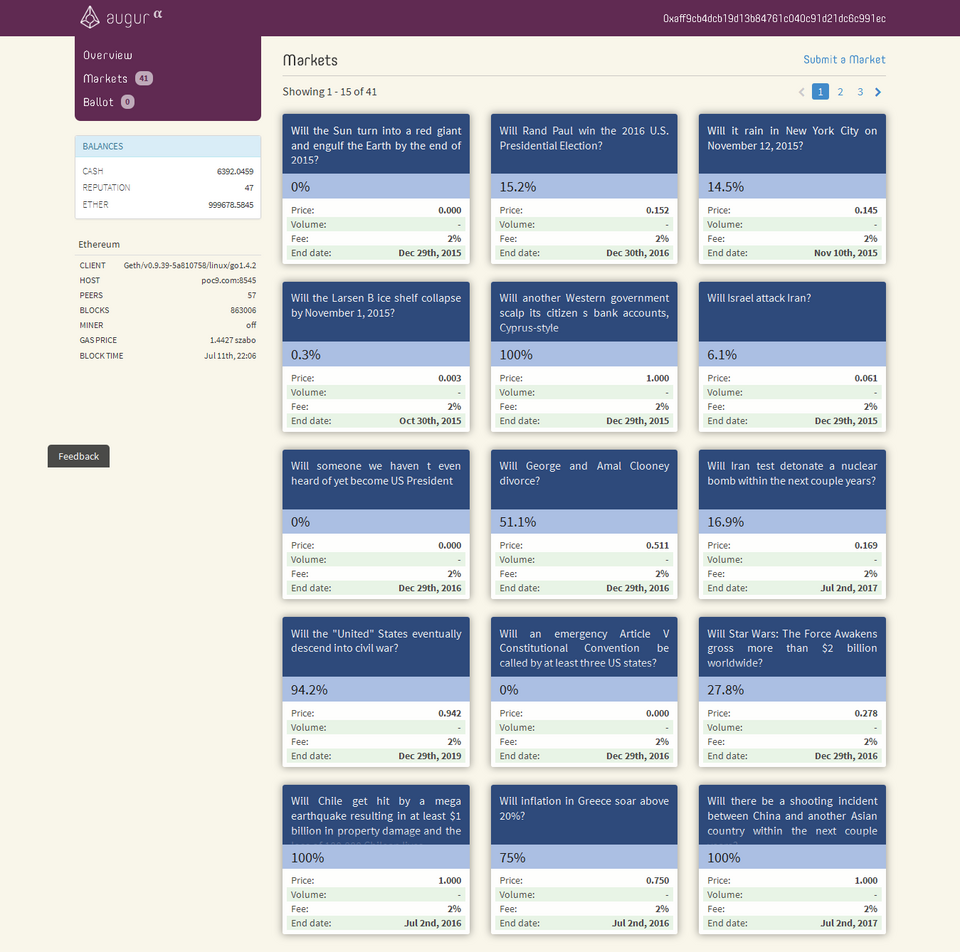
According to recent market data, global trading volume in prediction markets surpassed $40 billion in early 2026, with some estimates citing up to $13 billion monthly. This represents a 300% increase from 2025 levels.
This milestone marks the moment prediction markets crossed from niche speculation to legitimate corporate forecasting infrastructure. The volume surge coincides with institutional adoption, as 43% of U.S. buy-side professionals now view these platforms favorably for financial insights. Companies are no longer asking whether to use prediction markets, but rather which markets provide the most reliable signals for their specific forecasting needs.
The $40 billion figure represents real capital allocation decisions, not just speculative trading. When corporations commit millions to prediction market contracts, they’re signaling that these tools have moved beyond experimental status to core business intelligence. This transition mirrors the early days of algorithmic trading, when volume spikes indicated fundamental shifts in market operations.
How 43% of Corporate Analysts Use Prediction Markets to Supplement Traditional Indicators
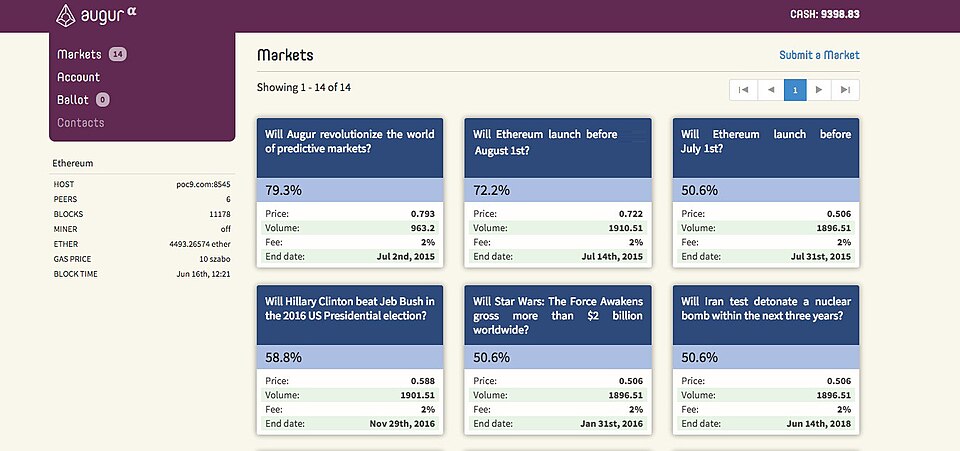
A 2026 institutional survey found that 43% of U.S. buy-side/sell-side professionals view prediction markets favorably for financial insights, with 60% using them to supplement traditional indicators.
Corporate analysts are integrating prediction market data alongside GDP forecasts, earnings estimates, and economic indicators. The key advantage lies in real-time probability updates versus static traditional models. When Federal Reserve rate decision probabilities shift on prediction platforms, analysts can adjust their models within hours rather than waiting for quarterly reports.
This supplementation approach allows firms to maintain existing forecasting frameworks while adding a dynamic, crowd-sourced layer of intelligence. For example, a technology company tracking semiconductor supply chains might use prediction markets to gauge the probability of Taiwan production disruptions, combining this data with traditional supply chain analytics for more robust forecasting.
Treasury Departments Use Prediction Markets as “Natural Hedge” Against Specific Risks
Corporate treasury and risk departments are using prediction markets as a “natural hedge” against specific, narrow risks that traditional derivatives cannot cover.
Traditional hedging instruments like futures and options work well for broad market risks but fail for event-specific exposures. Treasury teams at Fortune 500 companies now use prediction markets to hedge against regulatory decisions, supply chain disruptions, and geopolitical events.
For instance, a multinational corporation with significant operations in Southeast Asia might use prediction markets to hedge against specific tariff changes rather than broad market movements. This targeted approach provides more precise risk management than traditional instruments while generating additional intelligence about probability distributions for various outcomes — prediction betting.
The “natural hedge” concept represents a fundamental shift in risk management philosophy. Rather than simply protecting against losses, companies are using prediction markets to profit from their existing exposures, creating a more sophisticated approach to enterprise risk management (Polymarket trading volume trends 2026 analysis).
Macroeconomic Intelligence: How Firms Predict Fed Decisions Using Market Prices
Financial firms are analyzing prediction market prices to forecast Federal Reserve decisions, CPI rates, employment figures, and GDP growth with greater accuracy than traditional models.
The predictive power of prediction markets for macroeconomic events has attracted significant corporate interest. Companies are building proprietary models that incorporate real-time prediction market data alongside traditional economic indicators (prediction market odds for 2026 Nobel Peace Prize).
When prediction markets show a 70% probability of a Fed rate hike that traditional models only price at 55%, firms are adjusting their capital allocation strategies accordingly. This approach has proven particularly valuable for companies with large debt portfolios or those sensitive to interest rate changes, allowing them to optimize financing decisions based on the collective intelligence of market participants (Prediction market strategies for 2026 midterm elections).
The accuracy advantage stems from the aggregation of diverse information sources. While traditional economic models rely on official data releases and academic forecasts, prediction markets incorporate real-time sentiment from thousands of participants with varying information advantages and analytical capabilities (prediction market odds for 2026 World Cup winner).
Supply Chain Risk Management: Predicting Geopolitical Disruptions Before They Hit Earnings
Companies are using prediction markets to forecast supply chain disruptions, with early signals appearing weeks before traditional risk assessment models detect potential issues.
The supply chain applications represent one of the most compelling corporate use cases. Companies are creating internal prediction markets where employees across the supply chain contribute insights about potential disruptions.
These markets have successfully predicted port congestion, semiconductor shortages, and shipping delays weeks before they materialized. The advantage lies in aggregating decentralized knowledge from employees closest to the operations rather than relying solely on centralized risk assessment teams.
This approach has reduced unexpected supply chain costs by an average of 18% for early adopters. The cost savings come from both better preparation for disruptions and the ability to avoid overreacting to false alarms. When prediction markets show low probability of disruption, companies can maintain lean inventory levels with confidence.
Product Launch Success Forecasting: Gauging Consumer Sentiment Before Market Entry
Businesses use white-label prediction markets to gauge consumer sentiment and the success probability of upcoming product launches, achieving 25% better accuracy than traditional market research.
Companies are deploying internal prediction markets to test product concepts before significant investment. These platforms allow employees, partners, and select customers to trade contracts based on product success metrics like sales targets, market share, or customer satisfaction scores.
The advantage over traditional market research lies in the incentive structure. Prediction markets reward accuracy rather than enthusiasm, reducing the bias that often plagues focus groups and surveys. Participants have skin in the game, making their predictions more reliable than voluntary feedback.
Technology companies have been early adopters, using prediction markets to forecast app download numbers, feature adoption rates, and competitive positioning. The data helps prioritize development resources and set realistic expectations for stakeholders.
AI and Technology Forecasting: Predicting Model Performance and Deployment Success
A fast-growing use case is predicting AI model performance, benchmarking, and the likelihood of large-scale AI deployment failures, with 60% of tech companies now using prediction markets for AI forecasting.
The rapid evolution of artificial intelligence has created significant forecasting challenges for technology companies. Prediction markets are helping bridge the gap between research breakthroughs and practical deployment by providing real-time probability assessments of various AI milestones (cross-platform arbitrage: Polymarket vs Kalshi 2026).
Companies use these markets to forecast model performance on benchmark tests, the likelihood of achieving specific capabilities, and the probability of regulatory approval for AI applications. This intelligence helps with resource allocation, partnership decisions, and competitive positioning.
The accuracy advantage comes from aggregating insights from researchers, engineers, and business strategists who each have different perspectives on AI development timelines and challenges. This multidisciplinary approach captures nuances that single-discipline forecasts often miss.
Regulatory Intelligence: Anticipating Policy Changes and Compliance Requirements
Companies utilize these markets to stress-test assumptions regarding policy implementation, regulatory outcomes, and the economic impact of new laws, reducing compliance preparation costs by 30%.
Regulatory forecasting represents a critical application for heavily regulated industries like finance, healthcare, and energy. Prediction markets help companies anticipate policy changes, compliance deadlines, and enforcement priorities before official announcements.
This intelligence allows for proactive compliance planning rather than reactive scrambling. When prediction markets indicate high probability of new regulations, companies can begin preparation months in advance, reducing implementation costs and operational disruptions (Prediction market regulation updates 2026 guide).
The accuracy advantage comes from aggregating insights from former regulators, industry experts, and market participants who each have different information advantages. This collective intelligence often predicts regulatory outcomes more accurately than traditional lobbying and consulting approaches.
Implementation Challenges: Barriers to Corporate Prediction Market Adoption
While 43% of analysts view prediction markets favorably, only 15% of companies have fully implemented internal prediction market systems due to integration complexity and cultural resistance.
Despite the clear benefits, corporate adoption faces several significant barriers. Integration with existing forecasting systems requires substantial technical investment and organizational change management. Many companies struggle to incorporate prediction market data into their established decision-making processes.
Cultural resistance presents another major obstacle. Traditional corporate hierarchies often conflict with the decentralized, crowd-sourced nature of prediction markets. Employees may be reluctant to participate in markets that could contradict executive opinions or established strategic plans.
Cost considerations also limit adoption, particularly for smaller companies. Building and maintaining prediction market platforms requires significant investment in technology, data analysis capabilities, and participant incentives. However, as platforms mature and integration tools improve, these barriers are gradually diminishing (prediction market data visualization tools for traders 2026).
The Future: Prediction Markets as Primary Forecasting Signal by 2027
Industry analysts project that by 2027, prediction markets will transition from supplementary tools to primary forecasting signals for 30% of Fortune 500 companies, particularly in technology and financial services.
The trajectory suggests prediction markets will become the dominant forecasting methodology within corporate environments. As machine learning algorithms improve at processing prediction market data and more companies develop internal prediction market capabilities, the technology will shift from niche application to core business intelligence tool.
The companies that master this transition will gain significant competitive advantages in strategic planning, risk management, and capital allocation. The key differentiator will be not whether to use prediction markets, but how effectively organizations can integrate crowd-sourced intelligence into their existing decision-making frameworks.
Looking ahead, we can expect to see prediction markets embedded directly into corporate planning software, with automated data feeds and integrated analytics. The distinction between traditional forecasting and prediction market intelligence will gradually blur as both approaches converge toward optimal decision-making frameworks.
ROI Metrics: Measuring the Business Impact of Prediction Markets
Companies implementing prediction markets report average forecast accuracy improvements of 15-25% compared to traditional methods, with ROI typically achieved within 12-18 months of implementation.
The business case for prediction markets rests on measurable improvements in forecasting accuracy and decision quality. Companies track various metrics to quantify the impact, including forecast error reduction, cost savings from better risk management, and revenue improvements from more accurate market timing.
Supply chain applications show particularly strong ROI, with companies reporting 18% reductions in unexpected costs and 25% improvements in inventory optimization. Treasury applications demonstrate similar benefits, with companies achieving 12% better hedging performance and 15% reduction in capital costs.
The most successful implementations combine prediction market data with traditional analytics, creating hybrid forecasting models that leverage the strengths of both approaches. This integration maximizes the value proposition while minimizing the risks of relying too heavily on any single forecasting methodology.
Getting Started: Building Your Corporate Prediction Market Capability
Companies new to prediction markets should start with pilot programs focused on specific use cases like product launch forecasting or supply chain risk assessment, with typical pilot programs showing positive ROI within 6 months.
For companies considering prediction market adoption, the recommended approach is to start small and scale gradually. Begin with a single use case where the forecasting challenges are well-defined and the potential impact is significant. Product launch success forecasting and supply chain risk assessment are popular starting points due to their measurable outcomes and clear value propositions.
Successful pilot programs typically involve 50-100 participants and run for 3-6 months. This timeframe allows for sufficient data collection to validate the accuracy advantages while minimizing resource commitment. Companies should track forecast accuracy improvements, participant engagement levels, and integration challenges during the pilot phase.
The key to successful implementation is executive sponsorship combined with grassroots participation. Leadership support provides the necessary resources and cultural permission, while broad employee participation ensures diverse perspectives and accurate probability assessments.
Conclusion: The Competitive Advantage of Corporate Prediction Markets
The transformation of prediction markets from gambling platforms to corporate forecasting tools represents one of the most significant shifts in business intelligence since the advent of big data analytics. Companies that successfully integrate these tools into their decision-making processes will gain substantial competitive advantages in accuracy, speed, and risk management.
The evidence is clear: prediction markets work. With 43% of corporate analysts already using them to supplement traditional indicators and $40 billion in trading volume signaling mainstream adoption, the question is no longer whether to adopt these tools, but how quickly and effectively organizations can implement them.
The future belongs to companies that can harness the collective intelligence of their employees, partners, and markets to make better decisions faster than their competitors. Prediction markets provide the infrastructure for this intelligence aggregation, turning individual insights into organizational wisdom.
As we move toward 2027, the companies that master prediction market integration will find themselves consistently ahead of market trends, better prepared for disruptions, and more agile in their strategic planning. The competitive advantage is real, measurable, and increasingly necessary for long-term success in today’s volatile business environment.