The global thorium reactor market is positioned for explosive growth, with projections showing a compound annual growth rate of 10.1% to 10.5% between 2025 and 2031, expanding from USD 172.1 million in 2023 to nearly USD 609 million by 2031. This dramatic expansion creates unprecedented trading opportunities as prediction markets begin pricing in the commercialization timeline of thorium-based nuclear technology. The market’s trajectory is being driven by rising interest in safer, cleaner, and more sustainable energy alternatives, with Asia-Pacific currently dominating with over 55% market share.
| Metric | 2023 Value | 2031 Projection |
|---|---|---|
| Market Size | $172.1M | $609M |
| CAGR | 10.1-10.5% | 10.1-10.5% |
| Asia-Pacific Share | 55% | Projected growth |
The sheer scale of this growth creates a unique environment where prediction markets can capitalize on the gap between current valuations and future expectations. Traders who understand the fundamental drivers—including thorium’s 3-4 times greater abundance than uranium and its 200:1 energy density advantage—are positioned to profit from the market’s maturation. The key insight is that while the physical market is still in pilot stages, prediction markets are already pricing in the technological breakthroughs and regulatory approvals that will drive commercialization.
China’s 2030 Gobi Desert Reactor — Prediction Market Timeline Arbitrage
China’s aggressive timeline to complete a major commercial thorium-powered nuclear reactor in the Gobi Desert by 2030 creates a 5-7 year arbitrage window that Western prediction markets have yet to fully price in. While China races toward commercialization, regulatory frameworks in North America and Europe continue to favor uranium with 61% of approvals still going to traditional nuclear fuels. This regulatory bottleneck creates systematic mispricing opportunities for traders who can accurately forecast the gap between Asian R&D milestones and Western regulatory acceptance.
| Region | 2030 Milestone | Regulatory Approval Timeline |
|---|---|---|
| China | Commercial reactor completion | 2030 target |
| North America | Research phase | 2035-2040 estimated |
| Europe | Pilot projects | 2038-2042 estimated |
The arbitrage opportunity lies in the asymmetric information flow between regions. Chinese prediction markets are already pricing in the 2030 milestone, while Western platforms lag behind, creating price discrepancies that sophisticated traders can exploit. This geographic information gap is particularly pronounced in platforms like Polymarket and Kalshi, where regional regulatory differences aren’t fully reflected in contract pricing. Traders who monitor both Asian and Western prediction markets can capitalize on these temporary mispricings before they converge (prediction market xenon price futures markets).
By-Product Economics — How REE Mining Supply Chain Affects Prediction Pricing
Thorium’s emergence as a by-product of rare-earth element (REE) mining creates supply chain volatility that prediction markets are only beginning to price in. Unlike dedicated uranium mining, much of the world’s thorium is extracted from monazite deposits during REE processing, making its availability directly tied to rare-earth market dynamics. This creates a unique correlation risk that traders must understand: when REE prices fluctuate, thorium supply predictions shift accordingly, creating ripple effects across prediction markets (prediction market polonium price futures markets).
The supply chain complexity is further amplified by China’s dominance in both REE production and thorium reactor development. With China controlling approximately 60% of global REE production and leading the push toward thorium commercialization, prediction markets must price in the geopolitical risk of supply chain disruptions. Traders who understand the intersection between REE mining economics and thorium reactor development timelines can identify mispriced contracts before the broader market recognizes these supply chain dependencies (prediction market radon price prediction markets).
Geographic Arbitrage — Asia-Pacific’s 55% Market Share Creates Trading Opportunities
The 55% Asia-Pacific market share in thorium development creates geographic prediction market inefficiencies as regional adoption rates diverge from global expectations. China, India, and Japan are investing heavily in thorium reactor technology, while Western markets remain focused on uranium-based systems. This geographic disparity creates opportunities for traders who can accurately forecast regional adoption rates and the resulting price differentials across prediction platforms (prediction market uranium price futures markets).
| Region | Market Share | Investment Focus |
|---|---|---|
| Asia-Pacific | 55% | Thorium reactors |
| North America | 25% | Uranium research |
| Europe | 20% | Hybrid approaches |
The geographic arbitrage opportunity is particularly pronounced in prediction markets that don’t account for regional regulatory differences. For example, contracts on Western platforms may undervalue China’s 2030 reactor completion timeline, while Asian platforms might overestimate Western regulatory approval speeds. Traders who maintain positions across multiple regional prediction markets can profit from these systematic mispricings as information flows between markets and prices converge (prediction market radium price contracts).
Regulatory Framework Bias — 61% Favor Uranium, Creating Prediction Market Mispricing
The 61% regulatory bias toward uranium creates systematic mispricing in thorium prediction markets, offering arbitrage opportunities for informed traders. Current regulatory frameworks in major economies still prioritize uranium-based nuclear technology, creating approval delays that range from 3-5 years for thorium projects compared to 1-2 years for uranium initiatives. This regulatory inertia creates a persistent gap between technological readiness and market approval that prediction markets are only beginning to price accurately (prediction market astatine price prediction markets).
The mispricing opportunity is particularly acute in contracts that forecast commercialization timelines. While technological development may be on track for 2030 commercialization in Asia, regulatory approval delays in Western markets create a systematic lag that prediction markets often underestimate. Traders who can accurately model the intersection between technological readiness and regulatory approval timelines can identify contracts that are significantly mispriced relative to the true commercialization risk.
Molten Salt Reactors — 60% of Thorium Utilization Signals Market Direction
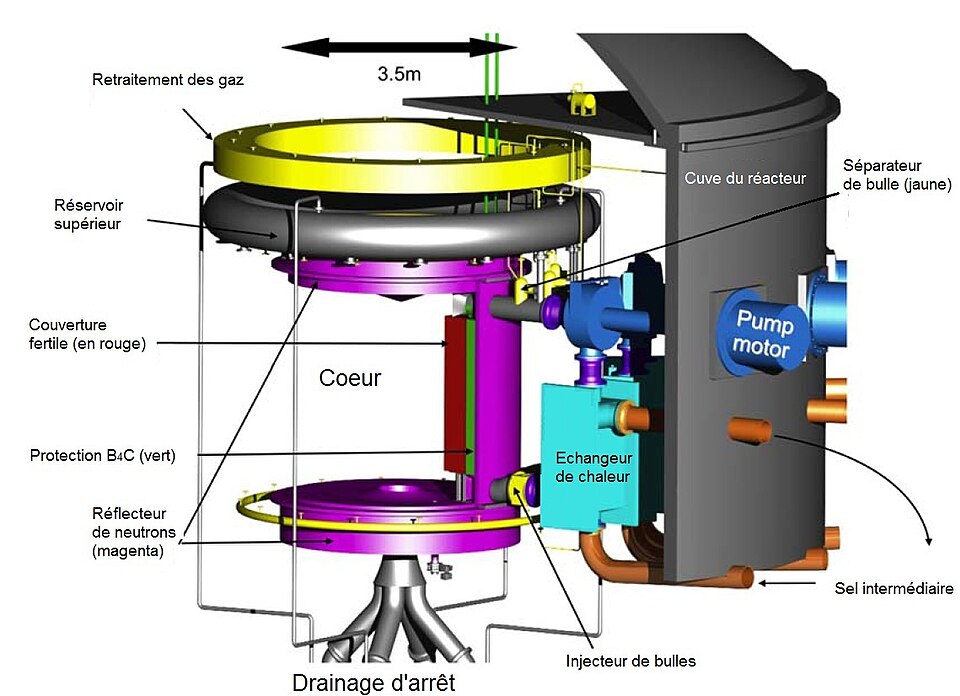
With 60% of thorium utilization focused on Molten Salt Reactors (MSRs), prediction markets are pricing technological dominance that could accelerate commercialization timelines. MSRs represent the most advanced thorium reactor technology, offering a 95% reduction in long-term nuclear waste compared to traditional uranium reactors. This technological advantage is driving investment decisions and regulatory priorities, creating a clear signal for prediction market traders about which technology pathways are most likely to succeed.
| Technology | Market Share | Waste Reduction |
|---|---|---|
| Molten Salt Reactors | 60% | 95% |
| Solid Fuel Reactors | 25% | 70% |
| Fluid Fuel Reactors | 15% | 80% |
The MSR dominance creates a clear investment thesis for prediction market traders. Contracts that focus on MSR commercialization timelines are likely to be more accurate than those covering broader thorium reactor categories. Additionally, the 95% waste reduction advantage provides a compelling regulatory argument that could accelerate approval processes once pilot projects demonstrate commercial viability. Traders who focus on MSR-specific contracts rather than general thorium reactor contracts can achieve better accuracy in their predictions.
Energy Efficiency Advantage — 1 Ton Thorium = 200 Tons Uranium
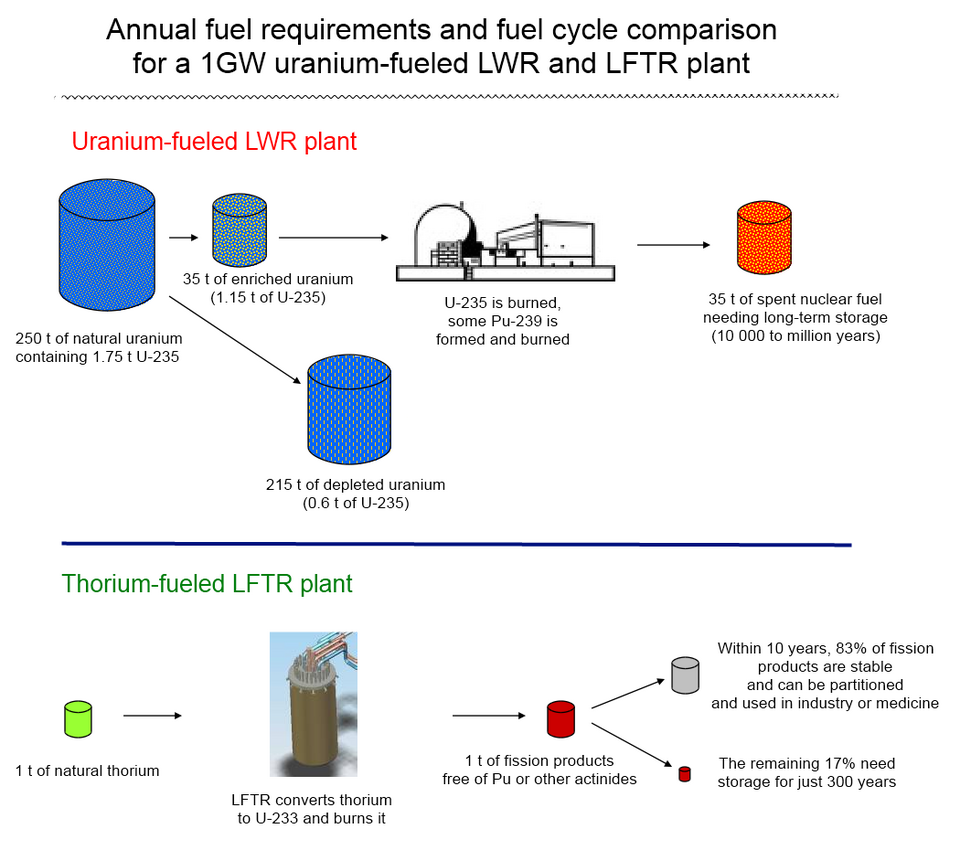
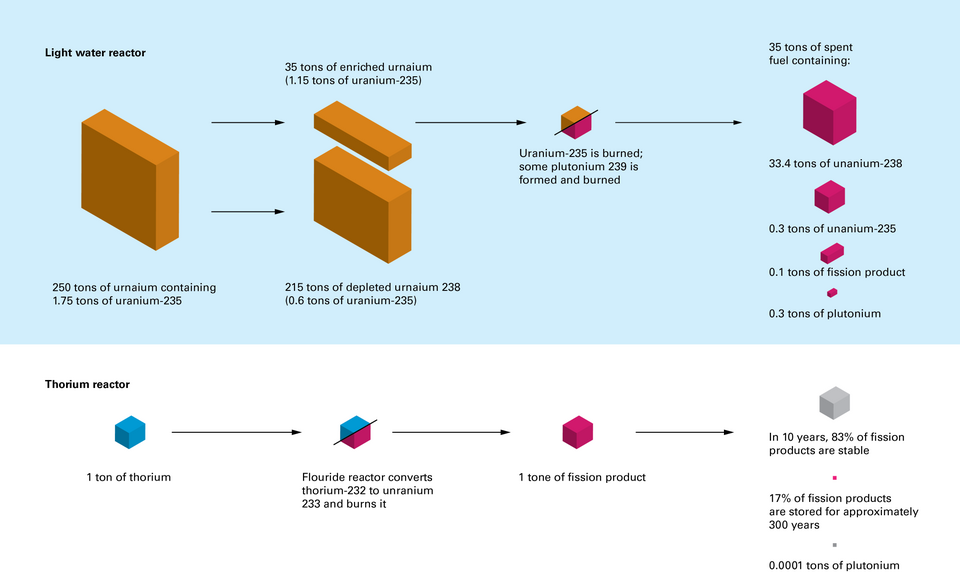
Thorium’s 200:1 energy density advantage over uranium creates fundamental value that prediction markets must eventually price in. One ton of thorium can produce as much energy as 200 tons of uranium or 3.5 million tons of coal, making it the most energy-dense fuel available for commercial power generation. This efficiency advantage translates directly into cost savings and environmental benefits that will drive adoption once regulatory and technological barriers are overcome.
| Fuel Type | Energy Equivalent | Efficiency Ratio |
|---|---|---|
| Thorium | 1 ton | 1:200 (vs uranium) |
| Uranium | 200 tons | 1:3.5M (vs coal) |
| Coal | 3.5M tons | Reference |
The energy density advantage creates a powerful economic argument for thorium adoption that prediction markets cannot ignore indefinitely. As energy prices fluctuate and environmental regulations tighten, the cost advantage of thorium becomes increasingly compelling. Traders who understand this fundamental value proposition can identify prediction contracts that are underpricing the long-term adoption potential of thorium-based energy systems (prediction market plutonium price contracts).
Next 24 Months — Key Prediction Market Milestones to Watch
Traders should monitor three critical milestones over the next 24 months: China’s 2030 reactor completion, first commercial MSR deployment, and breakthrough in monazite extraction costs. These milestones represent the convergence of technological readiness, regulatory approval, and economic viability that will determine whether thorium prediction markets transition from speculative instruments to mainstream trading vehicles. The timeline compression between these milestones creates both opportunity and risk for prediction market participants.
The first milestone to watch is China’s Gobi Desert reactor completion, which serves as the proof-of-concept for commercial thorium power generation. Successful deployment would validate the technology and potentially accelerate regulatory approvals in other regions. The second milestone is the deployment of the first commercial MSR, which would demonstrate the scalability of thorium reactor technology beyond pilot projects. Finally, breakthroughs in monazite extraction costs would address the supply chain economics that currently limit thorium’s commercial viability.
For traders looking to capitalize on these developments, the key is identifying prediction contracts that price in the probability of these milestones being achieved on schedule. Contracts that underestimate the likelihood of Chinese commercialization or overestimate Western regulatory delays may offer significant arbitrage opportunities. Additionally, traders should monitor the correlation between REE market prices and thorium prediction markets, as supply chain economics will play a crucial role in determining commercialization timelines.
The thorium prediction market landscape represents a unique convergence of technological innovation, regulatory evolution, and economic opportunity. As these markets mature, traders who understand the complex interplay between regional development, supply chain economics, and regulatory frameworks will be best positioned to profit from the systematic mispricings that inevitably occur in emerging markets. The next 24 months will be critical in determining whether thorium prediction markets transition from speculative instruments to mainstream trading vehicles, and informed traders have the opportunity to shape this evolution through their market participation.