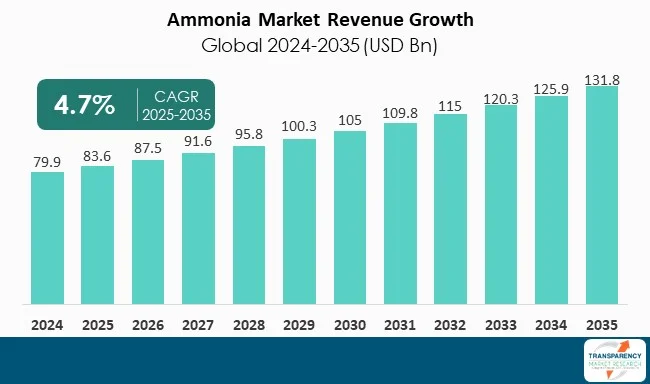
Prediction markets are experiencing explosive growth, with trading volume surging 400% in 2025 to reach $60 billion, creating new opportunities for commodity price forecasting. Among these emerging applications, ammonia price prediction markets represent a particularly compelling frontier, driven by the commodity’s unique position at the intersection of agriculture, energy, and emerging green technologies.
How Prediction Markets Are Revolutionizing Ammonia Price Forecasting
Prediction markets have emerged as highly accurate tools for forecasting commodity prices, with median Brier scores often below 0.05 (considered “excellent”). These platforms aggregate real-time market intelligence and frequently outperform traditional forecasting methods, particularly in volatile conditions.
The traditional approach to ammonia price forecasting relies on econometric modeling and forward curves, but prediction markets offer a fundamentally different methodology. By allowing traders to place real-money bets on future price outcomes, these platforms create a dynamic information aggregation system that captures collective intelligence in real-time. The 400% volume growth in prediction markets during 2025 demonstrates trader appetite for these tools, particularly for commodities with complex demand drivers like ammonia.
Real-Time Market Intelligence vs Historical Data
Unlike traditional forecasting that relies on historical data and econometric models, prediction markets use real-time trader sentiment and actual price outcomes to resolve predictions, creating a more dynamic and responsive forecasting mechanism. This approach is particularly valuable for ammonia, where sudden supply disruptions or regulatory changes can dramatically impact prices.
Agricultural Demand Cycles and Their Impact on Ammonia Price Volatility
Over 70% of global ammonia production is consumed by the agriculture sector, making it the primary driver of market demand and price movements. This strong seasonal correlation with planting cycles creates predictable patterns that prediction markets can exploit.
Agricultural demand cycles create distinct seasonal patterns in ammonia pricing that traditional markets often struggle to price efficiently. During peak planting seasons, demand spikes can create temporary supply constraints, while off-season periods see price softening. Prediction markets excel at capturing these cyclical patterns because traders can place bets on specific timeframes tied to planting schedules. The APAC region’s dominance (57-58% market share) means regional planting cycles have global ripple effects that sophisticated traders can arbitrage.
How Planting Seasons Create Price Predictability
Strong seasonal correlation with planting cycles means ammonia prices follow predictable patterns tied to agricultural calendars, particularly in regions with concentrated growing seasons.
The agricultural calendar creates a rhythm to ammonia demand that prediction markets can track with precision. Spring planting in the Northern Hemisphere typically drives prices higher as fertilizer demand peaks, while fall sees reduced consumption. Traders who understand these cycles can position themselves ahead of predictable price movements, using prediction markets to hedge against seasonal volatility or capitalize on anticipated price swings (prediction market biodiesel price prediction markets).
The CFTC Regulatory Framework Enabling Ammonia Prediction Markets
The CFTC is asserting exclusive jurisdiction over prediction markets as commodity derivatives, with Chairman Michael Selig developing new rules for event contracts that could legitimize ammonia price forecasting platforms.
The regulatory landscape for commodity prediction markets underwent a fundamental shift in 2025 when the CFTC established exclusive jurisdiction over event contracts. This framework treats prediction markets as legitimate hedging tools rather than gambling, opening the door for ammonia price forecasting platforms to operate within clear legal boundaries. The 400% volume growth in prediction markets reflects trader confidence in this regulatory clarity, with $60B+ in trading volume demonstrating market maturity (prediction market butane price futures markets).
Legal Status and Compliance Requirements
Under the new CFTC framework, prediction markets for commodity prices like ammonia are treated as legitimate hedging tools, not gambling, creating clear compliance pathways for operators.
The CFTC’s classification of prediction markets as commodity derivatives rather than gambling products has profound implications for ammonia price forecasting. This legal clarity allows platforms to implement proper compliance measures, including Know Your Customer (KYC) protocols and position limits. Traders can now participate with confidence, knowing their activities are protected under established commodity trading regulations rather than operating in legal gray areas.
Green Ammonia Disruption: New Price Dynamics in Prediction Markets
Green ammonia is witnessing explosive growth, with market projections increasing from USD 2.8 billion in 2026 to USD 18.3 billion by 2036, driven by decarbonization mandates that create new price dynamics prediction markets must price.
The emergence of green ammonia is creating entirely new price dynamics that traditional forecasting models struggle to capture. Green ammonia production costs vary dramatically based on renewable energy availability and carbon pricing regimes, creating regional price differentials that prediction markets can exploit. Japan and South Korea’s investments in ammonia for power generation add another layer of complexity, as power sector demand creates different seasonal patterns than agricultural demand. This evolution in ammonia markets parallels developments in hydrogen price futures markets, where decarbonization trends are similarly reshaping price discovery mechanisms (prediction market ethanol price futures markets).
Carbon Pricing and Regional Arbitrage Opportunities
Carbon pricing creating arbitrage opportunities between regions with different regulatory frameworks and renewable energy costs is a key dynamic that prediction markets are beginning to price into ammonia futures.
Carbon pricing mechanisms create significant regional price differentials for ammonia production. Regions with abundant renewable energy and favorable carbon policies can produce green ammonia at lower costs, while areas dependent on natural gas face higher production costs and carbon penalties. Prediction markets excel at pricing these regional arbitrage opportunities because traders can place bets on the convergence or divergence of regional price differentials based on policy changes and energy market developments.
Data Sources and Resolution Mechanisms for Ammonia Price Predictions
Unlike traditional forecasting that relies on historical data and econometric models, prediction markets use real-time trader sentiment and actual price outcomes to resolve predictions, creating a more dynamic and responsive forecasting mechanism.
Prediction markets for ammonia prices require robust data sources and clear resolution mechanisms to function effectively. Price outcomes are typically verified against established commodity benchmarks like those from ICIS or S&P Global Platts, with resolution occurring at specific intervals (monthly or quarterly). The key advantage is that prediction markets don’t just forecast prices—they create a feedback loop where actual market outcomes improve future predictions through trader learning and market efficiency (prediction market ethane price prediction markets).
Verification and Settlement Processes
Ammonia price predictions are typically resolved against established commodity benchmarks from industry data providers, with clear settlement processes that ensure market integrity and trader confidence.
The settlement process for ammonia price prediction markets relies on transparent, verifiable data sources. Major industry data providers like ICIS and S&P Global Platts serve as authoritative price benchmarks, with their daily assessments used to resolve monthly or quarterly prediction contracts. This third-party verification ensures that prediction outcomes are objective and not subject to manipulation, which is crucial for maintaining trader confidence in the market’s integrity (prediction market methane price contracts).
Strategic Trading Approaches for Ammonia Prediction Markets
Traders can exploit the predictable aspects of ammonia price volatility—planting seasons, fertilizer application windows, and regional production costs—to build profitable strategies in prediction markets.
Successful trading in ammonia prediction markets requires understanding both the predictable patterns and the disruptive forces shaping the market. Seasonal agricultural demand creates reliable trading opportunities around planting seasons, while green ammonia developments create longer-term trends to capitalize on. The most effective strategies combine fundamental analysis of agricultural cycles with technical analysis of prediction market pricing patterns, allowing traders to identify mispriced probabilities before they correct.
Risk Management and Position Sizing
Effective risk management in ammonia prediction markets involves understanding position limits, diversification across seasonal and structural trades, and maintaining adequate capital reserves for margin calls.
Risk management in ammonia prediction markets requires a sophisticated approach that accounts for both the inherent volatility of commodity prices and the unique characteristics of prediction market mechanics. Position sizing should reflect the trader’s confidence level in specific predictions, with larger positions reserved for high-conviction trades based on clear seasonal patterns or regulatory developments. Diversification across different time horizons—from short-term planting season trades to longer-term green ammonia adoption bets—helps manage portfolio risk while capturing multiple profit opportunities.
Key Players and Market Infrastructure
The emerging ammonia prediction market ecosystem involves several critical entities. The CFTC provides regulatory oversight and legitimacy, while data providers like ICIS and S&P Global Platts serve as price verification authorities. Trading platforms must develop specialized AMM (Automated Market Maker) liquidity pools tailored to commodity contracts, with resolution oracles that can handle complex price verification scenarios. Market makers specializing in agricultural commodities are beginning to provide liquidity for these new prediction markets, creating the infrastructure necessary for efficient price discovery. This infrastructure development mirrors what’s happening in natural gas liquids markets, where prediction markets are similarly transforming price discovery mechanisms.
Future Outlook and Market Evolution
The convergence of regulatory clarity, technological infrastructure, and market demand suggests rapid growth for ammonia prediction markets through 2026 and beyond. As green ammonia adoption accelerates and carbon pricing mechanisms become more sophisticated, the complexity of ammonia price forecasting will increase, creating more opportunities for prediction markets to add value. The integration of climate data, renewable energy pricing, and agricultural yield forecasts into prediction market models will create increasingly sophisticated trading opportunities for those who can master this emerging asset class.