
In 2025, the total volume of prediction markets hovered around $64 billion. Fast forward to projections for 2026, and analysts at FalconX anticipate that figure to surge to $325 billion. This exponential growth underscores the rising importance of mastering closing price strategies to maximize profits in this dynamic landscape. But what specific tactics can traders employ to capitalize on those final-hour fluctuations?
Mastering Prediction Market Closing Price Strategies: Capitalizing on the Final Hour
Closing price strategies are crucial for maximizing profits in prediction markets. As market volume explodes, these strategies become even more important for capitalizing on final-hour price adjustments before event resolutions. Mastering these techniques requires a keen understanding of market dynamics, risk management, and the ability to execute trades swiftly and decisively. Ready to discover how to exploit those fleeting opportunities?
Why Closing Price Strategies Matter in 2026’s Prediction Markets
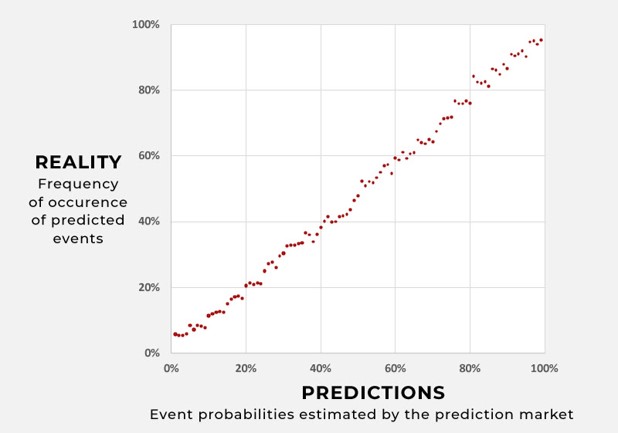
Closing price strategies are important because prediction market prices are generally considered most accurate near resolution, presenting opportunities to profit from last-minute price adjustments. This increased accuracy, however, is often accompanied by heightened volatility in the final trading hours. Specific strategies are therefore essential to manage risk and maximize potential gains in this period. But why does this volatility spike occur, and how can traders navigate it effectively?
The efficient market hypothesis suggests that prediction market prices reflect all available information. As an event approaches resolution, more information becomes available, leading to increased accuracy. This also means that any new information released close to the deadline can cause rapid price swings. What if a key economic indicator is released just hours before a financial market contract resolves?
The final hour often sees increased volatility and liquidity shifts as traders close positions or react to breaking news. This volatility can create opportunities for quick profits, but it also increases the risk of losses. Successfully navigating this environment requires specific strategies, such as volatility scalping and liquidity monitoring. Speaking of liquidity, remember to check out our guide to prediction market margin trading.
The need for specific strategies in the final hour is driven by the potential for rapid price changes and the increased risk of slippage. Traders must be prepared to act quickly and decisively to capitalize on opportunities and avoid losses. This often involves using limit orders and closely monitoring order books. Do you have the nerve to trade in these conditions?
Volatility Scalping: Exploiting Short-Term Price Swings Near Close
Volatility scalping involves exploiting short-term price swings in prediction markets, especially as resolution nears, by capturing small profits from rapid price fluctuations. This strategy relies on identifying and capitalizing on these fleeting opportunities, requiring quick execution and a strong understanding of market dynamics. But is it really possible to make consistent profits from such small movements?
Volatility scalping can be applied to prediction markets by identifying contracts with high price volatility in the final trading hours. Traders look for small price swings and use limit orders to capture profits from these fluctuations. The key is to enter and exit positions quickly, minimizing the risk of adverse price movements. This is all about speed and precision, isn’t it?
Using limit orders is crucial for volatility scalping, as it allows traders to specify the price at which they are willing to buy or sell a contract. This helps to ensure that they capture the desired profit margin and avoid slippage. Additionally, monitoring order books and liquidity levels is essential for identifying potential trading opportunities and avoiding markets with low liquidity. For more insights on essential trading tactics, see our breakdown of prediction market trading strategies.
Liquidity Monitoring: Avoiding Slippage in the Final Trading Minutes
Liquidity monitoring is crucial in prediction markets to avoid slippage, which erodes trading profitability. Slippage occurs when the actual execution price of a trade differs from the expected price due to insufficient liquidity. Therefore, traders must actively monitor liquidity levels in their chosen markets. But how can you effectively gauge liquidity in those final, critical moments?
Slippage can significantly impact trading profitability, especially in the final trading minutes when liquidity can be thin. Trading in markets with high liquidity is essential to minimize the risk of slippage and ensure the ability to exit positions quickly. As a general rule, aim for markets with liquidity above $100,000. Where do you find markets like that, though?
Tips for monitoring liquidity levels include tracking the order book depth, monitoring the bid-ask spread, and using liquidity indicators. A narrow bid-ask spread and a deep order book indicate high liquidity. Avoiding markets with wide spreads and shallow order books is crucial for preventing slippage. Don’t forget to check out our guide on prediction market early exit strategies to mitigate risk.
Misalignment Arbitrage: Profiting from Price Discrepancies
Price misalignment in prediction markets creates arbitrage opportunities, where traders profit from price discrepancies between different contracts related to the same event. This involves identifying situations where the combined implied probabilities of all possible outcomes do not equal 100%. This offers the chance for risk-free profit. But how often do these misalignments actually occur?
Price misalignment occurs when the prices of different contracts related to the same event do not accurately reflect the implied probabilities of the outcomes. For example, if there are two contracts related to a binary event (Yes/No), and the price of the “Yes” contract is $0.60 while the price of the “No” contract is $0.50, there is a price misalignment. This creates an arbitrage opportunity, as traders can buy both contracts and profit from the discrepancy. It’s like finding money on the floor, isn’t it?
Constant monitoring and rapid execution are essential for profiting from price misalignments. Traders must be able to identify these opportunities quickly and execute trades before the market corrects itself. Examples of price misalignment scenarios include situations where different prediction market platforms offer different prices for the same contract, or where news events cause temporary price discrepancies. Keep your eyes peeled and your fingers ready!
High-Probability Plays: Capitalizing on Contracts >50% Near Expiry
Capitalizing on contracts with probabilities greater than 50% near expiry is a common strategy, as these contracts often exhibit positive returns as the event resolution approaches. This strategy relies on the tendency for contracts with a higher likelihood of success to converge towards a price of $1 as the event nears its conclusion. But just how reliable is this tendency?
Focusing on contracts with probabilities greater than 50% in the final hour can be a profitable strategy due to the tendency for these contracts to have positive returns near expiry. This is because the market is likely to correct the price of these contracts as the event resolution approaches, leading to a guaranteed profit for traders who hold these contracts. But remember, nothing is ever truly guaranteed!
Data-backed examples of successful high-probability plays include contracts related to events with a high degree of certainty, such as elections where one candidate has a clear lead in the polls, or sporting events where one team is heavily favored to win. In these scenarios, the price of the contract reflecting the likely outcome tends to increase steadily as the event nears its conclusion. To diversify your approach, see our guide on prediction market portfolio diversification.
The Unexpected Risk: Regulatory Scrutiny and Insider Trading Concerns
Regulatory scrutiny of prediction markets is increasing, particularly regarding last-minute trades, raising concerns about insider trading and market manipulation. This heightened oversight introduces an element of risk that traders must consider. What ethical lines are being crossed in those frantic closing moments?
The increasing regulatory scrutiny of prediction markets highlights the importance of ethical trading practices. Regulators are particularly concerned about last-minute trades that may be based on insider information or intended to manipulate market prices. Engaging in such practices can lead to severe penalties, including fines and legal action. Just how far will regulators go to police these markets?
Traders should be aware of the risks of insider trading and avoid trading on privileged information. The Supreme Court’s expected ruling on the legal status of top prediction market platforms to watch in 2026 could further impact the regulatory landscape. It’s crucial to stay informed about the latest regulations and adhere to ethical trading practices. Always trade responsibly. Want to explore automated approaches? Check out our review of the best prediction market trading bots.
Integrating Price Action Trading with Closing Price Strategies
Price action trading techniques can enhance closing price strategies by identifying optimal entry and exit points in the final hour, based on candlestick patterns and other technical indicators. This approach combines technical analysis with an understanding of market sentiment. But can these techniques truly predict short-term price movements with sufficient accuracy?
Price action trading techniques can be used to identify entry and exit points in the final hour by analyzing candlestick patterns, support and resistance levels, and other technical indicators. This approach allows traders to make informed decisions based on the current market conditions and the likely direction of price movements. It’s all about reading the tea leaves, isn’t it?
Examples of how to apply price action trading to specific prediction market scenarios include identifying bullish or bearish candlestick patterns that signal potential price reversals, using support and resistance levels to set entry and exit points, and monitoring trading volume to confirm the strength of price movements. Remember, combine this with a solid understanding of prediction market odds across platforms.