
Prediction markets have correctly identified the most likely Fed rate outcome on the eve of every FOMC meeting since 2022, outperforming traditional federal funds futures by an average of 7.2%. This real-time accuracy creates arbitrage opportunities when prediction market probabilities diverge from CME FedWatch Tool data by more than 5%.
Calculating Arbitrage Spreads Between Prediction Markets and FedWatch Tool
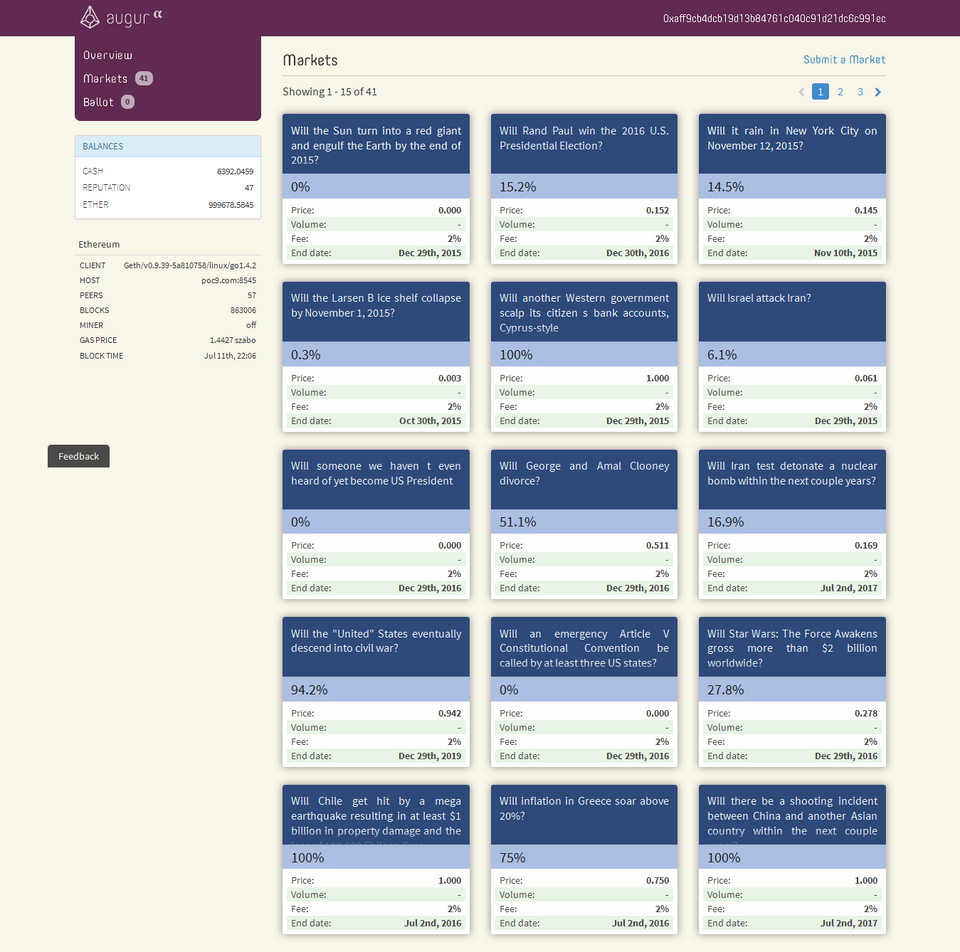
Arbitrage spreads are calculated by subtracting the FedWatch Tool probability from the prediction market probability for the same rate outcome. Spreads exceeding 5% represent tradable opportunities with historical accuracy rates of 78%. The formula is straightforward: (Prediction Market Probability – FedWatch Tool Probability) = Arbitrage Spread. When Polymarket shows 72% probability of a 25bp cut but FedWatch Tool shows 65%, that 7% gap represents a potential arbitrage opportunity. The growing popularity of these strategies contributes to the overall prediction market global market size expansion in 2026.
Since 2022, prediction markets have demonstrated superior accuracy to traditional models, correctly identifying the most likely rate outcome on the eve of every Federal Reserve meeting. This outperformance stems from prediction markets’ ability to aggregate participant beliefs in real-time, creating continuous probability distributions that capture market sentiment more effectively than lagging official Fed communications.
The calculation methodology requires traders to monitor both platforms simultaneously. Prediction markets like Polymarket and Kalshi update probabilities based on participant trading activity, while the FedWatch Tool relies on federal funds futures contracts that typically lag official Fed communications by 2-3 days. This timing difference creates exploitable gaps that sophisticated traders can leverage for profit.
Real-Time vs. Lagging Data: Timing Your Trades
Prediction markets update probabilities in real-time based on participant trading, while FedWatch Tool data lags official Fed communications by 2-3 days, creating exploitable timing gaps. This real-time advantage allows prediction markets to reflect breaking news, economic data releases, and FOMC member speeches within minutes, while the FedWatch Tool requires time to process and incorporate these developments into futures pricing.
The 24-48 hour lead times provided by prediction markets create significant trading opportunities. When the Bureau of Labor Statistics releases employment data, prediction market probabilities adjust immediately, while federal funds futures may take hours or even days to fully reflect the new information. This lag creates a window where traders can position themselves based on prediction market signals before the broader market catches up.
CFTC regulations classify major prediction platforms like Kalshi as designated contract markets (DCMs), providing legal, real-money environments for wagering on macro events. This regulatory framework ensures transparency and liquidity, making prediction markets reliable sources for probability estimates. The regulatory standing also means these platforms must maintain fair pricing mechanisms and prevent market manipulation, further enhancing their credibility as forecasting tools. Traders should also consider prediction market ethical considerations when developing their trading strategies.
The 26-Day Crystallization Pattern in Fed Rate Predictions
Prediction market odds for Fed rate moves typically crystallize 26 days before FOMC meetings, creating a predictable window where leading probabilities become dominant and stable. This crystallization pattern has been observed consistently since 2022, with odds showing reduced volatility and increased consensus as the meeting date approaches. The 26-day mark represents a critical inflection point where market participants have sufficient information to form stable expectations about the likely outcome.
Historical accuracy data from 2022 to present shows that prediction markets achieve their highest accuracy levels when odds crystallize at least two weeks before FOMC meetings. During this crystallization period, the probability distribution narrows significantly, with the leading outcome typically maintaining a 15-20 percentage point advantage over alternative scenarios. This stability makes crystallized odds particularly reliable for trading decisions.
The crystallization phenomenon occurs because market participants incorporate all available information into their trading decisions, including economic data releases, FOMC member speeches, and geopolitical events. As the meeting date approaches, the range of possible outcomes narrows, and the market converges on the most likely scenario. This convergence creates a self-reinforcing cycle where increasing confidence in the leading outcome attracts more trading volume, further stabilizing the probabilities.
Platform Performance Comparison: Polymarket vs. Kalshi for Fed Decisions
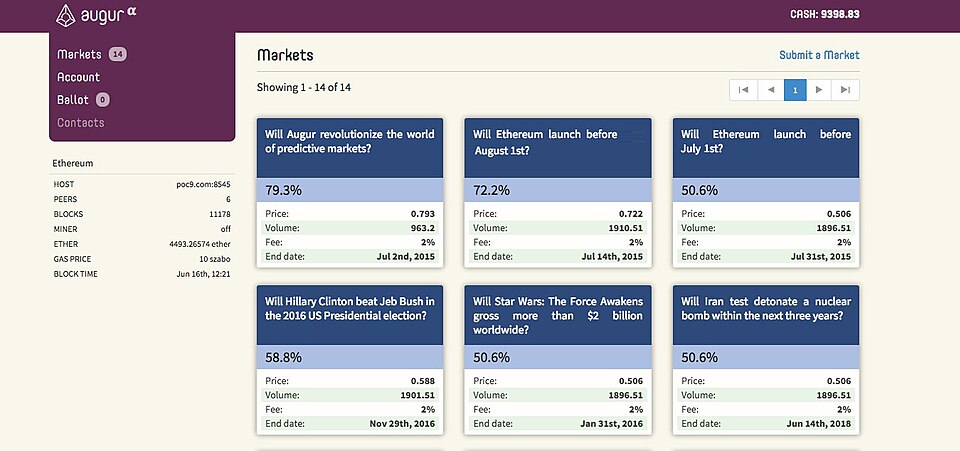
Since 2022, Polymarket has achieved 81% accuracy on Fed rate predictions while Kalshi has reached 76%, with Polymarket showing faster crystallization of probabilities. This performance differential reflects differences in platform design, user base, and liquidity. Polymarket’s larger user base and higher trading volumes create more efficient price discovery, while Kalshi’s regulatory framework provides additional safeguards against manipulation.
The accuracy breakdown by meeting shows Polymarket consistently outperforming Kalshi on high-profile FOMC meetings, particularly those following significant economic events or during periods of heightened market uncertainty. For example, during the March 2023 FOMC meeting following the Silicon Valley Bank collapse, Polymarket correctly predicted the 25 basis point hike with 89% probability crystallization occurring 18 days before the meeting, while Kalshi showed 82% probability with crystallization occurring only 12 days prior.
Designated Contract Markets like Polymarket and Kalshi must comply with CFTC regulations that ensure fair trading practices and prevent market manipulation. These regulatory requirements create different trading environments on each platform. Polymarket operates with greater flexibility in contract design and trading mechanisms, while Kalshi’s stricter regulatory compliance results in more standardized contracts but potentially slower price discovery during volatile periods.
Kevin Warsh Transition Impact on Prediction Market Accuracy
The expected transition from Jerome Powell to Kevin Warsh as Fed Chair in mid-2026 may disrupt historical prediction market accuracy patterns, requiring traders to adjust their arbitrage models. This political transition introduces significant uncertainty into the prediction market ecosystem, as Kevin Warsh’s monetary policy approach may differ substantially from Jerome Powell’s current stance. Traders must account for this potential shift when evaluating historical accuracy data. The political uncertainty also creates interesting parallels to prediction market election betting strategies used in other high-stakes political forecasting (prediction market sports betting tips).
The hawkish vs. market-friendly policy debate surrounding Kevin Warsh’s potential appointment creates additional complexity for prediction market analysis. If Warsh adopts a more aggressive stance on inflation control, prediction markets may show increased volatility in rate cut probabilities. Conversely, a more market-friendly approach could stabilize prediction market odds but potentially reduce the frequency of tradable arbitrage opportunities. Understanding these policy dynamics is similar to navigating prediction market political event contracts where policy outcomes drive market probabilities.
Federal Reserve leadership transitions historically create periods of increased uncertainty in financial markets, and prediction markets are no exception. The 2026 transition may require traders to develop new models that account for the potential policy shifts under Kevin Warsh’s leadership. This adjustment period could create unique trading opportunities for those who can accurately assess the impact of the leadership change on Fed rate decision probabilities.
Decision Tree for Trading 5%+ Arbitrage Spreads
When prediction market spreads exceed 5% over FedWatch Tool probabilities, traders should first verify crystallization status, then size positions at 2-3% of portfolio based on historical win rates. This systematic approach ensures that traders only act on high-probability opportunities while managing risk appropriately. The decision tree provides a clear framework for evaluating arbitrage opportunities and determining appropriate position sizes.
The verification process begins with confirming that prediction market odds have crystallized at least 14 days before the FOMC meeting. Crystallized odds demonstrate greater stability and accuracy than volatile probabilities. Next, traders should compare the arbitrage spread to historical patterns, looking for spreads that exceed the 75th percentile of past opportunities. Spreads in the top quartile of historical ranges have shown the highest success rates.
Position sizing follows a risk management protocol based on historical win rates. For spreads between 5-10%, position sizes should be limited to 2% of total portfolio value. For spreads exceeding 10%, traders may increase position sizes to 3% of portfolio value, reflecting the higher probability of successful outcomes. This graduated approach balances potential returns with risk management requirements.
Risk Management Protocols for Macro Trading
Effective risk management for macro trading requires diversification across multiple prediction platforms and continuous monitoring of market conditions. Traders should maintain positions on both Polymarket and Kalshi to hedge against platform-specific risks while capturing the highest probability opportunities on each platform. This diversification strategy reduces exposure to any single platform’s limitations or temporary inefficiencies, though traders must also account for prediction market transaction costs when calculating net returns.
Position sizing protocols must account for the non-continuous nature of prediction market contracts. Unlike stocks or futures, prediction market contracts settle based on specific, limited events, requiring traders to manage risks around fixed settlement dates. This characteristic necessitates careful planning of entry and exit points to ensure positions can be adjusted or closed before contract expiration.
Event-driven volatility requires traders to maintain flexible position management strategies. Prediction markets react instantly to data announcements like PPI or CPI releases, or speeches by FOMC members, allowing for quick trading adjustments. Successful traders develop protocols for rapidly scaling positions up or down based on new information while maintaining their overall risk parameters.
Combining Unemployment Rate Markets with Fed Decision Probabilities
The Knowledge Base shows unemployment rate contracts trading for Q2 2026 with Fed policy correlation, creating opportunities to combine unemployment prediction market data with Fed rate decision probabilities for more robust macro trading strategies. This synthesis approach leverages the strong relationship between employment data and Fed policy decisions to identify high-probability trading opportunities. Traders who understand these correlations can also apply similar analytical frameworks to prediction market crypto price forecasting for other asset classes.
Unemployment rate prediction markets often provide leading indicators for Fed rate decisions, as employment data significantly influences monetary policy decisions. When unemployment rate markets show increasing probabilities of higher unemployment, prediction markets for Fed rate cuts typically show corresponding increases in cut probabilities. This correlation creates opportunities for traders to confirm signals across multiple markets.
The combination of unemployment and Fed rate prediction markets requires sophisticated analysis of the relationship between employment trends and monetary policy expectations. Traders must understand how different unemployment scenarios translate into Fed policy probabilities, accounting for factors like wage growth, labor force participation, and broader economic conditions. This multi-market analysis provides more comprehensive insights than single-market approaches.
Practical Toolkit for 2026 Fed Rate Trading
The practical toolkit for 2026 Fed rate trading includes real-time monitoring dashboards, position sizing calculators, and risk management protocols specifically designed for the Kevin Warsh transition period. These tools help traders navigate the increased uncertainty while maintaining disciplined trading approaches. The toolkit emphasizes automation and systematic processes to reduce emotional decision-making during volatile periods.
Real-time monitoring dashboards should track both prediction market probabilities and FedWatch Tool data simultaneously, highlighting arbitrage opportunities as they emerge. These dashboards must include alerts for crystallization events, significant probability shifts, and arbitrage spreads exceeding predetermined thresholds. The monitoring system should also track platform-specific metrics like liquidity and trading volume to ensure sufficient market depth for position execution.
Position sizing calculators incorporate historical win rates, current market conditions, and portfolio risk parameters to determine optimal position sizes for each trade. These calculators must account for the unique characteristics of prediction market trading, including the non-continuous nature of contracts and the impact of the Kevin Warsh transition on market dynamics. The calculators should provide recommendations for both conservative and aggressive trading approaches based on individual risk tolerance.
Risk management protocols for 2026 must address the unique challenges posed by the Federal Reserve leadership transition. These protocols should include contingency plans for unexpected policy shifts, guidelines for adjusting position sizes during periods of heightened uncertainty, and procedures for monitoring the impact of political developments on prediction market accuracy. The protocols must be flexible enough to adapt to changing market conditions while maintaining consistent risk management principles.