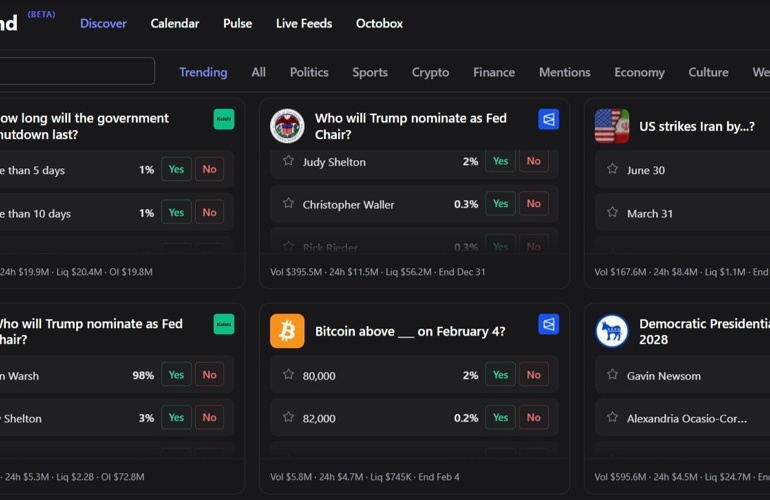
Kalshi, the CFTC-regulated prediction market, is projected to hit a staggering $10.1 billion in monthly trading volume in February 2026. This explosive growth, however, is shadowed by ongoing legal battles with state regulators challenging its sports-related contracts. Is Kalshi a legitimate trading platform or an unregulated sportsbook in disguise? Let’s dive deep.
“Kalshi is approved by the Commodity Futures Trading Commission (CFTC) as a Designated Contract Market (DCM), making it a federally regulated exchange rather than a traditional sportsbook.” (CFTC, 2026)
This regulatory distinction is at the heart of Kalshi’s operations. As a DCM, Kalshi argues it falls under federal oversight, preempting state gambling laws. This position is currently being challenged in multiple state-level lawsuits, creating a complex legal landscape for US traders. The core question: are event contracts “swaps” or bets?
What is Kalshi and How Does It Navigate the Federal vs. State Regulation Battle?

Kalshi operates as a Designated Contract Market (DCM) regulated by the Commodity Futures Trading Commission (CFTC). This allows it to offer event contracts on a variety of topics, from economics to weather and politics. However, its expansion into sports has triggered legal clashes with states arguing it’s offering illegal gambling.
“Kalshi is a CFTC-regulated prediction market arguing that its federal oversight preempts state gambling laws, leading to ongoing legal battles.” (hklaw.com, 2026)
The crux of Kalshi’s argument lies in the classification of Kalshi event contract types as “swaps” under the Commodity Exchange Act. This classification, supported by a February 2026 Tennessee court ruling, places it under federal jurisdiction. However, states like Massachusetts and Nevada, where geofencing restrictions have been implemented, continue to challenge this claim, creating uncertainty for users in those regions. This uncertainty highlights the importance of understanding Kalshi event contract types before trading.
The $70 Billion Milestone: How Kalshi’s Trading Volume Growth Dominates the Prediction Market

Kalshi’s rapid growth is undeniable. The platform boasts an annualized trading volume of $70 billion as of early 2026, fueled by an 8x increase between July and December 2025. This surge positions Kalshi as a major player in the prediction market space, attracting both retail and institutional traders.
“Kalshi has reached an annualized trading volume of $70 billion, driven largely by sports event contracts, showcasing its dominance in the prediction market.” (research.contrary.com, 2026)
While Kalshi initially focused on areas like economics and weather, a significant shift has occurred, with sports event contracts now accounting for 90-91% of trading volume in January 2026. This pivot towards sports has been a key driver of its growth, attracting a new segment of users familiar with traditional sports betting. For those looking to analyze this kind of data, exploring prediction market data analysis tools can be invaluable. How does Kalshi stack up against Polymarket alternatives 2026? (Polymarket deposit methods).
Is Kalshi Legal? Decoding the State Lawsuits and Federal “Swap” Ruling

The legality of Kalshi’s operations remains a contested issue. Lawsuits from states like Nevada, Massachusetts, and Connecticut challenge the classification of its sports contracts, arguing they constitute illegal gambling. The core issue is whether Kalshi’s structure aligns with federal regulations, or if it oversteps into territory governed by state laws.
“Kalshi faces lawsuits from several states challenging the legality of its sports contracts, but a federal court has supported its classification as ‘swaps’ under federal jurisdiction.” (www.npr.org, 2026)
The February 2026 Tennessee court ruling, classifying Kalshi’s sports contracts as “swaps,” provides a significant legal victory for the platform. This ruling supports Kalshi’s argument that its activities fall under the purview of the Commodity Exchange Act, preempting state-level gambling restrictions. For US traders, this federal preemption argument could mean continued access to Kalshi’s markets, even in states with restrictive gambling laws.
Kalshi vs. Offshore Sportsbooks: Why US Traders Choose CFTC Regulation, KYC, and Direct Withdrawals

Kalshi distinguishes itself from unregulated offshore sportsbooks through its commitment to regulatory compliance and user protection. As a CFTC-regulated platform, Kalshi adheres to strict KYC (Know Your Customer) requirements, prohibiting insider trading, and providing secure ACH/wire withdrawal options. These features offer a level of security and transparency often lacking in offshore alternatives.
“Kalshi offers US traders a secure and transparent alternative to offshore sportsbooks through CFTC regulation, KYC compliance, and direct withdrawal options.” (tradetheday.com, 2026)
Unlike many offshore sportsbooks, Kalshi requires users to verify their identity through KYC procedures, ensuring a safer trading environment. Furthermore, as a U.S. financial institution, Kalshi allows users to directly withdraw funds to their bank accounts via ACH or wire transfer, providing a convenient and reliable method for accessing their funds. This contrasts sharply with the often-opaque and risky withdrawal processes associated with offshore platforms. Understanding the Kalshi withdrawal process is crucial for new users.
For those interested in following best prediction market indicators or accessing prediction market historical data, Kalshi provides a regulated environment to explore these strategies.