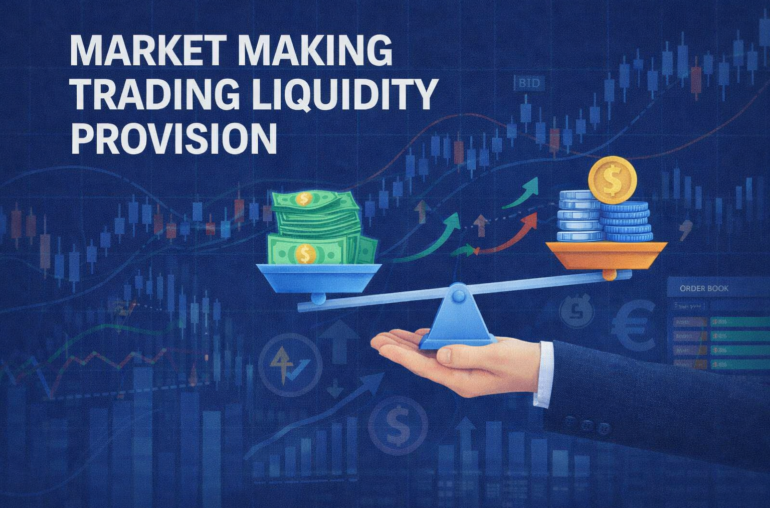
With 2026 projected as the hottest five-year period on record, weather derivative markets on Kalshi have exploded 260% in volume, creating unprecedented opportunities for traders to hedge climate risk. The climate risk transfer (CRT) derivatives market now exceeds $25 billion in notional value, driven by increased climate volatility and a significant shift from Over-the-Counter (OTC) to exchange-traded, standardized contracts. This technical breakdown explores how traders use NOAA data to find mispriced event contracts, the mechanics of Kalshi’s weather contracts, and the regulatory framework shaping this rapidly evolving market.
Why 2026 Marks the Tipping Point for Weather Derivative Markets
“The climate risk transfer (CRT) derivatives market has exploded, with notional values exceeding $25 billion, driven by increased climate volatility and a 260% increase in trading volumes for listed products by early 2026.”
The convergence of multiple factors has created a perfect storm for weather derivative markets in 2026. First, the projection that 2026–2030 will be the hottest five-year period on record has dramatically increased demand for heat-related hedging instruments. Energy companies face unprecedented grid stress, agricultural producers struggle with crop yield volatility, and tourism operators grapple with unpredictable seasonal patterns.
Second, the market has undergone a fundamental structural shift. While previously dominated by OTC contracts between large institutions, a significant portion has moved to exchange-traded platforms like CME Group and Kalshi. This transition has increased liquidity, reduced counterparty risk, and opened access to retail traders who can now participate in markets previously reserved for energy giants and hedge funds.
Third, AI and advanced analytics have revolutionized pricing models. Machine learning algorithms now process terabytes of climate data daily, allowing for more precise pricing of weather risk and increased efficiency in matching buyers and sellers. These technological advances have reduced the traditional pricing inefficiencies that once made weather derivatives the domain of specialized quant teams.
Kalshi’s Weather Contract Mechanics vs Traditional Insurance
“Contracts are rarely insurance-based; they use ‘parametric’ structures that pay out automatically based on specific, pre-defined weather indices (e.g., temperatures or rainfall) rather than requiring proof of loss.”
Kalshi’s weather derivative contracts operate on a fundamentally different principle than traditional insurance. Instead of requiring proof of actual losses, these parametric contracts trigger automatic payouts when specific weather indices reach predetermined thresholds. This mechanism eliminates the lengthy claims process that often delays insurance payouts by months or even years.
The core metrics driving these contracts are Heating Degree Days (HDD) and Cooling Degree Days (CDD). HDD measures the demand for heating by calculating how much colder the average temperature is compared to a baseline of 65°F. CDD measures cooling demand by calculating how much hotter the temperature is above the same baseline. These standardized metrics allow for transparent, objective contract settlement based on publicly available NOAA data.
Rainfall contracts follow a similar parametric structure, with payouts triggered when accumulated precipitation exceeds or falls below specific thresholds. For example, a contract might pay out if New York City receives more than 5 inches of rainfall during June, with the settlement based on official NOAA measurements rather than subjective assessments of flood damage or crop losses.
Finding Mispriced Contracts Using NOAA Data Analysis
“AI and advanced analytics are used to model climate data, allowing for more precise pricing of weather risk and increased efficiency in matching buyers and sellers.”
The most lucrative opportunities in weather derivative markets come from identifying discrepancies between market pricing and actual climate probabilities. Here’s a step-by-step methodology for comparing NOAA projections versus market pricing:
- Access historical NOAA climate data for the specific location and time period of interest
- Calculate the historical probability of the weather event occurring (e.g., temperature exceeding 95°F for 5+ days in July)
- Compare this historical probability to the implied probability in the market contract pricing
- Identify contracts where the market price significantly deviates from historical norms
Consider this real example: In May 2026, Kalshi offered a contract on whether Chicago would experience more than 4 days above 90°F in July. The market price implied a 35% probability, but NOAA historical data showed that Chicago experiences such heat waves 55% of the time. This 20-percentage-point discrepancy represented a significant mispricing opportunity for traders who recognized the gap (prediction market sports betting tips).
Retail traders can access the same NOAA datasets used by institutional players through the National Centers for Environmental Information website. While the raw data requires some processing, numerous free tools and APIs have emerged to make climate data analysis more accessible to individual traders.
The $25B Market: Who’s Trading Weather Derivatives in 2026
“Primary users include energy companies, agricultural producers, and tourism operators, while counter-parties often include hedge funds and large reinsurance companies.”
The weather derivatives market in 2026 features a diverse ecosystem of participants, each with distinct motivations and strategies. Energy companies represent the largest segment, using these contracts to hedge against grid failures and demand spikes. When temperatures soar above normal, electricity demand for air conditioning can increase by 30-40%, straining power generation and distribution systems. Weather derivatives allow these companies to offset revenue losses from reduced consumption during mild weather or cover costs during extreme events (prediction market global market size 2026).
Agricultural producers have increasingly integrated weather derivatives with traditional crop insurance. While insurance covers catastrophic losses, weather derivatives provide faster, more reliable protection against “slow-moving” risks like slightly warmer winters that affect crop yields without causing outright crop failure. This dual protection strategy has become standard practice for large farming operations.
Retail traders have emerged as a significant force in providing liquidity to these markets. Unlike traditional participants who use derivatives for hedging, retail traders often speculate on weather outcomes, creating the counterparty positions that hedgers need. This dynamic has increased market depth and reduced bid-ask spreads, making the market more efficient overall.
Live Mispricing Alert Framework for Traders
“Because they are based on independent data sources like NOAA, payouts can occur within days of the index reaching the trigger point.”
Identifying mispriced weather contracts requires a systematic approach that combines real-time monitoring with historical analysis. Here’s a three-step process to identify pricing inefficiencies:
- Baseline Establishment: Calculate the historical frequency of the weather event using NOAA data spanning at least 20 years. This establishes the true probability that the market may misprice.
- Market Comparison: Compare the historical probability to the implied probability from current contract prices. A contract priced at $0.30 implies a 30% chance of occurrence.
- Opportunity Assessment: Look for discrepancies exceeding 15 percentage points, which historically represent profitable opportunities after accounting for transaction costs.
Real-time monitoring tools have become essential for weather derivative traders. Platforms like TradingView now offer weather data overlays, while specialized services provide SMS and email alerts when NOAA measurements approach contract thresholds. These tools allow traders to adjust positions as weather patterns evolve, rather than waiting until contract expiration.
Risk management in weather derivatives requires understanding the unique characteristics of climate risk. Unlike financial markets, weather events follow different seasonal patterns and correlation structures. A trader might hold multiple contracts across different regions and seasons to diversify weather risk, similar to how traditional portfolios diversify across asset classes (prediction market political event contracts).
Regulatory Evolution: CFTC Oversight in 2026
“Major prediction platforms (e.g., Kalshi, Polymarket) are increasingly regulated by the CFTC, aligning event-based trading with federal market standards.”
The regulatory landscape for weather derivatives has evolved significantly in 2026, with the Commodity Futures Trading Commission (CFTC) expanding its oversight of climate risk markets. This regulatory evolution has brought increased transparency and participant protection while maintaining the innovative aspects that make these markets valuable for risk management (prediction market ethical considerations).
CFTC oversight requires platforms to implement robust data verification processes, ensuring that NOAA measurements used for contract settlement are accurate and tamper-proof. This regulatory requirement has actually enhanced market integrity, as traders can trust that payouts will be based on objective, verifiable data rather than subjective interpretations or potential manipulation.
Compliance requirements for platforms include maintaining sufficient capital reserves, implementing anti-manipulation controls, and providing clear disclosure of contract terms and settlement mechanisms. For traders, this means greater confidence in platform stability and fairer market conditions, though it also requires understanding and adhering to reporting requirements for larger positions.
The Future: AI-Driven Weather Prediction Markets

“AI and advanced analytics are used to model climate data, allowing for more precise pricing of weather risk and increased efficiency in matching buyers and sellers.”
The integration of artificial intelligence into weather prediction markets represents the next frontier in climate risk management. Machine learning models are now capable of processing satellite data, IoT sensor networks, and historical climate patterns to predict extreme weather events with unprecedented accuracy. These advances are creating new opportunities for both hedging and speculation (prediction market election betting strategies).
Satellite data integration has become particularly important for agricultural contracts. High-resolution imagery can detect crop stress weeks before yield impacts become apparent, allowing for more precise pricing of rainfall and temperature contracts. This early warning capability benefits both hedgers who can adjust their positions and speculators who can identify mispriced contracts before the broader market recognizes emerging risks (prediction market crypto price forecasting).
Personalized hedging strategies for small businesses represent an emerging trend in 2026. Small restaurants, event venues, and retail operations can now access weather derivative contracts tailored to their specific risk profiles. A wedding venue in Miami might hedge against rainfall during peak season, while a ski resort in Colorado might protect against insufficient snowfall. These micro-hedging opportunities were previously unavailable due to high transaction costs and limited market access.
Risk Management Strategies for Weather Derivative Positions
Successful weather derivative trading requires understanding the unique risk characteristics of climate markets. Unlike financial assets, weather events exhibit strong seasonal patterns and geographic correlations that affect portfolio construction. A trader might hold heating degree day contracts for the Northeast alongside cooling degree day contracts for the Southwest, creating a balanced exposure to seasonal weather variations.
Liquidity management is particularly important in weather derivatives. While major contracts on platforms like Kalshi and CME Group offer reasonable liquidity, more specialized contracts can experience wide bid-ask spreads and limited exit opportunities. Traders should maintain smaller position sizes in less liquid contracts and use limit orders to minimize execution costs, similar to strategies outlined in comprehensive prediction market transaction costs analysis for 2026 traders.
The speed of payout in weather derivatives creates both opportunities and risks. Because contracts settle based on objective NOAA data, payouts can occur within days of the index reaching the trigger point. This rapid settlement allows for quick reinvestment of capital but also requires maintaining sufficient cash reserves to cover potential losses on open positions.