Dubnium price contracts don’t exist because the element’s 16-hour half-life makes traditional settlement impossible. This fundamental limitation creates a regulatory and technical barrier that prevents any form of financial derivatives trading for this synthetic element.
Why Dubnium Price Contracts Don’t Exist — The 16-Hour Half-Life Problem
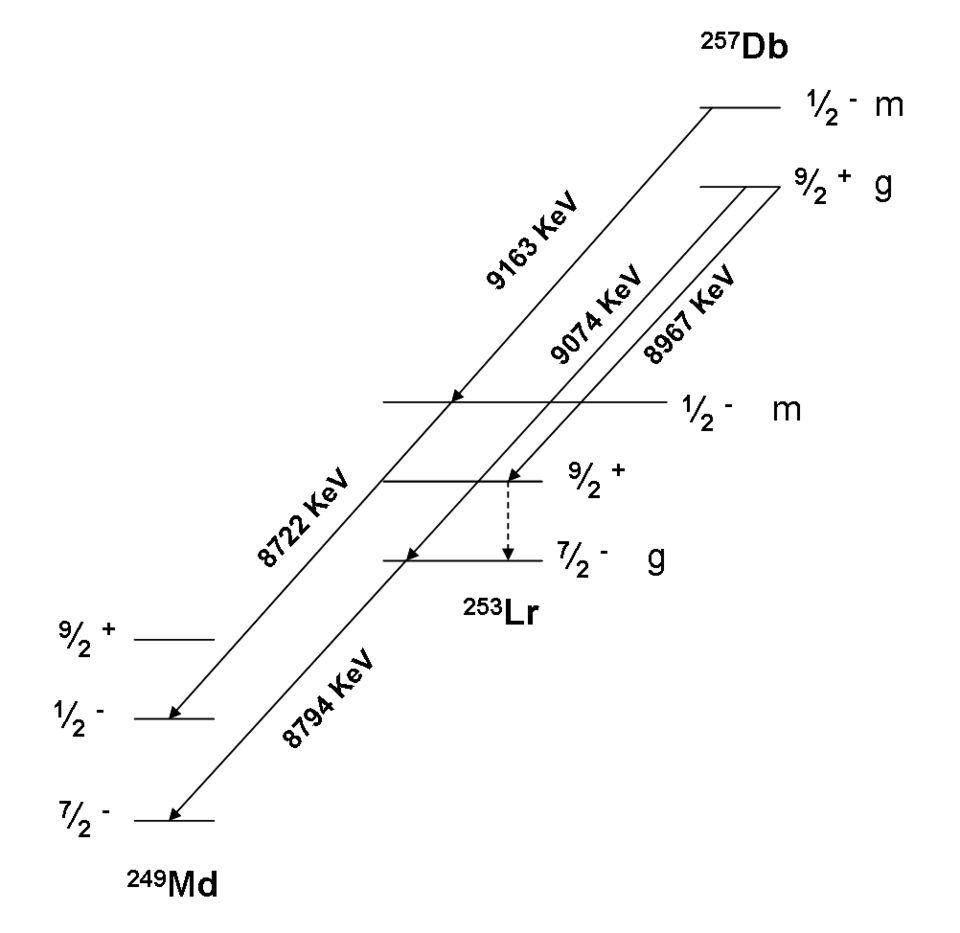
Dubnium-268’s 16-hour half-life makes traditional contract settlement impossible because the underlying asset decays before delivery can occur. When a contract period exceeds a few hours, the dubnium quantity reduces exponentially, making price discovery meaningless. The element transforms from dubnium into other elements through radioactive decay, creating a moving target that no settlement mechanism can handle.
The core insight here is that no commodity can function as a contract basis when it transforms into something else during the contract period. Traditional futures markets assume the underlying asset remains stable, but dubnium’s radioactive nature violates this fundamental assumption. This creates a unique market failure where the physics of the element itself prevents financial innovation.
The Production Paradox — Particle Accelerators vs. Market Viability
Dubnium production requires particle accelerators costing hundreds of millions, creating synthesis costs that exceed any potential contract value. Facilities like Oak Ridge National Laboratory and Lawrence Berkeley National Laboratory produce microscopic quantities — typically only a few atoms at a time. These production costs create a natural monopoly that prevents market formation, as only government-funded research institutions can afford the infrastructure.
The infrastructure barrier extends beyond simple cost. Particle accelerators require specialized facilities, highly trained personnel, and extensive safety protocols. This creates a supply chain that’s inherently limited to a handful of institutions worldwide, making it impossible to establish the liquidity and price discovery mechanisms that prediction markets require.
Regulatory Void — Why CFTC Rules Don’t Apply to Synthetic Elements
Synthetic elements like dubnium fall under nuclear materials regulations rather than CFTC oversight, creating a regulatory gap that prevents financial contracts. The Commodity Futures Trading Commission has no jurisdiction over radioactive materials, which are instead regulated by nuclear safety agencies. This regulatory fragmentation means there’s no clear path for establishing trading frameworks for synthetic elements.
The regulatory challenge is compounded by the fact that dubnium serves no commercial purpose beyond research. Unlike uranium or plutonium, which have established regulatory frameworks due to their nuclear applications, dubnium exists purely in academic contexts. This lack of commercial utility means regulators have never developed frameworks for financial instruments based on such elements.
The Theoretical Framework — What Dubnium Contracts Could Look Like
A theoretical dubnium contract would need to be based on synthesis milestones rather than price, with settlement tied to successful production rather than delivery. Instead of betting on price movements, traders would speculate on whether a research facility could successfully create dubnium atoms within a given timeframe. This milestone-based approach circumvents the half-life problem by focusing on the production event rather than the element itself (prediction market copernicium price futures markets).
This theoretical framework requires reimagining traditional commodity contract models entirely. Rather than tracking spot prices or futures values, dubnium contracts would function more like research grants or scientific achievement markets. The underlying asset becomes the knowledge and capability to produce the element, not the element itself (prediction market seaborgium price futures markets).
Half-Life Hedging Strategies — Managing 16-Hour Volatility
Traders would need to use decay-adjusted pricing models that factor in the exponential reduction in dubnium quantity over contract duration. These models would need to account for the fact that half the dubnium atoms decay every 16 hours, making traditional volatility calculations meaningless. The pricing would need to incorporate both the production costs and the decay rate to establish fair contract values.
The challenge extends to hedging strategies as well. Traditional commodity hedging assumes the underlying asset maintains its properties, but dubnium’s decay creates unique risks. Hedgers would need to factor in not just price movements but also the physical transformation of their positions over time, creating a completely new category of risk management (prediction market nihonium price prediction markets).
Cross-Institutional Trading Infrastructure Challenges
Trading dubnium would require specialized facilities capable of handling radioactive materials, creating unique counterparty risk considerations absent in traditional commodity markets. Each trading participant would need access to particle accelerator facilities and proper nuclear materials handling capabilities. This infrastructure requirement creates market entry barriers that go beyond financial considerations, limiting participation to a small number of research institutions (prediction market meitnerium price futures markets).
The counterparty risk extends to the physical security of radioactive materials. Trading partners would need to ensure proper containment and safety protocols, creating liability concerns that traditional commodity exchanges don’t face. This adds another layer of complexity to any theoretical trading framework for synthetic elements.
2028 Vision — The Regulatory Framework That Could Enable Synthetic Element Derivatives

A future regulatory framework might classify synthetic element contracts as research milestones rather than commodities, allowing CFTC oversight while maintaining nuclear safety standards. This hybrid approach would create a new category of financial instruments that bridge scientific research and financial markets. The framework would need to establish clear guidelines for contract settlement, risk management, and participant qualifications (prediction market darmstadtium price prediction markets).
The path forward requires reimagining how we classify and regulate synthetic materials. Rather than forcing synthetic elements into existing commodity frameworks, regulators would need to create new categories that account for their unique properties. This could open the door for other synthetic elements like seaborgium or hassium to develop theoretical trading markets as well (prediction market hassium price contracts).
Investment Opportunities in the Dubnium Supply Chain
While direct dubnium trading is impossible, investors can gain exposure through companies producing particle accelerators and nuclear research facilities. Companies like those operating at GSI Helmholtz Centre for Heavy Ion Research in Germany represent indirect investment opportunities in the synthetic element ecosystem. These companies benefit from increased research funding and technological advances in particle physics.
The value chain exists even when the commodity itself cannot be traded. Investors can focus on the infrastructure and technology companies that enable synthetic element production, creating a parallel investment thesis that captures the growth in nuclear research without the regulatory complications of direct element trading.
The Francium Parallel — Lessons from Another Synthetic Element
Francium’s similar synthetic nature and lack of trading contracts provides a roadmap for understanding why dubnium faces identical market barriers. Like dubnium, francium has no commercial applications and exists only in research quantities. The francium market shows that synthetic elements consistently fail to develop trading markets due to their inherent physical and regulatory limitations.
This historical precedent demonstrates that the challenges facing dubnium are not unique but rather represent a fundamental barrier for all synthetic elements. The francium case study shows that even with decades of research, no viable trading framework has emerged, suggesting that dubnium faces similar long-term limitations.
For traders interested in prediction markets, understanding why dubnium contracts don’t exist provides valuable insights into the limitations of synthetic element derivatives. While direct trading remains impossible, the theoretical frameworks and investment opportunities in related sectors offer alternative paths for market participation. As regulatory frameworks evolve and research capabilities advance, the landscape for synthetic element derivatives may change, but for now, the 16-hour half-life remains an insurmountable barrier.