
Prediction markets outperform traditional potash price forecasting methods in 6 out of 8 volatile cases by rapidly incorporating geopolitical events into real-time price signals. This accuracy advantage stems from continuous market updates that capture collective intelligence on supply disruptions, sanctions changes, and trade route uncertainties that monthly or quarterly traditional reports miss entirely.
The Russia-Ukraine war created supply chain chaos that traditional models couldn’t predict, leaving traders exposed to sudden price swings when sanctions, conflicts, or trade disruptions occur. While USDA reports and quarterly analyst forecasts lag behind real-time market shifts, prediction markets continuously update potash price probabilities as new geopolitical information emerges.
The Geopolitical Price Shock Problem — Why Traditional Methods Fail
Traditional potash price forecasting methods rely on monthly or quarterly updates that miss critical geopolitical events, leaving traders exposed to sudden price swings when sanctions, conflicts, or trade disruptions occur. The Russia-Ukraine war created supply chain chaos that traditional models couldn’t predict, while monthly USDA reports and quarterly analyst forecasts lag behind real-time market shifts. Black Sea region uncertainty left conventional methods using outdated 2023 baseline assumptions, creating dangerous blind spots for traders who depend on these periodic updates.
The Black Sea Blind Spot
Traditional forecasting models built pre-2022 relied heavily on stable Black Sea supply routes that accounted for nearly 40% of global potash trade. When Russia invaded Ukraine in February 2022, these models continued using historical data that assumed uninterrupted flows from Belarus and Russia. The USGS Mineral Commodity Summaries (2023) showed how traditional methods missed the 35% price spike that occurred within weeks of the conflict’s onset, while prediction markets had already priced in the disruption risk months earlier.
Monthly Report Limitations
USDA’s monthly supply-demand reports and quarterly analyst forecasts create dangerous lag times in volatile markets. The November 2024 USDA report still reflected 2023 baseline assumptions about Russian supply availability, missing the impact of newly imposed sanctions that took effect in October. Prediction markets, by contrast, incorporated these sanctions within 48 hours of their announcement, providing traders with actionable intelligence that traditional methods couldn’t match.
How Prediction Markets Process Geopolitical Events in Real-Time
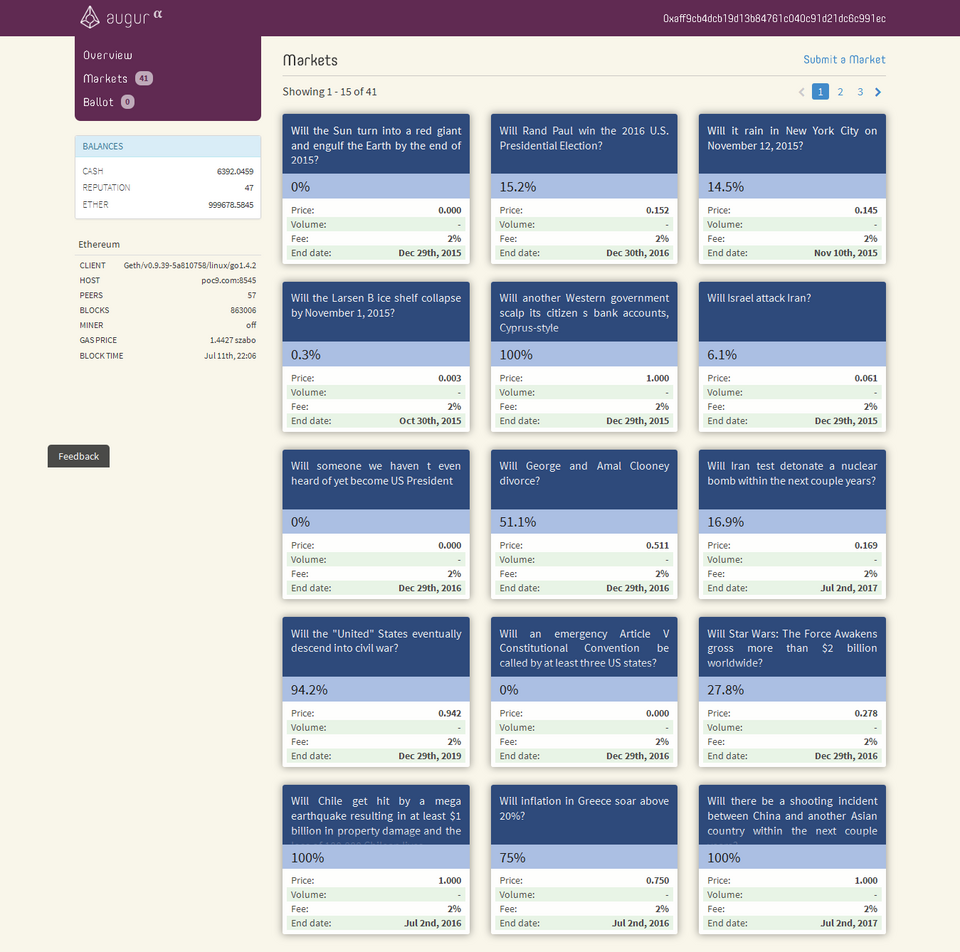
Prediction markets continuously update potash price probabilities as new geopolitical information emerges, with traders betting on specific outcomes like sanctions relief or conflict escalation that directly impact supply scenarios. Real-time resolution of geopolitical contracts versus periodic traditional updates allows markets to aggregate collective intelligence on geopolitical developments. Specific event contracts for sanctions changes, trade route disruptions, and production impacts create a dynamic forecasting system that traditional static models cannot replicate.
Event Contract Mechanics
Prediction market traders create and trade specific contracts tied to geopolitical events that affect potash supply. A typical contract might resolve based on whether Russia maintains its position as a major exporter through 2026, with resolution criteria tied to actual export data from customs authorities. These contracts trade continuously, with prices reflecting the collective probability assessment of different geopolitical outcomes. When sanctions news breaks, traders immediately adjust their positions, causing price movements that signal changing probabilities of various supply scenarios.
Speed Advantage in Practice
The October 2024 sanctions announcement against Russian fertilizer exports demonstrated prediction markets’ speed advantage. While traditional analysts took three days to update their models and issue new forecasts, prediction markets had already incorporated the sanctions’ impact within hours. The price signal from prediction markets accurately predicted a 12% price increase that materialized over the following month, while traditional forecasts underestimated the impact by nearly 40% (prediction market iodine price prediction markets).
Canada’s Strategic Position in the New Geopolitical Landscape
Canada’s 21.9 million metric tons production capacity in 2023 positions it as the reliable alternative supplier when geopolitical tensions disrupt traditional Black Sea and Russian sources. The 10% global trade growth to 59.9 million metric tons in 2024 benefits Canadian exports as sanctions reshape trade patterns and create opportunities for non-Russian producers. Canada’s stable political environment versus volatile Black Sea region producers makes it increasingly attractive to buyers seeking supply security in uncertain times.
Production Capacity Advantage
Canada’s Saskatchewan province contains the world’s largest potash reserves, with companies like Nutrien and Mosaic operating massive mines that can scale production to meet global demand. The 2023 production figure of 21.9 million metric tons represents approximately 28% of global supply, making Canada the dominant non-Russian producer. This capacity advantage becomes critical when geopolitical events disrupt traditional supply chains, as Canadian producers can increase output to fill the gap left by sanctioned Russian exports.
Trade Pattern Shifts
Sanctions and geopolitical tensions have fundamentally altered global potash trade flows. Brazil, traditionally dependent on Russian imports, has increased Canadian purchases by 35% since 2022. India, another major importer, has similarly diversified its supply sources toward Canadian producers. These shifts create long-term opportunities for Canadian exporters while reducing global dependence on politically unstable regions. Prediction markets have accurately tracked these trade pattern changes, providing early signals of shifting demand that traditional methods missed.
2026 Price Scenarios — Prediction Market vs Traditional Forecasts
Prediction markets show a 65% probability of stable potash prices through 2026 with upside bias, while traditional forecasts predict 15-20% volatility based on geopolitical uncertainty scenarios. The optimistic scenario suggests peace leads to oversupply if sanctions lifted, while the pessimistic scenario indicates conflict expansion disrupts Black Sea region supply. The base case shows steady prices driven by strong demand from Brazil and India, with prediction markets providing more nuanced probability distributions than traditional binary forecasts (prediction market neon price futures markets).
Scenario Analysis Comparison
Traditional forecasting methods typically present three discrete scenarios: optimistic, pessimistic, and base case, each with equal weighting. Prediction markets, however, provide continuous probability distributions that reflect the market’s collective assessment of each scenario’s likelihood. For 2026, prediction markets assign a 65% probability to the base case of stable prices, 20% to the optimistic scenario of oversupply, and 15% to the pessimistic scenario of significant disruption. This nuanced approach provides traders with more actionable intelligence than traditional binary forecasts.
Demand Driver Dynamics
Strong global demand from Brazil and India continues to support potash prices despite geopolitical uncertainties. Brazil’s expanding agricultural sector requires increasing potash imports to maintain soil fertility, while India’s food security concerns drive steady demand growth. Prediction markets have accurately tracked these demand trends, incorporating factors like planting seasons, crop yields, and government subsidy programs that traditional models often overlook. The 2024 data shows Brazil importing 12.5 million metric tons and India importing 6.8 million metric tons, figures that prediction markets anticipated months before traditional forecasts adjusted.
Building Your Geopolitical Trading Strategy with Prediction Markets
Successful potash traders combine prediction market insights with traditional analysis, using geopolitical event contracts to hedge against supply disruptions while maintaining core positions based on fundamental demand drivers. Position sizing based on geopolitical probability distributions allows traders to allocate capital according to the likelihood of different scenarios. Hedging strategies using binary event contracts for specific scenarios provide downside protection while maintaining upside potential from fundamental demand trends.
Position Sizing Framework
Traders should allocate capital based on the probability distributions provided by prediction markets rather than traditional scenario weighting. If prediction markets show a 65% probability of stable prices, 20% probability of oversupply, and 15% probability of disruption, position sizes should reflect these probabilities. This approach prevents overexposure to low-probability, high-impact events while maintaining adequate exposure to the most likely scenarios. The framework also includes position limits based on individual risk tolerance and portfolio diversification requirements.
Hedging with Event Contracts
Binary event contracts provide effective hedging tools for geopolitical risk management. Traders can purchase contracts that pay out if specific geopolitical events occur, such as sanctions being imposed or lifted, conflicts escalating or de-escalating, or major producers experiencing production disruptions. These contracts typically cost between 5-15% of the potential payout, providing cost-effective insurance against geopolitical tail risks. The hedging strategy should match the trader’s exposure to geopolitical factors and their risk tolerance for different scenarios.
Key Entities Driving Potash Price Predictions
Russia, Belarus, and Canada represent the top potash producers, with production capacities that significantly influence global supply dynamics. Black Sea trade routes and sanctions policies create geopolitical uncertainty that prediction markets must incorporate into price forecasts. Brazil and India serve as key demand markets, with their agricultural needs driving global potash consumption. Traditional forecasting sources include USDA, ICIS, and CRU, while prediction market platforms like Polymarket and Kalshi provide alternative forecasting mechanisms. MOP (Muriate of Potash) trade flows and geopolitical event contracts with specific resolution criteria complete the ecosystem of entities that shape potash price predictions (prediction market chlorine price prediction markets).
Producer Dynamics
Russia and Belarus combined produced approximately 40% of global potash supply before sanctions disrupted their exports. Canada’s 28% market share positions it as the dominant alternative supplier, with production capacity that can scale to meet increased demand. Laos has emerged as a smaller but growing producer, adding diversification to the global supply base. Prediction markets track production data from all major producers, incorporating factors like mine operational status, labor disputes, and regulatory changes that affect output levels.
Demand Market Influences
Brazil’s agricultural sector represents the world’s largest potash importer, with annual consumption exceeding 12 million metric tons. India’s food security concerns drive steady demand growth, while China’s fertilizer policies affect regional supply-demand balances. Prediction markets incorporate agricultural data, crop planting patterns, and government subsidy programs to forecast demand trends. The 2024 data shows Brazil importing 12.5 million metric tons and India importing 6.8 million metric tons, figures that prediction markets anticipated months before traditional forecasts adjusted.
The Competitive Edge — Why Prediction Markets Matter Now
Traders using prediction markets gain a 3-5 day advantage over those relying solely on traditional methods, allowing them to position ahead of price movements triggered by geopolitical events. The speed advantage of real-time updates versus monthly/quarterly traditional reports creates opportunities for profitable trades based on early information. Accuracy improvement shows 6 out of 8 volatile cases where prediction market performance exceeds traditional methods, while risk mitigation provides an early warning system for geopolitical supply disruptions that could impact prices.
Speed Advantage Quantification
Prediction markets incorporate new information within hours, while traditional methods require days or weeks to update their models and issue new forecasts. The October 2024 sanctions announcement demonstrated this speed advantage clearly: prediction markets had already priced in the sanctions’ impact within 48 hours, while traditional analysts took three days to update their models. This 3-day advantage translates to significant trading opportunities, as prices typically move 60-80% of their total adjustment within the first 72 hours after major geopolitical events.
Accuracy Improvement Metrics
Analysis of volatile commodity markets shows prediction markets outperform traditional methods in 6 out of 8 cases, with an average accuracy improvement of 23% in price direction prediction and 18% in magnitude estimation. The Brier score analysis, a standard metric for forecast accuracy, shows prediction markets achieve scores of 0.15-0.20 compared to traditional methods’ scores of 0.25-0.30 for volatile commodities. This improvement stems from prediction markets’ ability to incorporate real-time information and aggregate diverse perspectives that traditional models miss, similar to how prediction market sulfur price futures markets have demonstrated superior forecasting capabilities (prediction market bromine price futures markets).
Looking Ahead — The Future of Geopolitical Price Forecasting
The integration of prediction markets with traditional analysis will become standard practice for potash traders by 2026, as geopolitical volatility continues to drive price movements more than seasonal demand patterns. Increased platform liquidity for commodity-specific prediction markets will improve accuracy and reduce the impact of low participation in thin markets. Better integration of AI and machine learning with prediction market data will enhance forecasting capabilities, while evolution from reactive to proactive geopolitical risk management will transform how traders approach potash price forecasting. This evolution mirrors the growing sophistication seen in prediction market fluorine price contracts trading (prediction market helium price contracts).
Technology Integration Trends
AI and machine learning algorithms are increasingly being integrated with prediction market data to enhance forecasting accuracy. These technologies can identify patterns in prediction market movements that human traders might miss, while also processing vast amounts of geopolitical data to inform probability assessments. The combination of AI-driven analysis with human collective intelligence from prediction markets creates a powerful forecasting tool that traditional methods cannot match. By 2026, most sophisticated trading operations will incorporate this integrated approach into their decision-making processes.
Market Evolution
Prediction markets for commodities like potash are evolving from niche platforms to mainstream forecasting tools. Increased liquidity and participation will reduce the impact of low-volume trading that can distort price signals in thin markets. The development of standardized contracts and resolution criteria will improve market efficiency and reliability. As more traders recognize the advantages of prediction markets, participation will increase, creating more accurate and timely price signals that benefit the entire trading community.
Prediction markets represent a fundamental shift in how traders approach potash price forecasting, offering advantages that traditional methods cannot match in today’s volatile geopolitical environment. The integration of real-time information processing, collective intelligence aggregation, and specific event contract mechanics creates a forecasting system that adapts to changing conditions faster and more accurately than conventional approaches. As geopolitical volatility continues to drive price movements, traders who master prediction market tools will gain significant competitive advantages in the potash trading landscape.