## AI Prediction Market Trading: Complete Guide for 2026
AI prediction markets have evolved from niche experiments into billion-dollar trading platforms where users bet on real-world events using binary contracts. The industry has matured significantly since 2018, with platforms like Kalshi and Polymarket processing billions in volume and attracting both retail and institutional traders. This guide covers how AI prediction markets work, major platforms, trading strategies, and regulatory considerations for 2026.
- Trade binary contracts on real-world events across politics, economics, and technology
- Major platforms include Kalshi (regulated) and Polymarket (CFTC-approved)
- Contract prices (0-100 cents) represent probability of event outcomes
## How AI Prediction Markets Work and Key Platforms
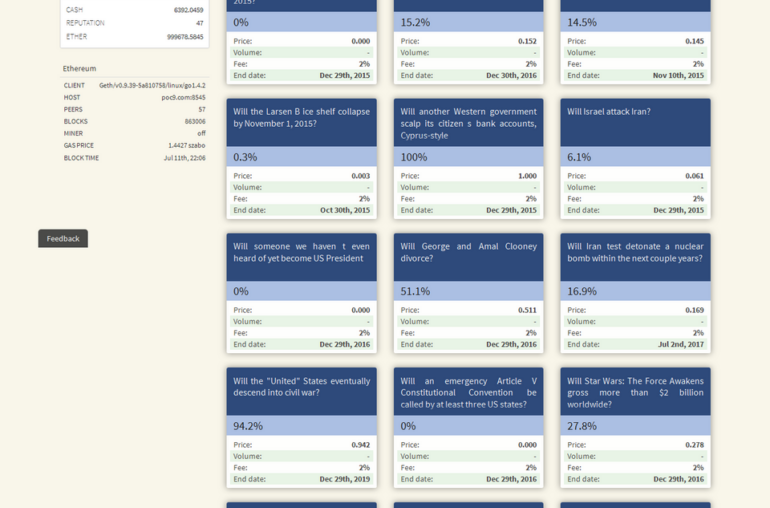
AI prediction markets operate on binary contracts that trade between 0 and 100 cents, with prices representing the market’s probability of an event occurring. When a contract resolves, winning traders receive $1 per share while losers receive nothing. The price discovery mechanism aggregates diverse opinions to create accurate forecasts for events ranging from elections to economic indicators.
### Binary Contracts and Probability Pricing (0-100 cents range)
Prediction market contracts follow a simple binary format where traders buy “YES” or “NO” positions on future events. A contract trading at 60 cents implies a 60% probability of the event occurring, while 40 cents suggests a 40% likelihood. The price fluctuates based on new information, market sentiment, and trading activity. For example, if CPI inflation data shows unexpected increases, contracts betting on higher rates might jump from 30 cents to 70 cents within hours.
### Major Platforms — Kalshi vs Polymarket Comparison
**Kalshi** operates as a federally regulated exchange approved by the Commodity Futures Trading Commission (CFTC) since 2020. Founded in 2018, it offers event contracts on economic indicators, political outcomes, and regulatory decisions. The platform charges transaction fees on trades and maintains strict compliance standards, making it available across most U.S. states.
**Polymarket** returned to the U.S. market in late 2025 after settling CFTC investigations and acquiring a regulated exchange. The platform specializes in crypto-based prediction markets covering politics, sports, and cultural events. While facing some state-level challenges in Nevada, Polymarket operates legally at the federal level and has seen significant volume growth during election cycles.
### Event Coverage Across Politics, Economics, and Technology
Prediction markets cover diverse event categories that attract different types of traders. **Political markets** include election outcomes, policy decisions, and regulatory changes. **Economic markets** focus on CPI inflation rates, Federal Reserve interest rate decisions, and unemployment figures. **Technology markets** track corporate earnings, company performance, and technology adoption rates. **Cultural markets** cover Oscar winners, sports game outcomes, and entertainment events.
## Trading Strategies and Making Money on Prediction Markets
Successful prediction market trading requires understanding market mechanics, risk management, and opportunity identification. Traders can profit through multiple approaches, from arbitrage to market making, while managing the inherent volatility of event-based contracts.
### Arbitrage and Spread Management for Market Makers
Market makers profit from the bid-ask spread by simultaneously quoting both buy and sell prices for contracts. This strategy requires maintaining sufficient capital to handle potential losses while providing liquidity to the market. Effective market makers analyze order book depth, identify pricing inefficiencies, and adjust spreads based on market volatility. The most successful market makers use automated systems to quote prices continuously across multiple contracts.
### Risk Mitigation and Liquidity Provision Techniques
Risk management in prediction markets involves position sizing, diversification, and stop-loss strategies. Traders should never risk more than 1-2% of their capital on a single contract. Diversification across uncorrelated events reduces portfolio volatility. Stop-loss orders protect against adverse price movements, while position scaling allows traders to increase exposure as contracts move in their favor. Successful traders also monitor news flow and adjust positions based on breaking information.
### How to Profit from Market Inefficiencies and Mispricings
Market inefficiencies occur when contract prices deviate from true probabilities due to information asymmetry, liquidity constraints, or emotional trading. Skilled traders identify these gaps by analyzing historical data, tracking news developments, and monitoring social media sentiment. For example, a contract might be mispriced at 40 cents when fundamental analysis suggests a 60% probability. Traders who correctly identify such inefficiencies can generate consistent profits over time.
## Regulatory Status and Legal Considerations
The regulatory landscape for prediction markets remains complex, with federal approval coexisting alongside state-level challenges. Understanding compliance requirements and legal risks is essential for traders operating in this space.
### CFTC Regulation and Platform Compliance Requirements
The Commodity Futures Trading Commission regulates prediction markets as event contracts, requiring platforms to meet specific compliance standards. Kalshi operates as a fully regulated exchange with CFTC approval, while Polymarket achieved federal compliance through strategic acquisitions and regulatory settlements. Both platforms must implement anti-money laundering procedures, know-your-customer verification, and reporting requirements. Traders should verify platform compliance before depositing funds.
### State-Level Legal Challenges and Restrictions
While federal regulation provides a framework for prediction markets, individual states maintain varying approaches to oversight. Nevada regulators have pursued legal action against Polymarket, seeking to regulate it under state gaming laws. Other states may impose restrictions on certain types of event contracts or require additional licensing. Traders should research their state’s specific regulations before participating in prediction markets.
### Insider Trading Risks and Compliance Best Practices
Insider trading risks exist in prediction markets when traders possess material non-public information about events they’re betting on. Platforms implement trading restrictions during sensitive periods and monitor for suspicious activity. Traders should avoid betting on events where they have access to confidential information and maintain detailed records of their trading decisions. Compliance best practices include understanding platform rules, reporting suspicious activity, and consulting legal counsel when uncertain about specific trades.
The prediction market industry continues to evolve in 2026, with increasing institutional participation and technological innovation. Successful traders combine fundamental analysis, technical skills, and risk management to navigate this dynamic market. As regulatory frameworks mature and platform capabilities expand, prediction markets offer unique opportunities for those willing to master their complexities.